Most folks are familiar with the layered pasta dish known as lasagna. Sometimes made with tomato sauce, meat and cheese, and other times with vegetables, it's been a favorite form of Italian comfort food since the first modern recipe was published in "Liber de Coquina" in the 14th century.
We think it's time you got to know timballo, an equally elaborate layered dish that dates back to the Renaissance, when a version served at the di Medici daughters' weddings married the seemingly disparate flavors of goose, trout and candied orange peel in an envelope of pasta.
Named after the mold it's cooked in _ a timbale _ the casserole-like dish resembles a cake or pie. Only instead of a pastry crust into which the cook folds veggies, meats or other goodies, the dish comprises cooked pasta or risotto bound together with eggs or cheese.You also can use roasted aubergine or mashed potatoes as a shell or even gnocchi or ravioli; in the Abruzzo region of Italy, timbales are stacked with crepes (thin sheets of homemade pasta).
The goal is to create a crust that, after it's baked and unmolded, will hold up to being sliced into hot, cheesy wedges.
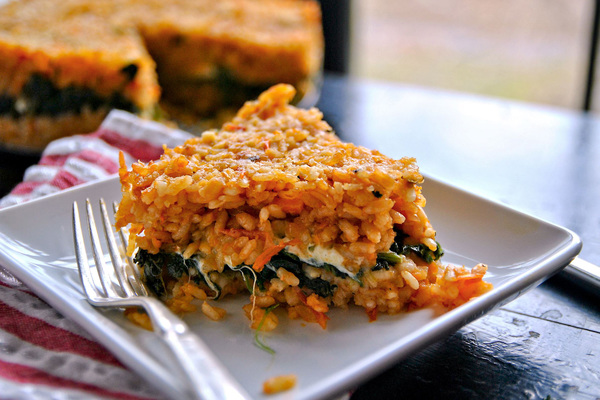
That's where the "wow" factor comes in: Unveiled at the table, with the different-colored layers and textures on display as you begin to portion it, timballo is nothing short of spectacular.
In making the dish, the variations are endless. This relatively simple recipe from Katie and Giancarlo Caldesi's luscious "Sicily: Recipes From an Italian Island" features cherry tomato risotto layered with garlicky spinach and fresh mozzarella. But you could just as easily flavor the rice with saffron, or swap mushrooms or peas for the spinach, or up the ante with a savory mix of sausage, onions and pancetta as a filling. It all depends on what you're hungry for and have in your pantry or fridge.
A couple of tips: Be sure to grease the baking dish with butter and then dust it with fine breadcrumbs to allow for an easy release. And allow the timballo to sit for 10 minutes before turning it out onto a plate, or you could end up with a messy glop _ and deflated ego.
Don't worry if you don't have a timbale pan. The recipe also works with a well-greased cake tin, a springform pan, a Bundt pan or a souffle dish.