‘It’s not always easy to meet the needs of refugees’
Amanda works in schools in the north-west.
It was Nafisa’s birthday on the day she got her admission form. I said happy birthday. She smiled. The pastoral head said we should have got a cake. I wondered what Nafisa made of this. Do they have birthday cakes in Sudan?
She had grown up and been educated in a refugee camp. I remember asking her if she’d ever used a computer. She said no, but she’d seen a picture of one.
After two years, I am proud to say Nafisa has gone from having no understanding of English to being able to participate in lengthy conversations on various subjects. She now asks questions and can understand the gist of the lesson, particularly if there are visuals to provide context.
When she first joined us, we went around taking photos of the various areas of the school, helping her to understand vocabulary and simple sentences. We did a lot of work on The Very Hungry Caterpillar for colours, food, days of the week and a simple life cycle. Starting Macbeth was a big step. We made puppets to tell the story.
Schools try hard to meet the needs of refugees, but it’s not always easy. It means that teachers have to think carefully about the subject knowledge they want to get across, and the language students will need in order to follow the lesson. For a mainstream subject teacher with limited (if any) experience of language teaching and awareness, this can be difficult.
In an ideal world, I’d like to have a knowledgeable colleague on hand to offer advice and perhaps teach some basic reading and writing skills in the early stages after a refugee arrives.
‘A student told me she felt punished for her difficult past’
Tomas works in a secondary school in the south.
Sannah had been in the country for three years when I met her. She was a refugee from a war-torn region of Somalia and was illiterate in her first language, never having been to school. This was the only information we had received about her during the admission process. Later, after building up trust, she told me that her father had died.
Sannah had been removed from mainstream classes for outbursts of anger and fights with other students. I was told she also needed to improve her language skills before rejoining the group. She joined my English as an additional language lessons, and I initially found her very needy. She would shout out for help because she’d not yet learned to put up her hand. If she didn’t get attention, she would put her head on the table in despair. In year 11 she acted like a child in year 2, probably because of the trauma she had been through.
Sannah opened up to me about the difficulties she’d experienced. Other students called her “loony” because she could not speak English. Her class was once asked to write about their fathers for homework, and she – of course – didn’t have one. She told me that she felt she was being punished for her past and that she didn’t belong.
I did my best to support her, but she really needed a child psychologist to discuss her experiences. Unfortunately the school couldn’t afford this. We liaised with charities who offered support, but students such as Sannah really need day-to-day specialists.
The negative streotypes around refugees need to be challenged and this message must come from all teachers. I would love more specialist mentors to be made available because this would mean that children could discuss how they felt about their experiences in school, rather than suffering in silence.
‘We don’t care about backgrounds’
Ben is a teacher at an academy in London.
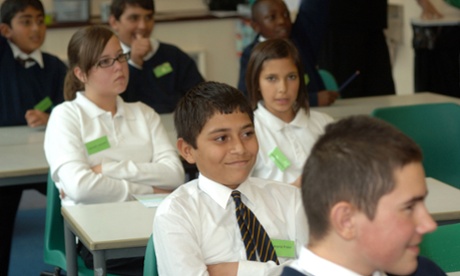
There are about 56 languages spoken in my school. A lot of our students are refugees, but we don’t really look at them in that way. A student’s background and where they come from simply isn’t important. Our approach is to help them to progress as quickly as possible, keeping them in mainstream lessons and developing their language skills.
They’re supported by the English induction teachers, who are fluent in a range of languages, monitoring their wellbeing and progress. All students are also buddied up with an older student who understands their experience. Extra English lessons are provided, as well as the opportunity to take a GCSE in English as an additional language.
We had an experience yesterday with a student called Tolo, who joined us recently. He has only been in school for two months but was saying that he wanted to leave. In this situation, we get the parents in and have a conversation. If there are difficulties, we form links with home straight away to make sure our expectations are clear.
But most refugee students see school as an opportunity. We rarely get problem children. We have very few incidents of people not talking to one another and although the children speak their own languages at home, we use English in school.
I currently teach an amazing student who started at the beginning of year 10 with very little English. Normally in this situation she’d be put in an alternative programme so she might do IGCSE in English as a second language. But after speaking to her parents, we thought that she should do her GCSEs. She managed to pass and got a B in English literature and a C in English language. Now she will go on to do her A-levels and head to university.
We don’t really care about students’ backgrounds in our school – everyone is different and bullying doesn’t happen much. Most students are incredibly open to new languages, religions and accents. This brings an energy to our academy. In other schools someone being different might be a big issue but it’s not for us.
All names of students and teachers have been changed.