It is no exaggeration to suggest that England have rarely, if ever, played a more important one-day series than that which begins against India here tomorrow. The world of cricket is shifting rapidly as the financial muscle of Indian Twenty20 takes hold and, if England falter badly now, they could regret it for a generation.
The implications of England's India tour extend far beyond the usual issue of national pride, important as this still is for players on both sides. They even extend further than the ability of England's most sought-after players, led by Kevin Pietersen, to prove their value to the watching Indian Premier League franchises.
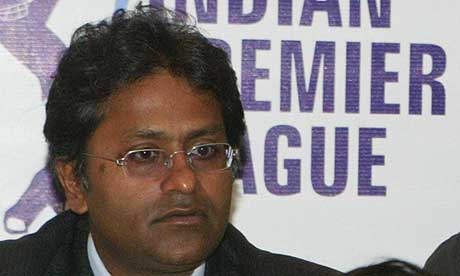
As David Collier, chief executive of the England and Wales Cricket Board, arrives in Mumbai this weekend for crucial negotiations with Lalit Modi, chairman of the IPL, every great England moment will bolster what is essentially a weak bargaining hand, just as a failed England tour would encourage India to dismiss them as inessential in their grand design.
It has long seemed inevitable the two countries will eventually stop posturing and cobble together a compromise for 2009 in which England players will be allowed a fortnight's grace to play in the IPL - enough for such as Andrew Flintoff and Pietersen to earn up to £200,000. But the real debate is about the future, a debate that should have ended months ago.
Modi's stances can blow with the wind but as early as May he expressed his desire for India and England to agree a window in which IPL could be played. "We are not opposed to bringing our IPL season forward by a few weeks," he said. "Similarly, if the ECB can move their international season back by a few weeks, then we can have a window. It would be a win-win situation for everybody."
All it will take is a brilliant England display in the next week, and the acclaim of the Indian media, for Modi to recognise that the IPL is not complete without them. But England's auditions in the past fortnight have brought a great crashing of the scenery: twice bowled out for under 100, firstly against the Stanford Superstars and then, on Tuesday, by a Mumbai 2nd XI.
Gandhi studied at Rajkot High School, and briefly returned as a young lawyer after passing his bar exams in London. His home now houses the Gandhi Smriti, a memorial museum. It would be beneficial if some of his teachings on mutual tolerance formed the framework for the Modi-Collier negotiations.
Before England left sheepishly for Rajkot yesterday, their coach, Peter Moores appropriately tried to rationalise their 124-run defeat by a Mumbai Cricket Association XI to the sound of barking dogs. Those dogs will howl until England rediscover the one-day form that overpowered South Africa 4-0 last summer.
But they will begin the series without Ryan Sidebottom, whose calf and achilles problems are likely to rule him out of the first two ODIs, and perhaps Stuart Broad, who required an injection in a knee that he slightly twisted while fielding last Sunday in the first Mumbai game.
Moores suggested that Broad would be missed as England have thrived through aggressive fast bowling in mid-innings, although that proved much less effective in India than England. Graeme Swann is the likely replacement for Broad, with Luke Wright preferred to Ravi Bopara.
"The Mumbai defeat has to be taken as a wake-up call," said Moores. "It's a clear indicator that we were not sharp enough or ready enough. To get bowled out for 98 is not good enough.
"But it is not a massive concern," he added. "The thing you need to get right is to be mentally on the right page by the time it gets to Friday. Though it was disappointing, it is not going to knock our confidence. We have a clear idea of how we want to play and we are going to test out how that goes in India."
India's Test defeat of Australia - an Australia bereft of experienced spin bowlers - has encouraged an exaggerated notion of their invincibility. Even a rudimentary analysis reveals that their one-day side is in transition. As well as the absent Sachin Tendulkar, who is resting out the first three games, there is no Rahul Dravid, Sourav Ganguly or VVS Laxman. Even if Tendulkar does return, he will not have played an ODI since March.
Murali Vijay, who made his Test debut as India won the series against Australia in Nagpur this week, is the newest of India's next generation; the Tamil Nadu batsman is also included in their one-day squad. But India have fast bowling problems of their own - Ishant Sharma could miss Rajkot with shoulder trouble.
India sneaked a 3-2 win in Sri Lanka in August but surprisingly a year has passed since their last home series when they beat Pakistan by an identical margin.
Line-ups
India from
Mahendra Singh Dhoni (capt), Virender Sehwag, Gautam Gambhir, Suresh Raina, Yuvraj Singh, Rohit Sharma, Yusuf Pathan, Harbhajan Singh, Zaheer Khan, Munaf Patel, Ishant Sharma, Pragyan Ojha, Rudra Pratap Singh, Virat Kohli, Murali Vijay
England probable
Kevin Pietersen (capt), Ian Bell, Matt Prior, Owais Shah, Paul Collingwood, Andrew Flintoff, Samit Patel, Luke Wright, Stuart Broad (or Graeme Swann), Steve Harmison, James Anderson.
TV Sky Sports 1, 3.30am tomorrow
India's new breed
Munaf Patel 25
Right-arm medium-fast bowler
His seven for 97 against England in March 2006 is the best debut by an Indian pace bowler. Since then he has added reverse swing to his arsenal and averages 30.00 in ODIs
Murali Vijay 24
Opening batsman
Will be something of an unknown quantity, given that his debut came in the second Test against Australia. The right-hander made 33 in his first Test innings and 41 in the next
Virat Kohli 20
Opening batsman
The Under-19 World Cup-winning captain featured in the 3-2 ODI series defeat of Sri Lanka in August. A right-hander, he averaged 31.8 in that series with a top score of 54
Mikey Stafford