June 22 stands out in history for major turning points in war, politics, science and sport. The date witnessed Germany's invasion of the Soviet Union during World War II, Napoleon's second abdication as French emperor and Galileo's forced recantation before the Inquisition. It also saw the signing of the G.I. Bill in the United States, a landmark measure for returning World War II veterans. In the world of sport, Diego Maradona's controversial "Hand of God" goal became one of football's most famous moments. Together, these events illustrate the lasting historical significance of June 22 across centuries.
217 BC: Battle of Raphia
Ptolemy IV of Egypt defeated Antiochus III the Great of the Seleucid kingdom at the Battle of Raphia. The clash was one of the most significant military encounters of its era and strengthened Egyptian power in the region.
168 BC: Romans defeat Macedonians at Pydna
Roman forces defeated the Macedonians under King Perseus at the Battle of Pydna. The victory ended the Macedonian monarchy and enabled Rome to annex Macedonia, expanding Roman influence and authority.
1533: Austria and Ottoman Empire sign peace treaty
Ferdinand of Austria and Ottoman Sultan Suleiman the Magnificent signed a peace treaty in Constantinople. The agreement marked an important diplomatic development between the two powers.
1555: Mughals reestablish control in Punjab
The Mughal army defeated the Suri Empire in the Battle of Sirhind in Punjab. The victory restored the Mughal Empire and strengthened the position of Sultan Humayun.
1633: Galileo forced to recant
Accused of heresy by the Inquisition, Galileo Galilei was compelled to withdraw his support for the Copernican system, which placed the Sun at the centre of the solar system. The episode became one of history's most famous conflicts involving science and religious authority.
1675: Royal Greenwich Observatory established
King Charles II established the Royal Greenwich Observatory in England. The institution later became one of the world's most important centres for astronomical observation and research.
1812: Laura Secord warns British forces
After learning of plans for a surprise American attack, Laura Secord travelled 32 kilometres to alert British troops. Her warning contributed to a British surprise victory at the Battle of Beaver Dams.
1814: First match at current Lord's Cricket Ground
The first cricket match at the present Lord's Cricket Ground was played between MCC and Herefordshire. The fixture marked the beginning of the venue's long association with the sport.
1815: Napoleon abdicates for a second time
Napoleon Bonaparte abdicated as French emperor for the second time. The decision marked the end of his final return to power and a major turning point in European history.
1847: Ring doughnut reportedly created
The first ring doughnut was reportedly created by Hanson Gregory. The claim became part of the history of one of the world's most recognisable sweet treats.
1864: Battle of Jerusalem Plank Road fought
Union forces attempted to capture a railroad supplying Petersburg, Virginia, from the south and extend their lines to the Appomattox River. Confederate forces blocked the effort, after which both sides settled into trenches during a lengthy siege.
1868: Arkansas rejoins the United States
Arkansas re-entered the United States. The development marked a significant political milestone for the state.
1900: Foreign community retreats in Peking
Amid unrest in China, most of the foreign community in Peking, including many Chinese Christians, withdrew to British compounds. The move reflected growing concerns over security.
1904: Chinese labourers arrive in South Africa
Chinese labourers arrived in South Africa following a severe labour shortage. The development addressed workforce demands in the country.
1911: King George V crowned
George V was crowned king of the United Kingdom and its territories. The coronation formally marked the beginning of his reign.
1925: Spain and France fight Morocco
Spain and France engaged in military conflict involving Morocco. The action reflected continuing regional tensions during the period.
1934: John Dillinger labelled Public Enemy Number One
John Dillinger was informally designated America's first Public Enemy Number One. The title reflected his notoriety and prominence in criminal investigations.
1940: France surrenders to Nazi Germany
France surrendered to Nazi Germany during World War II. Under the terms that followed, the northern half of the country came under occupation while the south became Vichy France, a Nazi client state. The event reshaped the course of the war in Europe.
1941: Germany launches invasion of Soviet Union
Germany broke the German-Soviet Nonaggression Pact of 1939 and launched an attack on the Soviet Union during World War II. The invasion opened a major new front in the conflict and became one of the most consequential military operations of the war.
1941: June Uprising begins in Lithuania
The June Uprising started in Lithuania, leading to the collapse of Soviet occupation. The territory, however, was soon overtaken by advancing German forces.
1944: Roosevelt signs G.I. Bill
US President Franklin D. Roosevelt signed the G.I. Bill, legislation designed to compensate returning members of the armed services for their efforts during World War II. The measure became one of the most significant pieces of wartime legislation in the United States.
1946: Gandhi criticises treatment of Indians in South Africa
Speaking at a prayer meeting in New Delhi, Mahatma Gandhi called on the South African government to end what he described as "hooliganism" by Whites. His remarks highlighted concerns about racial treatment in the country.
1961: Beatles record songs in Hamburg
The Beatles recorded several songs in Hamburg, Germany, including "Ain't She Sweet," "Cry for a Shadow," "When the Saints Go Marching In," "Why," "Nobody's Child" and "My Bonnie."
1962: Hovercraft completes first test flight
The first test flight of a hovercraft took place. The achievement marked a notable development in transportation technology.
1984: Virgin Atlantic begins operations
Virgin Atlantic Airways commenced operations with a flight from Gatwick to Newark. The launch marked the start of the airline's commercial service.
1986: Maradona scores 'Hand of God' goal
During a FIFA World Cup quarterfinal against England, Diego Maradona scored the controversial "Hand of God" goal. The referee mistakenly believed the ball had struck his head rather than his hand. The goal helped Argentina win the match, and the team later secured its second World Cup title.
1990: Nelson Mandela addresses UN committee
Nelson Mandela addressed the United Nations Special Committee against Apartheid in New York. He stated that nothing had occurred in South Africa to change the position of the ANC.
2001: The Fast and the Furious debuts
The Fast and the Furious premiered in theatres across the United States. The crime drama was set in the underground street-racing scene of Southern California.
People born on June 22
1949: Meryl StreepMeryl Streep was born. She later won three Academy Awards and gained widespread popularity through films including Mamma Mia! and The Devil Wears Prada .
Days celebrated on June 22
National Kissing DayNational Kissing Day recognises and celebrates the act of kissing.
National Take Your Cat to Work Day
The observance encourages people to bring their cats to workplaces where appropriate.
International Being You Day
International Being You Day promotes self-expression and individuality.
World VW Beetle Day
World VW Beetle Day celebrates the iconic Volkswagen Beetle and its enthusiasts.
National Stupid Guy Thing Day
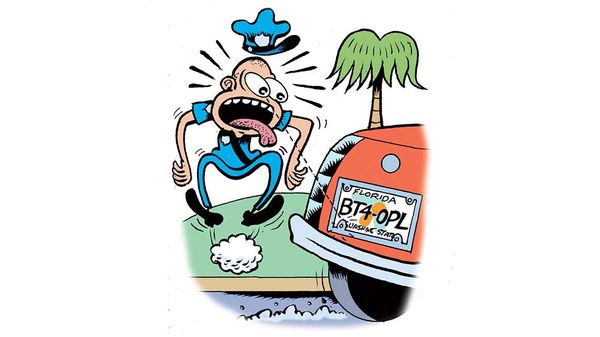
National Stupid Guy Thing Day playfully highlights harmless mistakes and amusing mishaps often associated with everyday life.
Positive Media Day
Positive Media Day encourages greater attention to uplifting and encouraging stories amid the negative news often seen in media.
B Kinder Day
B Kinder Day honours the life of Billie Kinder and encourages acts of kindness toward friends, family and communities.