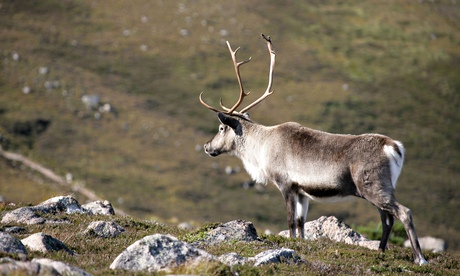
Nothing can prepare you for an encounter with reindeer on the open hill, as I was fortunate to have last week. As always, they just seemed to blend in with the hillside, which is surprising with such a large animal (the bulls can stand a metre high at the shoulder). This time I missed them on the way up and it was not until I was at about 600m and scanned all around with binoculars that I realised they were way below me. For some reason the herd was strung out in a long line – I counted 46 of them and admired the size and variation in their complex-looking antlers.
There has been a great deal of discussion about reintroducing once-native mammals such as beavers, which were extinct in Britain since the mid 18th century but have now been reintroduced to Argyll – and even more over the return of the wolf. Raptors such as the red kite and the sea eagle have been successfully reintroduced, despite illegal persecution of them, particularly in one part of the Highlands, around the Black Isle.
Intriguingly, the re-establishment of reindeer in the Cairngorms is rarely mentioned – even in some books devoted to the subject. In fact they were re-introduced as long ago as 1952, having been brought in from a domesticated Swedish herd from Lapland. The Cairngorm herd is now kept stable at around 130 to 150 animals, all roaming freely in the mountains.
Some of the bulls I saw had already cast their huge antlers, but the cows will retain theirs until the spring. This enables them to clear the snow for themselves and their calves, and defend their feeding areas. Both antlers and hooves are useful for clearing snow from food plants, hence their North American name, caribou, which means shoveller. Their feet are well adapted to snow – with broad hooves splayed to take their weight.
There was only one thing missing from the picture – and that was the snow. At this time of year there should have been plenty, especially where the reindeer and I were, on the northern slopes of the hills.