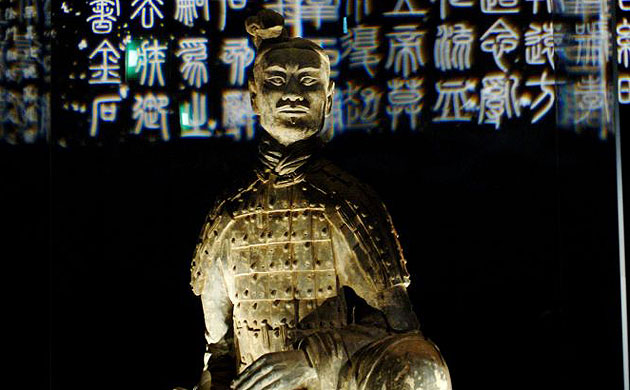
A kneeling archer, one of many soldiers designed to protect Emperor Quin in the afterlife. Construction of his mausoleum began in 246 BC, and is believed to have taken 700,000 craftsmen nearly 40 years to complete.Photograph: Linda Nylind/FreelanceA group of warriors. Altogether the exhibition includes 120 different objects - from the 8,099 figures now on display at the Teracotta Army Museum, only one, a kneeling archer, survives intact.Photograph: Linda Nylind/FreelanceThe heads of an officer and an infantryman stand alongside each other. Quin (r.221-210 BC) is one of China's most important rulers. He unified the country, and standardised its currency and script - so making China the oldest surviving political entity in the world.Photograph: Linda Nylind/Freelance
A warrior with horses. Villagers in the province of Shaanxi discovered the Terracotta Army by chance in 1974 while drilling for a water well.Photograph: Linda Nylind/FreelanceA selection of weapons on display. The exhibition focuses on Emperor Qin's military prowess, but also on his political achievements.Photograph: Linda Nylind/FreelanceTwo civil officials and a strongman.Photograph: Linda Nylind/FreelanceA close view of some of the exhibition's stone armour.Photograph: Linda Nylind/FreelanceA profile of one of the warriors. Every one of the life-size figures is unique, with different facial characteristics, hairstyles and uniforms.Photograph: Linda Nylind/FreelanceFour bronze bells, also part of the exhibition. Despite the riches that have already been recovered, the First Emperor's tomb itself still remains sealed and could contain even greater treasures.Photograph: Linda Nylind/FreelanceA strongman (centre), an acrobat (right) and two civil officials (left). As well as soldiers, Qin commissioned figures of both performers and bureaucrats to continue his reign into eternity.Photograph: Linda Nylind/Freelance
Sign up to read this article
Read news from 100’s of titles, curated specifically for you.



,-2799.jpg)