A theoretical business model adopted by the justice secretary to employ on-call solicitors has been selected with “cavalier disregard” for fairness and real-world experience, the high court has heard.
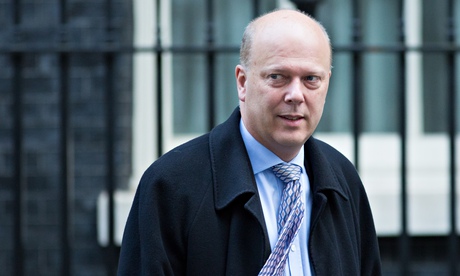
Chris Grayling’s backing for the scheme proposed by the advisers KPMG will result in a “headlong and disastrous rush” towards a loss-making market in which lawyers lose their jobs and defendants are deprived of adequate representation, Jason Coppel QC told judges.
The claims were made at the opening of a three-day judicial review challenge of Ministry of Justice proposals to reduce the number of duty criminal solicitor contracts attending magistrates courts and police stations in England and Wales from 1,600 to 527.
The London Criminal Courts Solicitors’ Association (LCCSA), the Criminal Law Solicitors’ Association (CLSA) and the Law Society, which have brought the action, fear the plans will lead to a sharp increase in miscarriages of justice.
“Everyone accepts that the number [of criminal solicitors] will have to be reduced,” Coppel, representing the LCCSA, told the court. “There are too many firms chasing too little work [but] ... [Grayling] has selected a number of contracts and a timescale which forces a headlong and dangerous rush towards a radically different market against a background of weak finances and substantial fee cuts.
“The results will be disastrous for many hardworking and dedicated practitioners. Large numbers of firms will go out of business. The ability of clients to choose their lawyer will be seriously diminished. Access to justice will be denied.”
There had been “cavalier disregard to fairness and cavalier disregard for the real-world experience of law firms”, Coppel added. Officials had failed to recognise and failed to explain to the justice secretary that KPMG’s model anticipated firms which needed to invest or operate as a consortium – most of those involved – would be making a loss.
Large numbers of solicitors will lose their jobs and be replaced by inexperienced paralegals or those just out of law college. “It can’t be a good thing for the quality of legal advice individuals will receive. Our complaint is that [the justice secretary] effectively adopted the first part of the KPMG model without doing any serious investigation into the important qualifications.”
Grayling has suffered at least seven courtroom defeats since last summer over policies aimed at cutting legal aid, reducing compensation for asbestos victims and banning books in prisons.
The Legal Aid Agency, which operates the contracts, expects the criminal law market to undergo a process of mergers and consolidation, resulting in significant savings. Solicitors’ firms, it maintains, will combine to enjoy economies of scale that compensate for the 17.5% cuts in fees being introduced in criminal cases.
Dinah Rose QC, for the CLSA, told the court: “Firms that do not succeed in obtaining a duty provider contract will mostly be forced to exit the criminal legal aid market or merge. Several hundred firms will probably [leave]. If the only firms that survive are those with a duty provider contract, there will be no competition in future rounds.
“Transition costs and the availability of funding for those costs were excluded from the KPMG model … The difficulty is that [the justice secretary’s] model requires large-scale market consolidation at great speed, the cost of which for smaller firms has not been considered.”
In his submissions to the high court, Martin Chamberlain QC, for the Ministry of Justice, said: “It is widely agreed … that the market for criminal legal aid services is inefficient and unsustainable in its current form.
“There are too many providers chasing too little work … To accommodate the [17.5% savings], some market restructuring has to take place. This means that some firms will cease trading or cease to do criminal legal aid work and others will become larger.
“The aim was to bring about the market consolidation necessary to reduce costs and deliver the savings needed.” There had been widescale consultation within the profession, he added. By November last year, Grayling had concluded that the information before him, “while not perfect, was sufficient for a decision to be made”.
The Law Society president, Andrew Caplen, said: “Having proper legal representation when accused of a crime is a fundamental right for everyone. The Law Society sought this judicial review because we believe this basic right is under threat. We must protect the right to an effective, publicly-funded defence system to prevent the risk of a sharp increase in miscarriages of justice.”
The hearing continues.