Get all your news in one place.
100’s of premium titles.
One app.
Start reading
The Guardian - UK
The Guardian - UK
Sport
Photographs: Kate Peters/INSTITUTE. Interviews by Becky Barnicoat, Patrick Kingsley and Emine Saner

Olympic Bodies: British Athletes - in pictures

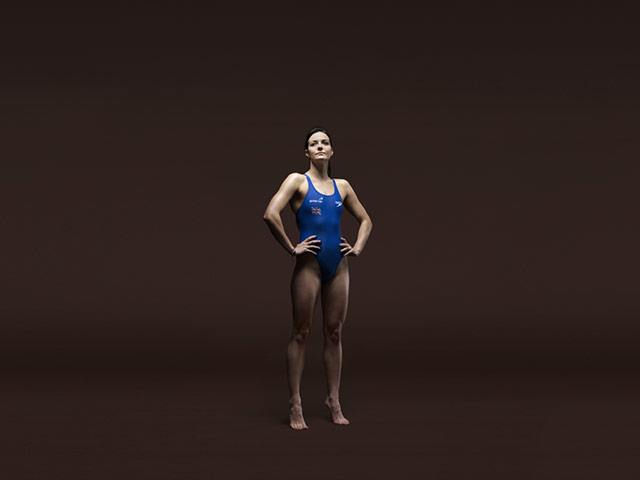
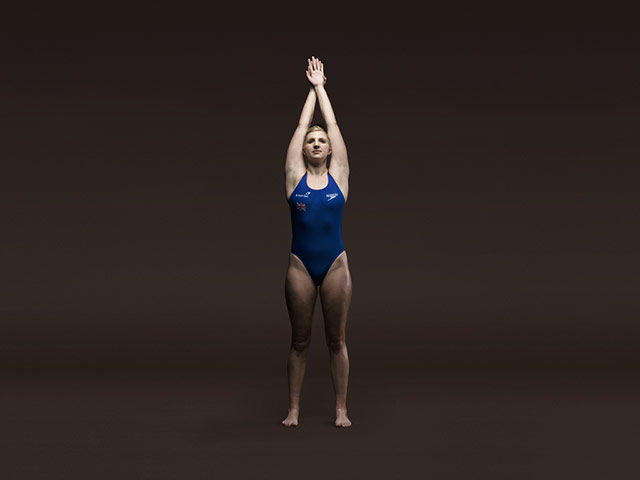
Olympic Bodies: British Olympic Athletes Rebecca Adlington
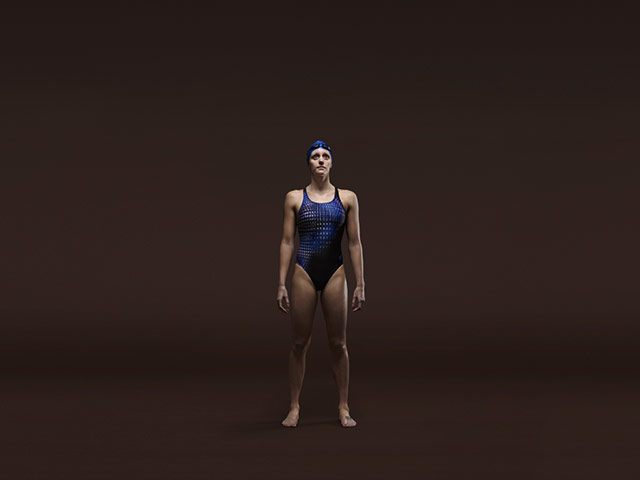
Rebecca Adlington, 23: Swimmer, 2008 Olympic 400m and 800m freestyle champion, 180cm, 72kg. “I love the feeling of being in water. Out of the water, I feel a bit lost; I don’t fit in ­anywhere. Women swimmers peak young. It’s such a hard sport that your body shuts down when you get to your late 20s and you can’t do it any more. It’s such a regimented lifestyle that your brain shuts down as well. I’m 23, my body has settled and it’s a lot harder for me to lose weight. None of us smokes, we eat healthily and train 10 times a week, but my body’s going, ‘Baby!’ and I’m like, ‘No, swimming!’ ”
Photograph: Kate Peters/INSTITUTE
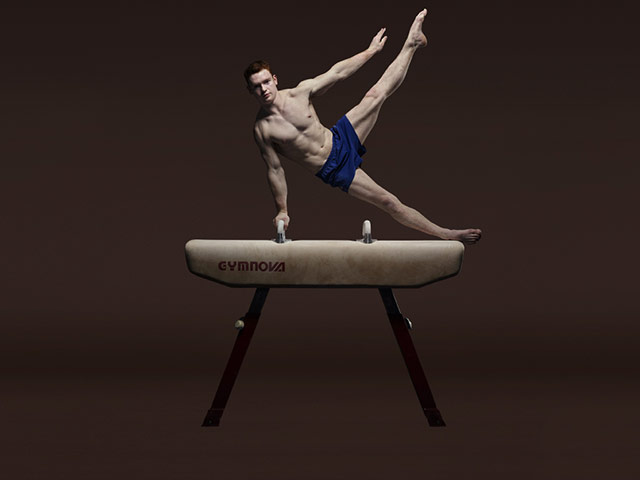
Olympic Bodies: British Olympic Athletes Daniel Purvis British Olympic Athletes
Daniel Purvis, 21: Gymnast, European gold medallist 2012, 170cm, 63kg. “When you’re a young gymnast, you see the older boys ­training and it spurs you on. They look like Rocky, and you want to get your body bigger. I train six days a week and watch my diet; if you’re packing a few more grams, you’re not going to be able to hold your positions. Some of my friends live in the pub, so I do put them to shame a little bit – but then they’re about 6ft taller than me, which isn’t the best.”
Photograph: Kate Peters/INSTITUTE
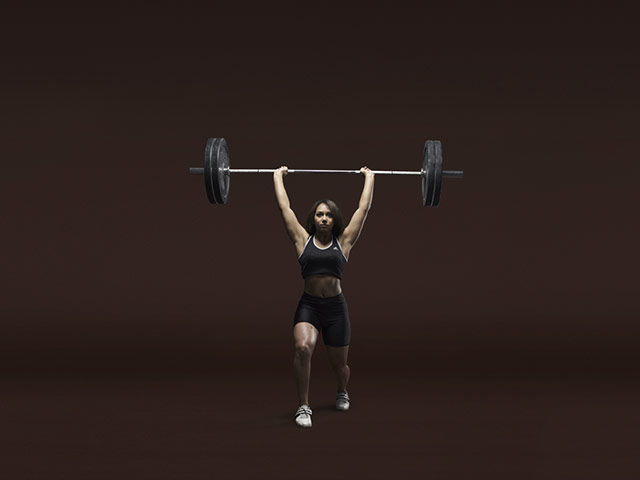
Olympic Bodies: British Olympic Athletes Zoe Smith
Zoe Smith, 18: Weightlifter, Commonwealth bronze medallist, 159cm, 61kg. “I’ve been lifting since I was 12. You can probably tell by my legs and bum. I’ve had lots of injuries: a disc bulge in my back, a fraying tendon in my shoulder and all weightlifters have dodgy knees. I hope it’s not permanent. Sometimes I feel a bit strange. My friends are just 17- and 18-year-old girls. They don’t have any muscles. I feel out of place. Maybe one day I’ll look normal again. I eat very little. I sit at around 61kg but I’m trying to get down to the 58kg class. I’ve got the metabolism of a dead person, so I’m calorie-counting every day.”
Photograph: Kate Peters/INSTITUTE
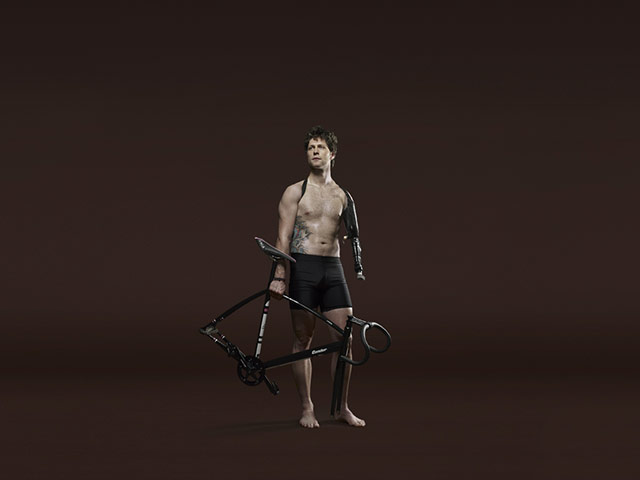
Olympic Bodies: British Olympic Athletes Jon-Allan Butterworth
Jon-Allan Butterworth, 26: Cycling, 2011 world championship gold medallist, 183cm, 75kg. “I was serving in the RAF in Iraq when I got hit by shrapnel from a rocket attack and lost my arm. I accepted it quickly. I was determined to get well and find a new normality. I found cycling through a Paralympic talent day. My body has completely changed. Through cycling, my legs have got bigger and my top half has shrunk. I now have a cyclist’s physique, and with that comes acceptance from other cyclists. I’m one of them, rather than someone who has lost an arm and rides a bike.”
Photograph: Kate Peters/INSTITUTE
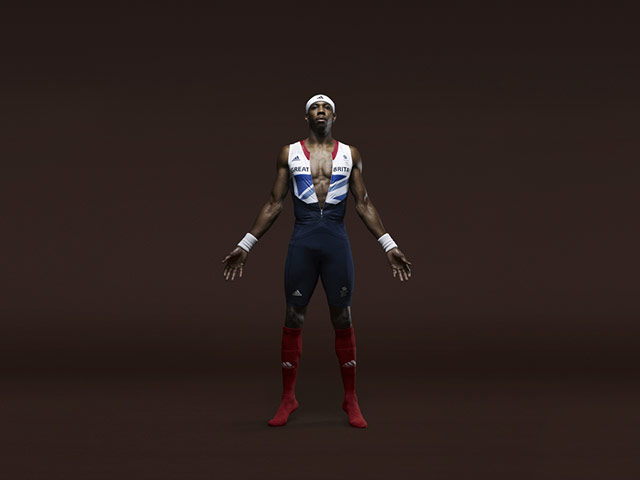
Olympic Bodies: British Olympic Athletes Phillips Idowu
PhillIps Idowu, 33: Triple jump, won gold at the Commonwealth, European indoor, world indoor and IAAF world championships, silver at Beijing Olympics, 193cm, 88kg. “I can wear whatever jewellery I like when I compete, and I do. Moving my piercings around is an easy way to change my appearance without doing anything too drastic. I used to have dyed red hair, but I don’t dye it much nowadays. Age and maturity are catching up with me. Now I think my performance should distinguish me. People should look at me because I’m on top of the podium, not because I’m the guy with the funny-coloured hair.”
Photograph: Kate Peters/INSTITUTE
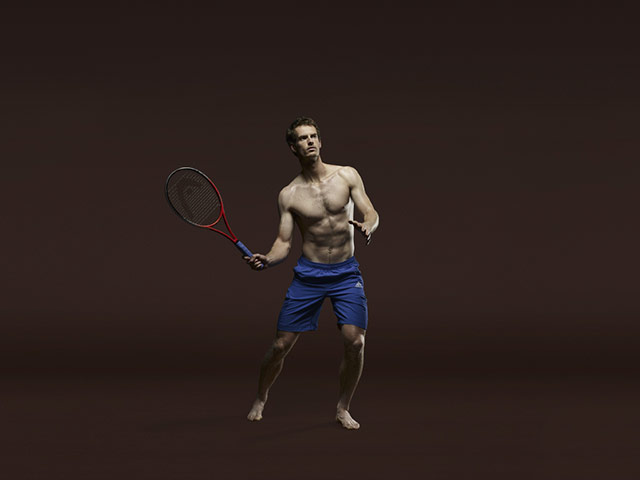
Olympic Bodies: British Olympic Athletes Andy Murray
Andy Murray, 25: Tennis, world No 4, 190cm, 83kg. “I feel much better about my body than when I first started playing on the men’s tour. I always had big legs when I was growing up, but I had a small upper body, so I had to work on that. I was born with good legs. They’re my best physical asset – I’ve always moved well on the court. My mum wouldn’t like me saying this, but she had big legs on her, strong calves, and I probably get that from her.”
Photograph: Kate Peters/INSTITUTE
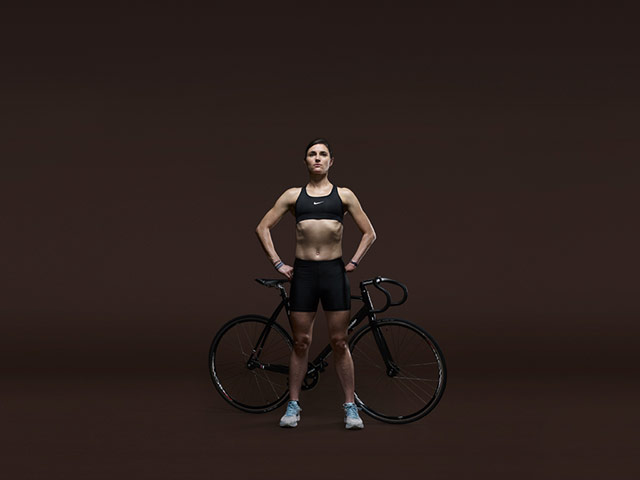
Olympic Bodies: British Olympic Athletes Victoria Pendleton
Victoria Pendleton, 31: Cyclist, 2008 Olympic gold medallist, sprint, 165cm, 61.5kg. “In the early days, people assumed I was an endurance athlete rather than a sprinter, because I was too slight. People would mock me because I was small and puny compared with the other more muscular girls. I took a lot of flak from people who thought I was in the wrong event. Then I started winning and it was like: ‘I showed them.’ Most of the exercises we do in the gym are targeted on getting my thigh and bum muscles as big as possible. I don’t mind. My body is the tool of my job, and my quads and glutes work the hardest. In fact, when my physio said my legs were looking bigger the other day, I felt good about it. I was like, ‘Yes! It’s working!’ ”
Photograph: Kate Peters/INSTITUTE
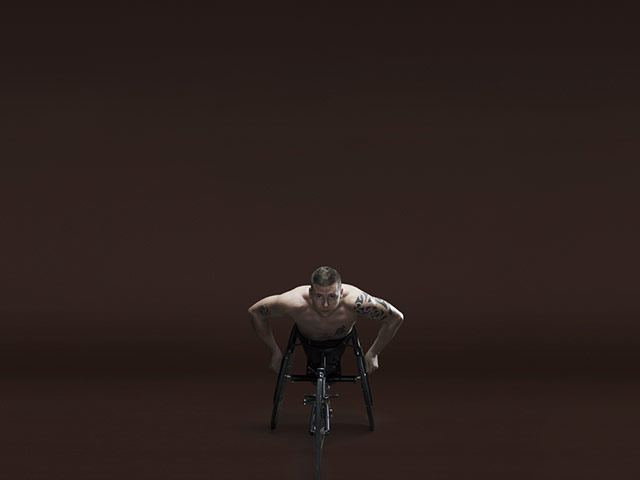
Olympic Bodies: British Olympic Athletes David Weir
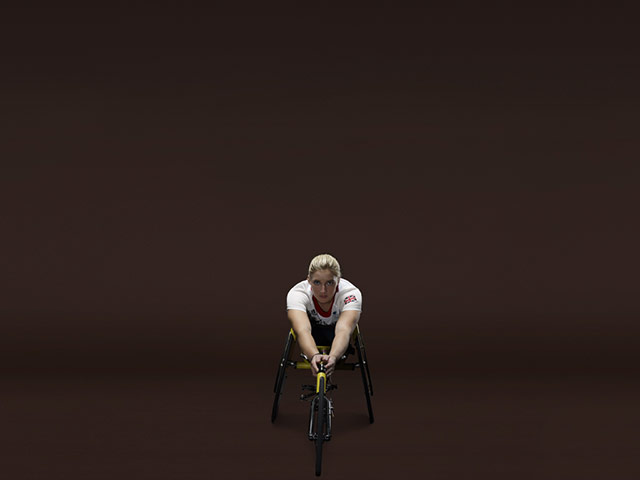
David Weir, 33: Wheelchair racer, 2008 Paralympic double-gold medallist, 64kg. “Mental strength is greater than physical strength. I proved that in the 2011 world championships. I was beaten all season and then got a shoulder injury and had six weeks off. I shouldn’t have won three golds, but I was mentally stronger than the rest of them. I pulled it out of the bag. I have lots of willpower and I don’t like losing. That’s why I’m a winner. That’s what drives me every day: failure. I don’t want to fail.”
Photograph: Kate Peters/INSTITUTE
Olympic Bodies: Olympic Bodies British Olympic Athletes
Jenna Randall, 23: Synchronised swimmer, 2006 Commonwealth silver medallist, 1.73m, 54kg. “Some people get obsessed with their bodies, but I’m happy in my skin. I’ve got a very athletic physique. My biggest fear is what happens after I retire. I obviously won’t be training as much and I worry I’ll get flabby.”
Photograph: Kate Peters/INSTITUTE
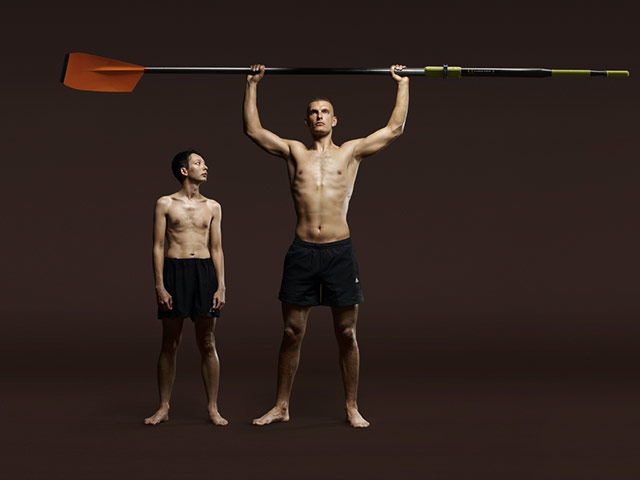
Olympic Bodies: British Olympic Athletes Phelan Hill and Mohamed Sbihi
Phelan Hill, 32: Cox, 2011 world cup series silver medallist, 172cm, 55kg. “I keep my weight down at 55kg, the official minimum weight for a cox. While the rowers eat 6,000 calories a day, I’m on 1,000-1,500. I live in a world where everyone is over 6ft – including the girls – so I spend my life looking up. It’s like Land Of The Giants. When I move back into the real world, I’m like, ‘Oh, wow – I’m not the smallest person.’ ”
Mohamed Sbihi, 24: Rows at No 5 in men’s eight, 2012 world cup series silver medallist, 203cm, 104kg. “What happened to Fabrice Muamba reminded me that while what we’re doing is special, it comes with risks. My training partner died three years ago in a similar incident. Rowing is self-sacrificing. The coaches say, ‘You’re going to pass out before you die’ and we’re always striving to push to that limit where we don’t know if it’ll go all dark.”
Photograph: Kate Peters/INSTITUTE
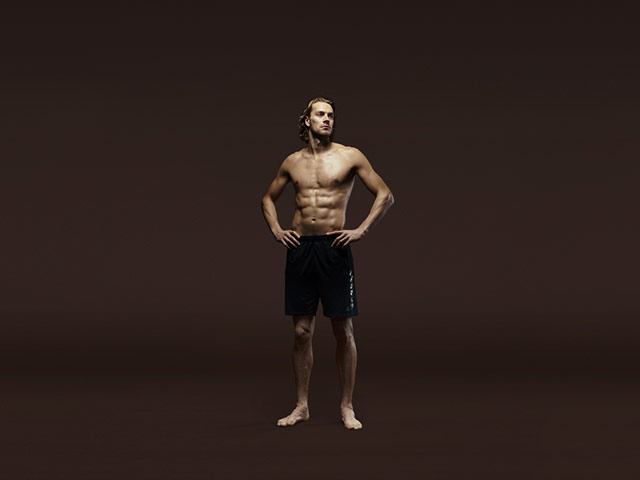
Olympic Bodies: British Olympic Athletes
Chris Tomlinson, 30: Long jump, 2010 European athletics championships bronze medallist, 198cm, 85kg. “Being a long jumper is the closest humans can get to flying without aid. You’re up in the air and you’re like, ‘Woah-woah-woah-woah-woah!’ It’s only for a second, but it feels like a long time. I’ve had some dodgy landings and, being a bloke, it can certainly hurt. Once, in Barcelona, the sandpit hadn’t been dug properly. I took off, jumped 8m 20cm and landed with my man’s bits right underneath me. I got out of the pit and was literally bent in two, badly winded. I didn’t put on a brave face, I just felt the pain.”
Photograph: Kate Peters/INSTITUTE
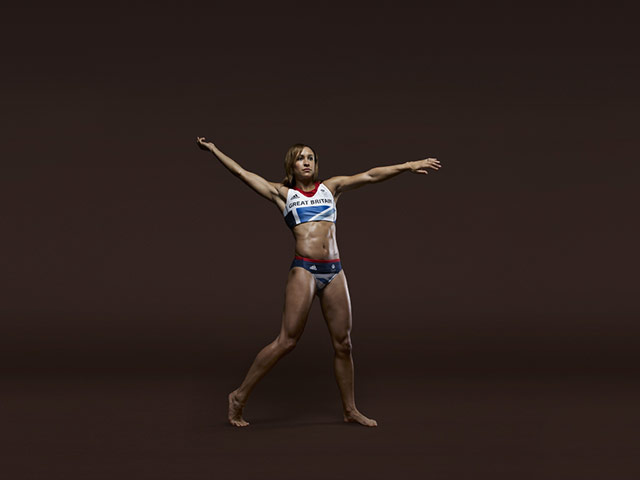
Olympic Bodies: British Olympic Athletes Jessica Ennis
Jessica Ennis, 26: Heptathlon, European, world and world indoor champion, and British record holder, 165cm, 57kg. “Heptathlon is one of the most demanding sports: you have to be fast, explosively strong, have endurance, great jumping and great throwing ability. I picked up three stress fractures in my right foot just before the Beijing Olympics. Afterwards, my coach decided I would change take-off legs for the long jump. At first it felt impossible – like writing with your right hand and changing to your left. It was so alien. I had to learn the whole rhythm and co-ordination of the other side of my body. Now I can’t imagine taking off on my right leg, and I’ve jumped farther than before.”
Photograph: Kate Peters/INSTITUTE
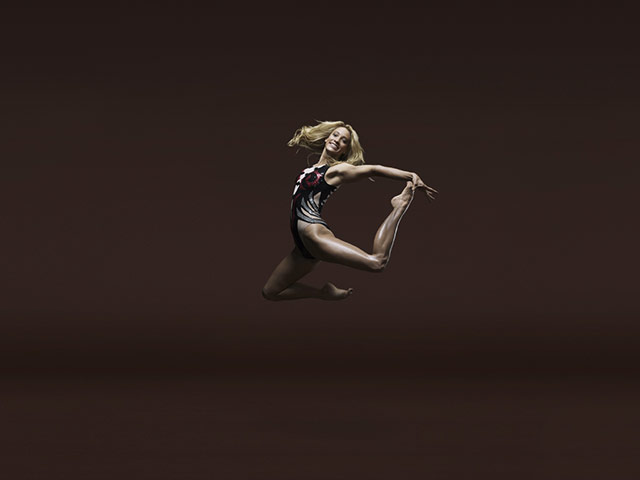
Olympic Bodies: British Olympic Athletes Katherine Driscoll
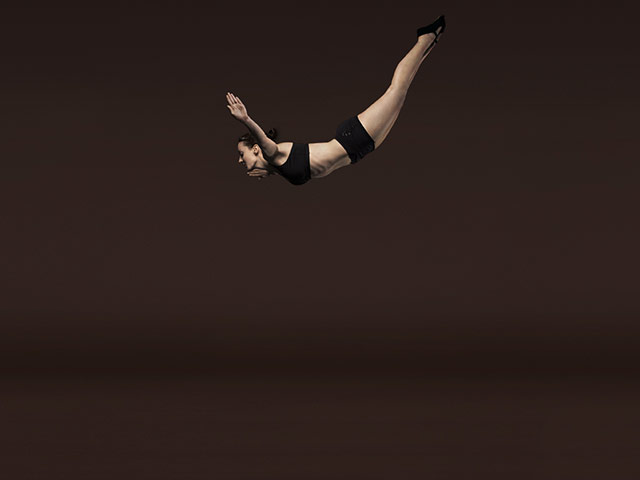
Katherine Driscoll, 26: Trampoline gymnastics, British champion, 167cm, 55kg. “The trampoline is an unsteady surface, so we can never fully control it. We focus on core strength, and learn to control our bodies with experience. I’ve only had one big accident. I landed on the side of the trampoline, on the metal frame. I had no idea in the middle of the move that I was going to be hitting the side. I just remember feeling loads of pain shoot up my neck, then on the rebound I kneed myself in the chin. I was taken to hospital on a stretcher. Luckily it was only bad whiplash.”
Photograph: Kate Peters/INSTITUTE
Olympic Bodies: British Olympic Athletes Shelly Woods
Shelly Woods , 26: Wheelchair racer, 1500m, 5,000m and marathon, 2008 Olympic silver and bronze medallist, 1500m and 5000m, 162cm, 54kg. “I was a very sporty youngster. Then one day I was climbing a tree when the branch snapped. I fell 20ft and broke my back, damaging my spinal cord and becoming paralysed from the waist down. I could have sat around feeling sorry for myself, thinking my life was over. But it wasn’t – I was only 11. In hospital I saw people worse off than me. One lady had tripped over a phone wire when she was answering the door and couldn’t move from the neck down. That put things in perspective. I’ve gone on to win two medals as a Paralympic wheelchair racer.”
Photograph: Kate Peters/INSTITUTE
Olympic Bodies: British Olympic Athletes Nicola Adams
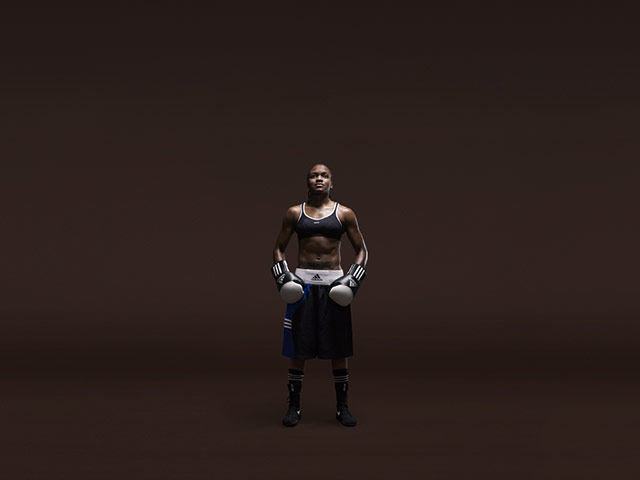
Nicola Adams, 29: Boxer, flyweight, European champion 2011, 160cm, 51kg. “When I’m fighting, I think about every move before I do it. It’s taken a lot of years to develop my skills. Your thinking and reaction time has to be super-quick. It’s almost like a game of chess: trying to get your opponent to do things, trying to make them react. Boxing is not impulsive. Every action has a reaction.”
Photograph: Kate Peters/INSTITUTE
Olympic Bodies: British Olympic Athletes Liam Tancock
Liam Tancock, 27: Swimmer, 2011 world champion, 183cm, 82kg. “The biggest giveaway that I’m a swimmer is my hair. Chlorine’s not great for your skin or hair, and mine’s pretty dead at the minute. We have to look after ourselves. We moisturise to make sure our skin doesn’t dry out and flake off, and we wash and condition our hair every time we get out of the pool. I tend not to notice if people are showing me attention because of my physique. I’m surrounded by swimmers who are in great shape, so it’s just normal for us.”
Photograph: Kate Peters/INSTITUTE
Olympic Bodies: British Olympic Athletes Francesca Halsall
Francesca Halsall, 22: Swimmer, 2010 European champion, 100m freestyle and 4x100m medley, 171cm, 59kg. “You can’t really look that pretty in a swimming hat and goggles, with wet hair and no make-up, so all the girls on the team do our nails. Before the race it’s like a nail bar. It takes our minds off things and makes us feel a bit more girly. My ankle tattoo is the British lion. I had surgery on that ankle after the last Olympics – I fell over running, tore one of the ligaments and had to have the joint cleaned out and the ligament reattached. It was not very fun, but I knew that if I wanted to put myself in the best position for 2012, I had to leave no stone unturned. My tattoo reminds me why I had surgery, and where I want to be at this year’s Games.”
Photograph: Kate Peters/INSTITUTE
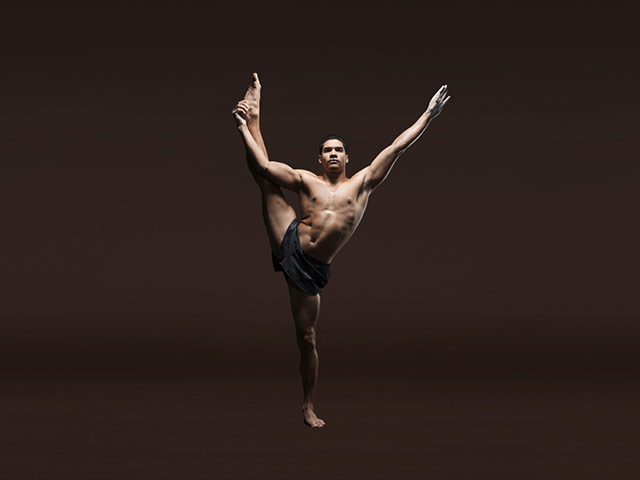
Olympic Bodies: British Olympic Athletes Louis Smith
Louis Smith, 23: Gymnast, bronze medallist at Beijing Olympics, 179cm, 76kg. “Doing gymnastics since the age of four has stunted my growth. I’ve got really big hands, long arms and big feet. I think I was meant to be taller than 5ft 9in, but I’ve spent most of my energy training instead of growing, so the sport has compacted me. We don’t appreciate how sculpted and defined our bodies are as athletes, but we don’t train 32 hours a week just to have a nice body.”
Photograph: Kate Peters/INSTITUTE
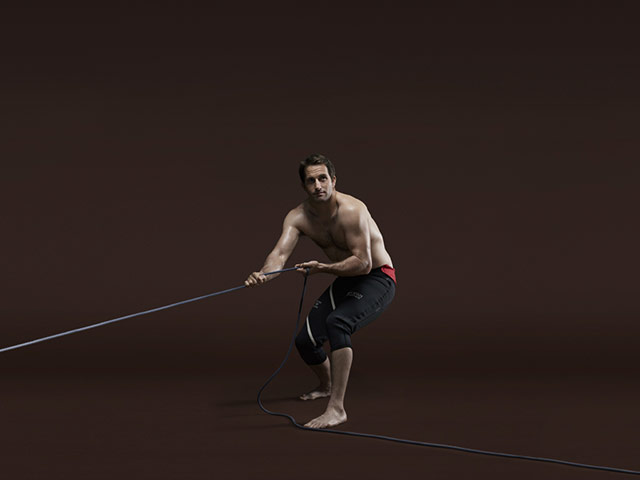
Olympic Bodies: British Olympic Athletes Ben Ainslie
Ben Ainslie, 35: Sailor, three-times Olympic gold medallist, 183cm, 91kg. “Sailing a boat is like wrestling a shark. Imagine you hook a big fish and it’s struggling, changing direction, constantly moving. The legs take a lot, because you’re suspended out of the boat, then you’re using your upper body, arms and back to work the sail. The whole body takes the load. You also need to make complex decisions. You’re thinking about the natural forces of the wind and waves. If you get the technique wrong, all of a sudden things become a lot heavier. I work hard in training to make sure that my brain will still function while my body is under a lot of stress.”
Photograph: Kate Peters/INSTITUTE
Olympic Bodies: British Olympic Athletes Keri-Anne Payne
Keri-Anne Payne, 24: Open water swimming, 10km, two-time 10km open water world champion and 2008 Olympic silver medallist, 177.4cm, 64kg. “Open water swimming can be quite physical. There’s a pack of 30-40 girls all trying to swim to the same point. You can’t see through the water and you’ve got animals to deal with. I was stung by around 5,000 jellyfish on my second ever open water race. My general tactic is to get out in front because I don’t like the fighting. I’ve been hit in the goggles and had a bloody nose. The last 1,000m are so painful. I just have to be mentally tough.”
Photograph: Kate Peters/INSTITUTE
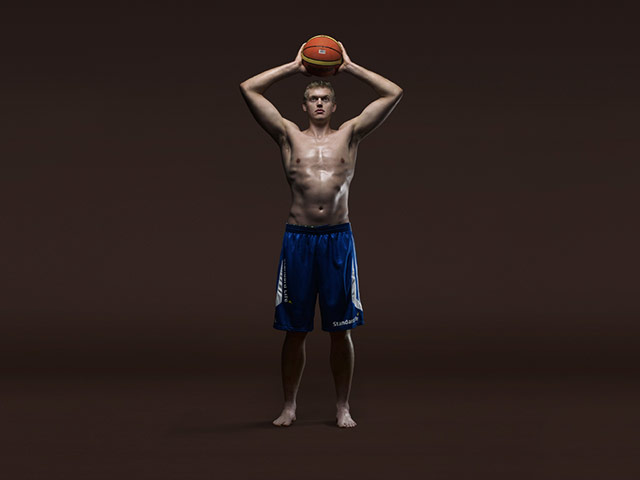
Olympic Bodies: British Olympic Athletes Daniel Clark
Daniel Clark, 23: Basketball, member of the first GB basketball team to qualify for the Olympics since 1948, 210cm, 110kg. “I’ve always been tall. I was a tall baby, a tall kid. Dad was a basketball coach and Mum played, so I always had a basketball in my hand. It just came naturally to shoot it at the hoop. For a typical meal, I might have a kilo of meat and still be able to have dessert. It’s nice knowing I can burn it off. My parents must be happy they don’t pay to feed me any more.”
Photograph: Kate Peters/INSTITUTE
Olympic Bodies: British Olympic Athletes Anthony Joshua
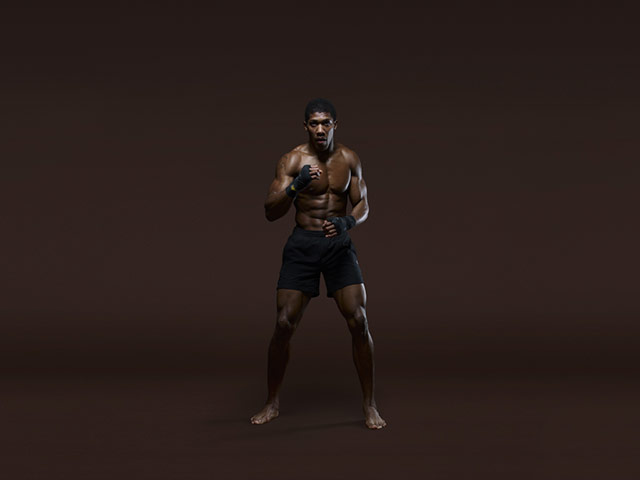
Anthony Joshua, 22: Super heavyweight boxer, 2011 amateur boxing world championships silver medallist, 198cm, 106kg. “My left hand is my best advantage. The long, stiff, powerful jab. We’re warriors. It’s a fighting sport, a macho man’s sport. Before a match, my opponents will be walking around looking moody at the world. I don’t try to intimidate outside the ring. I’ll have a laugh with my team-mates. Then, once that bell goes, I’ll let my fists do the talking.”
Photograph: Kate Peters/INSTITUTE
Olympic Bodies: British Olympic Athletes Shanaze Reade
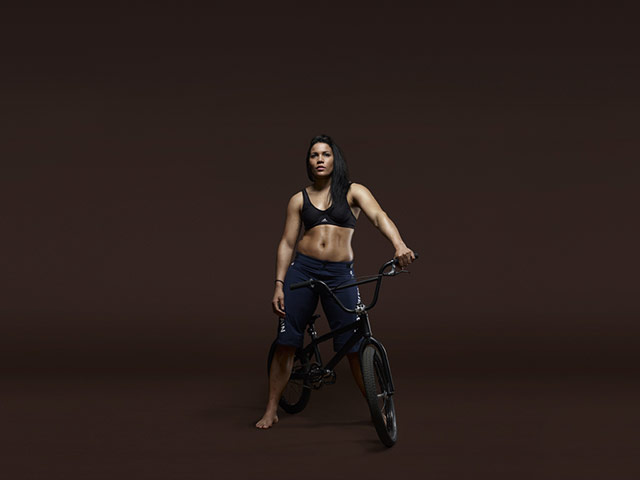
Shanaze reade, 23: BMX racer, five times world champion, 171cm, 77kg. “When I race, I feel I have superpowers. Something takes over and the bike becomes part of who I am. I think of myself more as a machine than a human. At the Olympic test event last year, the roar from the crowd made me feel like I was floating around the course, that I wasn’t even using my muscles. I remember ­breaking the world record, coming over the finish line and ­thinking, ‘How was that a world record? I feel like I haven’t even ­pedalled.’ ”
Photograph: Kate Peters/INSTITUTE
Olympic Bodies: British Olympic Athletes Richard Whitehead
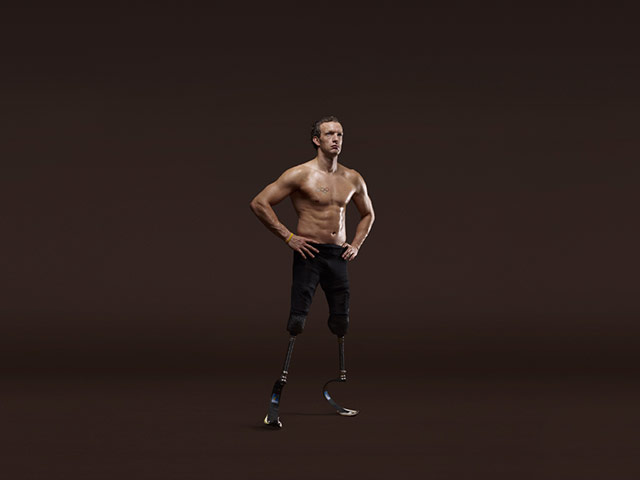
Richard Whitehead, 35: Runner, 200m Paralympic world record holder, 185cm, 69kg. “I was born with no legs from the knees down. Prosthetics in the early days were quite heavy and non-functional, but my parents saw sport as an avenue for me to break down barriers, so I learned to swim when I was four. I’ve since swum for Great Britain, competed in sledge hockey at the 2006 winter Paralympics in Turin, and hold the 200m Paralympic world record for running.”
Photograph: Kate Peters/INSTITUTE
Olympic Bodies: British Olympic Athletes Mo Farah
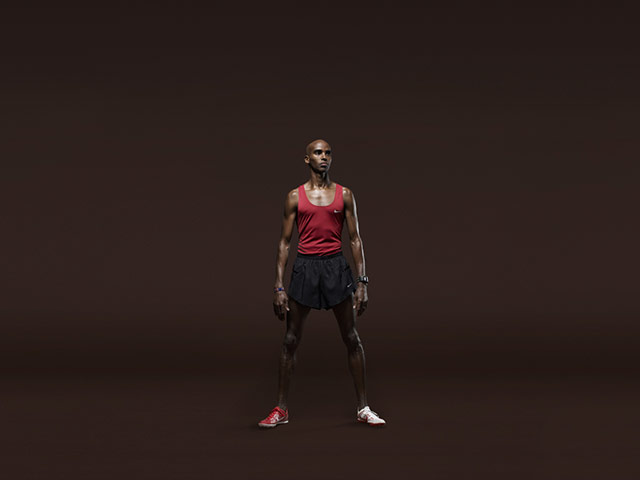
Mo Farah, 29: 5,000m and 10,000m runner, 5,000m world champion, 172cm, 58kg. “When I was younger, I was chubby. This is the leanest I’ve been. Running 10,000m, an extra kilo will take a lot out of you. But if you’re underweight, you won’t have any power. You have to be just right. On average, I run 100 to 120 miles a week. Naturally, that will have an impact; we’re pushing our bodies to the absolute limit. The back and knees are most likely to have problems, and most athletes will find they become stiffer after years of ‘running abuse’.”
Photograph: Kate Peters/INSTITUTE
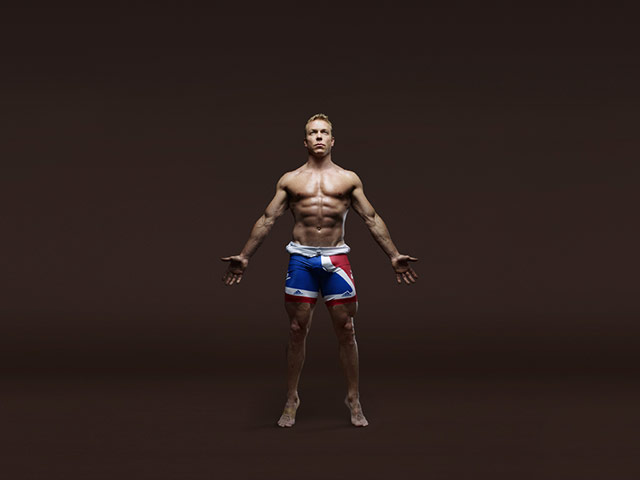
Olympic Bodies: British Olympic Athletes Sir Chris Hoy
Sir Chris Hoy, 36: Cyclist, four-time Olympic champion, 186cm, 92kg. “A lot of women come to me and say, ‘I don’t want to try cycling because I’ll get big thighs like you’, but you don’t get big thighs just from riding a bike. It’s all the gym work that sprint cyclists do so we have the power to accelerate. And it’s not as if my legs are grotesquely massive for the sport – there are one or two guys I race against internationally whose legs make mine look skinny. The thing that marks me out as a cyclist is my shaved legs. It’s a tradition in the sport and makes us more aerodynamic. It might sound ridiculous, but when you’re winning races by 0.001sec, everything counts.”
Photograph: Kate Peters/INSTITUTE
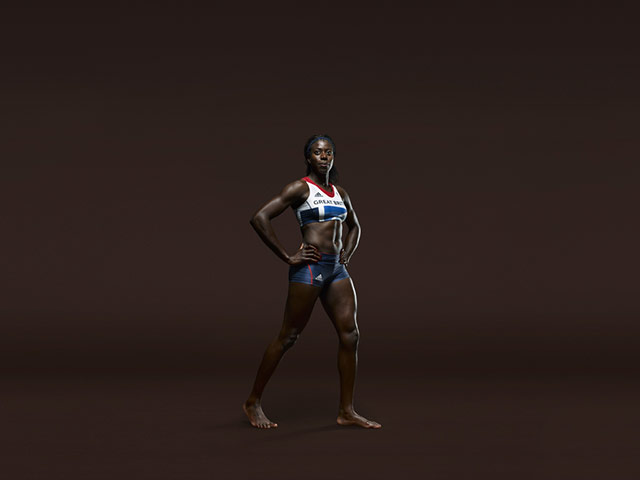
Olympic Bodies: British Olympic Athletes Christine Ohuruogu
Christine Ohuruogu, 28: 400m runner, won gold at the world and world indoor championships, Commonwealth Games and Beijing Olympics, 175cm, 70kg. “I was a skinny child. My brother and I were like tall sticks, which I hated. Running has made me much more defined. You can’t typecast runners – think of Usain Bolt. He’s very tall, very rangy, not your typical sprinter. Some runners are shorter and more powerful because their muscles are compact. Some are taller, leggy and graceful, with a long stride. I’m a power-based runner. I’ve got inherent strength, but I’m also tall, so I can cover the ground well. You run to your strengths and try not to allow the weaknesses to be exposed.”
Photograph: Kate Peters/INSTITUTE
Olympic Bodies: British Olympic Athletes Sarah Storey
Sarah Storey, 34: Cyclist, 2008 Paralympic time trial and individual pursuit champion, 175cm, 65kg. “I was born without most of my left hand. For some reason, it just stopped growing. I don’t consider myself disabled. I’ve won seven Paralympic gold medals and 20 world titles, as well as two world titles with the able-bodied team pursuit squad. To me, there’s no difference. The level of competition at the Paralympics is just as fierce. The determination is the same. It’s just that the competitors have a limb missing, or not working quite as well. After a while, you don’t see the disabilities. Everyone’s an athlete first.”
Photograph: Kate Peters/INSTITUTE
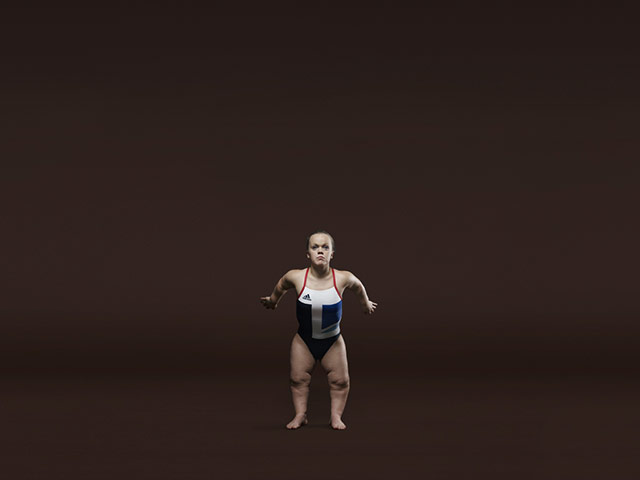
Olympic Bodies: British Olympic Athletes Ellie Simmonds
Ellie Simmonds, 17: Paralympic swimmer, 2008 Olympic 100m and 400m champion, 124cm, 45kg. “I won an Paralympic medal in Beijing when I was 13. I started training just before I was eight. I worked very hard and did exactly the same volume as my tall friends. I wanted to move up a group with them and stay in the club team for as long as I could. I think I developed my strength from those early years. Being young in Beijing was an advantage because I had no pressure on me and I recovered well after races.”
Photographer’s assistants: Rob Chilton, Boris Panic. Retouching: Dave Andrews at Phoenix Bespoke. Thanks to Nick Pearce at Reflection Digital, Spring Lighting, RGB Photographic and Institute for Artist Managament.
Photograph: Kate Peters/INSTITUTE
Sign up to read this article
Read news from 100’s of titles, curated specifically for you.
Already a member? Sign in here
Related Stories
Top stories on inkl right now
One subscription that gives you access to news from hundreds of sites
Already a member? Sign in here
Our Picks
Fourteen days free
Download the app
One app. One membership.
100+ trusted global sources.