Renewable energy business Olleco provides the UK food sector with a unique opportunity to run their fleets on the same oil in which they fry their chips, making CO2 savings of more than 95% compared to fossil fuels.
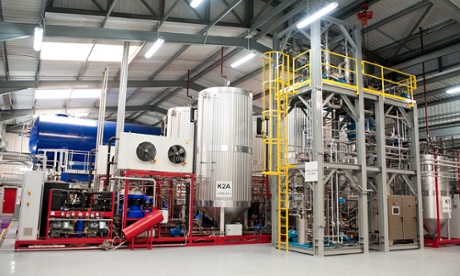
The company collects used cooking oils, fats and food waste from 50,000 catering and hospitality businesses and takes it to its state-of-the-art recycling centre in Liverpool. There, the waste food is converted into renewable energy and heat, which in turn power a biodiesel plant, where used oils are transformed into high-quality fuel.
Olleco is the only company in the country to have combined anaerobic digestion with biodiesel conversion in one place, both fed from waste generated by the same customers.
Nearly one million tonnes of food are wasted each year by UK food businesses, according to the Waste and Resources Action Programme (WRAP), costing the industry some £2.5bn annually. Used cooking oil is typically poured down the drain, while food waste often ends up in landfill, contaminating other waste that could have been recycled.
Olleco set out to stop the rot, cut carbon emissions and find new ways to generate value from organic waste. It envisages a future where 100% of the industry’s waste is transformed into new resources, a vision that reflects its parent company ABP Group’s ethos of doing more with less. Tackling food waste is the first step on this journey.
Established in 2014, Olleco’s Liverpool-based recycling centre puts waste food into an anaerobic digester, where micro-organisms convert it into bio-methane gas, water and nutrient-rich compost. The biogas is then collected and burned in a special gas engine to produce renewable electricity.
This energy, combined with heat generated by the engine (which is often lost to the atmosphere at standard anaerobic digestion plants), are harnessed and channelled into the adjacent biodiesel plant, the largest of its kind in the UK. The compost is sold to local farmers, helping to reduce the need for synthetic fertilisers.
At the biodiesel plant, oils and fats are carefully decanted from their packaging, with any plastic or tin containers sent for recycling. Next, they undergo a thorough cleaning process, where any moisture is removed and organic impurities are captured and directed to the anaerobic digester.
The oil is then chemically converted into biodiesel, creating two by-products: bio-heating oil and glycerol. Nothing goes to waste. The heating oil is used in the boilers and the glycerol is either processed with the food waste or sold to the cosmetics industry to create beauty products.
Olleco recycles more than 100,000 tonnes of organic waste annually from its 50,000 customers, generating 1MWh of renewable heat and power, and producing 16m litres of biodiesel.
Importantly, the biodiesel conforms with strict EU specifications and can be safely used by Olleco’s customers to power their vehicle fleets in all weather conditions. It saves customers around 95% of the CO2 emissions they would be responsible for if they were running their fleets on fossil fuels.
Meanwhile, the company has achieved the highest level of accreditation possible through the international sustainability and carbon certification system, and grown its business from 0 to 450 people in just nine years.
Continuous innovation and careful design have been central to Olleco’s achievement in creating consistently high-quality biodiesel. Since the quality of used oils and fats can vary significantly, most biodiesel plants use refined and pure rapeseed oil as feedstock, or a combination of used cooking oil and refined rapeseed oil.
Olleco used technology to tackle this challenge. In particular, it eliminated any impurities through a process known as vacuum distillation, giving customers the confidence they need to make the switch from standard diesel fuel. Farming micro-organisms and keeping them healthy is critical to the success of the operation, while keeping the feedstock of a consistent quality is also important.
The Guardian judges commented that the company’s efforts to recover value from food waste represent a great step forward for the circular economy – where waste is continuously recaptured and given a new lease of life.
Olleco is the 2015 winner of the innovation award in the waste category of the Guardian Sustainable Business Awards.