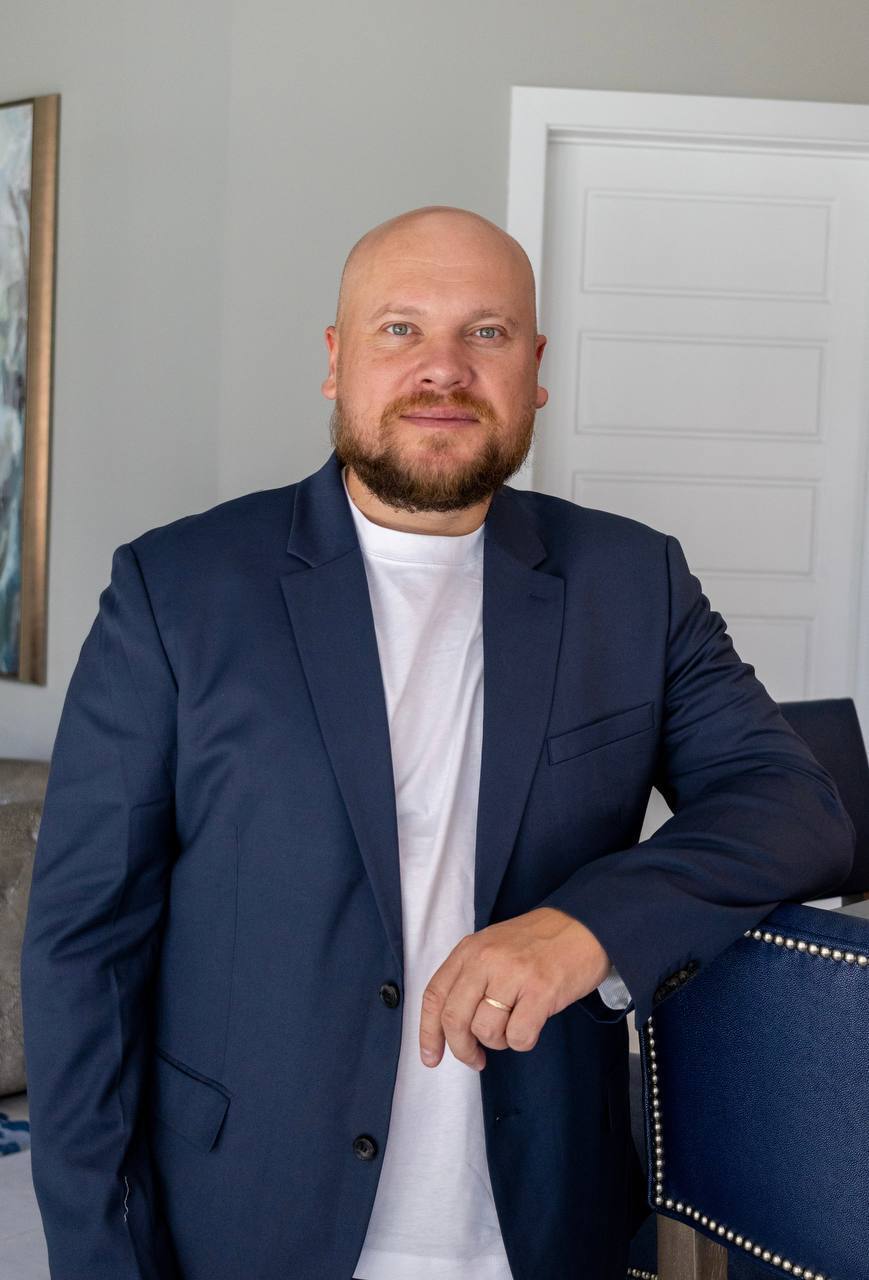
Ukrainian entrepreneur Oleksandr Bodnar has brought innovative products to the U.S. market in the home pest control niche. Anyone who has dealt with this kind of problem has likely come across the PESTJET, VOYA, and IRONE brands. According to Amazon's data, these brands are leaders in their category. Oleksandr’s story is an example of how a small entrepreneur, without a single physical store and operating exclusively through marketplaces, can structurally reshape an entire product category.
Market-Driven Analytics
Coming up with something genuinely new in the pest control niche is no easy task. Oleksandr, however, identified serious shortcomings in existing solutions, and he found out about these problems through a method most resellers simply overlook. "In negative reviews, users describe in precise detail exactly what doesn't work for them," the entrepreneur explains. "In my niche, the main complaint was that rodents and insects adapt to ultrasound very quickly, so the problem only gets solved temporarily. Most existing products lacked effective application methods or practical convenience for everyday situations."
Oleksandr, an engineer by his first education, saw an opportunity to develop his own solution: a device that combines ultrasound with electromagnetic waves, alternating their intensity and frequency to create unpredictable conditions for pests. This combination turned out to be a functional approach that had no mass-market equivalent on the American market at the time of the product's launch.
This anti-adaptation architecture became the competitive foundation for the entire product line. Mr. Bodnar defined the functional concept of each device, formulated performance and usability requirements, outlined the key characteristics that would differentiate the product from existing alternatives, and then coordinated the implementation with manufacturing partners. The engineering teams on the partner side carried out the technical execution based on the materials and specifications prepared by Bodnar.
The key technical solutions implemented in the devices are protected by the manufacturing partner's patent, but the actual author of the functional architecture of these developments is Oleksandr Bodnar: it was he who determined the operating principles of the devices, their technical characteristics, and their consumer properties before production ever began.
Closing unmet demand at the level of functionality rather than packaging or marketing is what builds a durable competitive position, Oleksandr Bodnar is convinced. "Having your own specifications lets you improve the product iteratively, essentially correcting its shortcomings in response to what customers actually expect. Active Amazon users always notice changes and respond positively to functional improvements," he adds.
Systematic Scaling and the Demands of the American Market
In 2018, Oleksandr's operation started with a single product and a single brand. By 2025, the line had grown to 8 models across several brands, and the total revenue of the BESTWINNER company where he serves as senior operational manager had already exceeded one million dollars.
All of this despite the fact that the American market sets strict requirements in the pest control category: EPA compliance, in particular, is a mandatory condition for legal sales. Mr. Bodnar went through this process in full — from documentation and certification to setting up fulfillment and customs clearance. In his strategy for scaling a product on a marketplace and growing a customer base, he identifies three essential stages: continuous product improvement through demand analysis, testing and quality control of new batches before shipment, and ongoing market monitoring.
"Usually these functions are split between different people. Some are strong on the engineering side and technical specifications, others have a deep understanding of how to promote products on Amazon, and someone else handles communication with factories. In my case, all operational processes were handled personally by me, with the help of the colleagues who now work in the company," Oleksandr says.
Impact on the Competitive Landscape
The appearance of products with unique technical specifications on Amazon affects the dynamics of the entire category, and the PESTJET case illustrates this clearly. This brand alone has repeatedly earned Best Seller status, which represents independent confirmation of the product's competitiveness from the largest retail marketplace in the country.
Beyond that, the rapid and sustained growth of e-commerce presents a well-founded challenge to traditional retail chains: products that previously reached consumers through lengthy distribution chains with corresponding markups are now available directly. At the same time, the scaling of certain product categories on marketplaces drives demand for adjacent industries: warehousing, transportation services, and logistics management technology. In this way, Oleksandr argues, small and medium-sized entrepreneurs make a meaningful contribution to the broader economy.
Building the Next Generation of Pest Control Devices
Oleksandr has no intention of stopping at what he has already built. He speaks about upcoming projects that will further strengthen the pest control category.
"Market monitoring shows that Chinese 'smart' devices are steadily entering the market: wireless portable models that double as power banks, equipped with light sensors and using biocomponents rather than ultrasound as the primary repellent," says Oleksandr Bodnar. "The specific operating principles still need to be worked out, but I plan to develop a smart device with American origins, built for Americans and for American conditions."
Beyond that, Oleksandr is already working on an AI-powered solution for the logistics industry: a SaaS platform that will help transportation companies, dispatchers, brokers, and independent drivers make more economically sound decisions in their daily work. In his own day-to-day experience, he noticed the problems drivers and logistics professionals face and suffered real financial losses because of them. Complaints about the stress of managing hours-of-service compliance, finding parking independently, dealing with weigh stations, loading delays, and constant pressure — a system capable of warning about risks, assisting with route planning, parking, and time management is, according to Oleksandr's plan, something that can be integrated into the operational processes of any business in commerce or transportation.