With COVID-19 cases and deaths rising in the U.S. and globally, identifying new therapies to prevent and combat the virus is a top priority. Natural products from plants are an attractive option in the search for a cure. Approximately 374,000 plant species are on Earth; humans have used more than 28,000 of them as a form of medicine.
But not all that is natural is necessarily safe. Scientists have not yet explored most of these species for their chemical makeup or therapeutic potential.
As a medical ethnobotanist, I study the traditional uses of medicinal plants to discover promising leads for new drugs to fight infectious diseases. It’s vital to consider both the potential benefits and risks of plant extracts in such research. I am concerned by recent reports that a chemical found in the oleander plant is being touted as a potential treatment for COVID-19.
About the Oleander plant
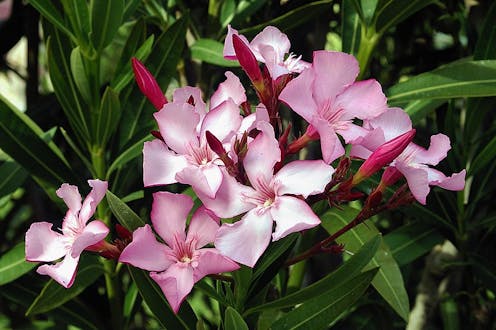
Nerium oleander is a highly toxic plant from the Apocynaceae family. Though renowned for its beauty and use in landscaping, this Mediterranean shrub is responsible for cases of accidental poisoning across the globe. All parts of the plant are poisonous. If eaten, it causes cardiac arrhythmias, or irregular heart rates, and can be lethal to both humans and animals.
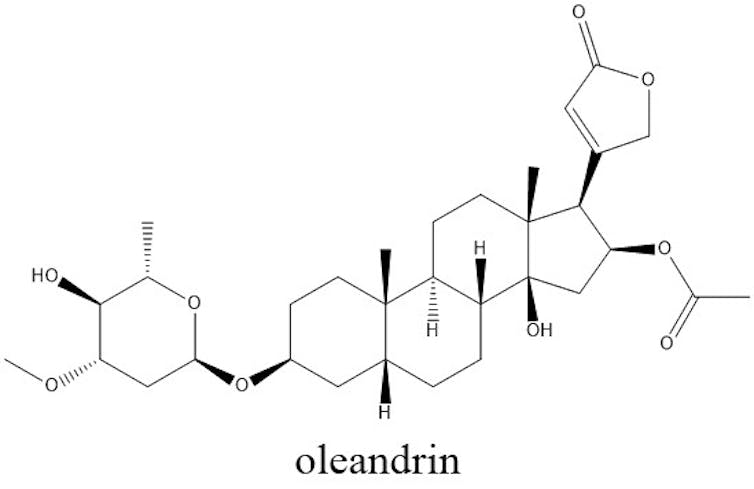
Oleandrin is the chemical that causes the plant’s lethal toxicity. It is known by scientists as a cardiac glycoside, a class of organic compounds with a common feature: They exhibit powerful effects on heart tissue, often with deadly consequences.
A pre-print article – that is, an article not peer-reviewed by other scientists – is now online. It reports how, in a test tube, oleandrin reduces production of the virus responsible for COVID-19. But this does not take into account the well-known cardiac toxicity of the chemical when consumed by an animal or human.
[Deep knowledge, daily. Sign up for The Conversation’s newsletter.]
Particularly worrisome is the idea that consumers may misinterpret any publicity surrounding oleander and try to self-medicate with this highly poisonous plant. I’m also concerned the dietary supplements industry may try to take advantage of the public’s fear of COVID-19 by developing supplements containing oleandrin.
There are many other examples of natural plant extracts that are harmful. But oleander is particularly dangerous, because ingesting any part of the plant can lead to serious illness and possibly death. What’s more, there is no published scientific evidence on the safety of consuming oleandrin or its plant source, Nerium oleander. It is critical that the Food and Drug Administration and its commissioner, Dr. Stephen Hahn, make certain the public is protected from this poison.

Cassandra Quave receives funding from the U.S. National Institutes of Health.
This article was originally published on The Conversation. Read the original article.