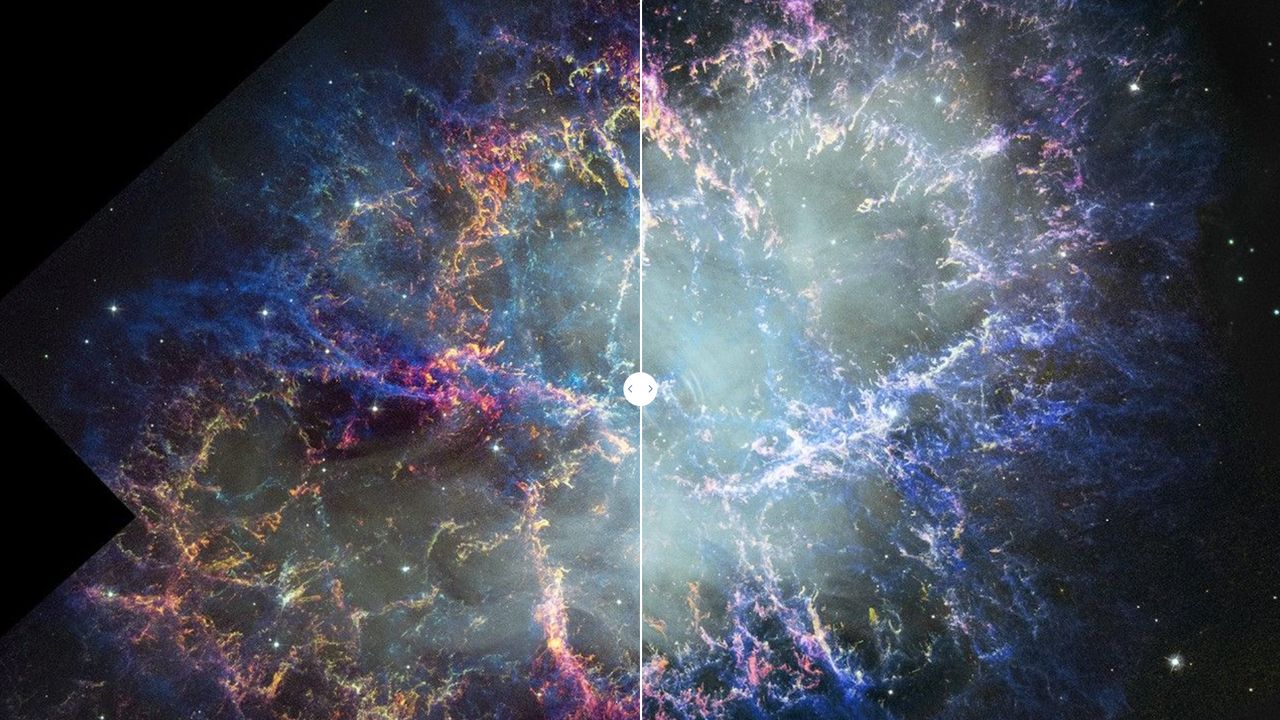
New tech often dominates the headlines, but a recent photo series shared by NASA is only possible because of the tech’s age. NASA’s Hubble Space Telescope has re-shot a photo of the colorful Crab Nebula 25 years later, creating a series of images that illustrate how rapidly the night sky can change.
The Hubble Space Telescope has been in orbit since 1999, making it the oldest space telescope still in service. That longevity allows the telescope to make direct comparisons over time.
In 1999, Hubble photographed the Crab Nebula, a remnant of a supernova that humans first took note of in 1054 as a star that was so bright it was temporarily visible during the day.
But, the Hubble photographed the Crab Nebula again in 2024, and the newly released comparison images are giving scientists insights into how the nebula has changed over time. “Hubble is the only telescope with the combination of longevity and resolution capable of capturing these detailed changes,” NASA wrote.
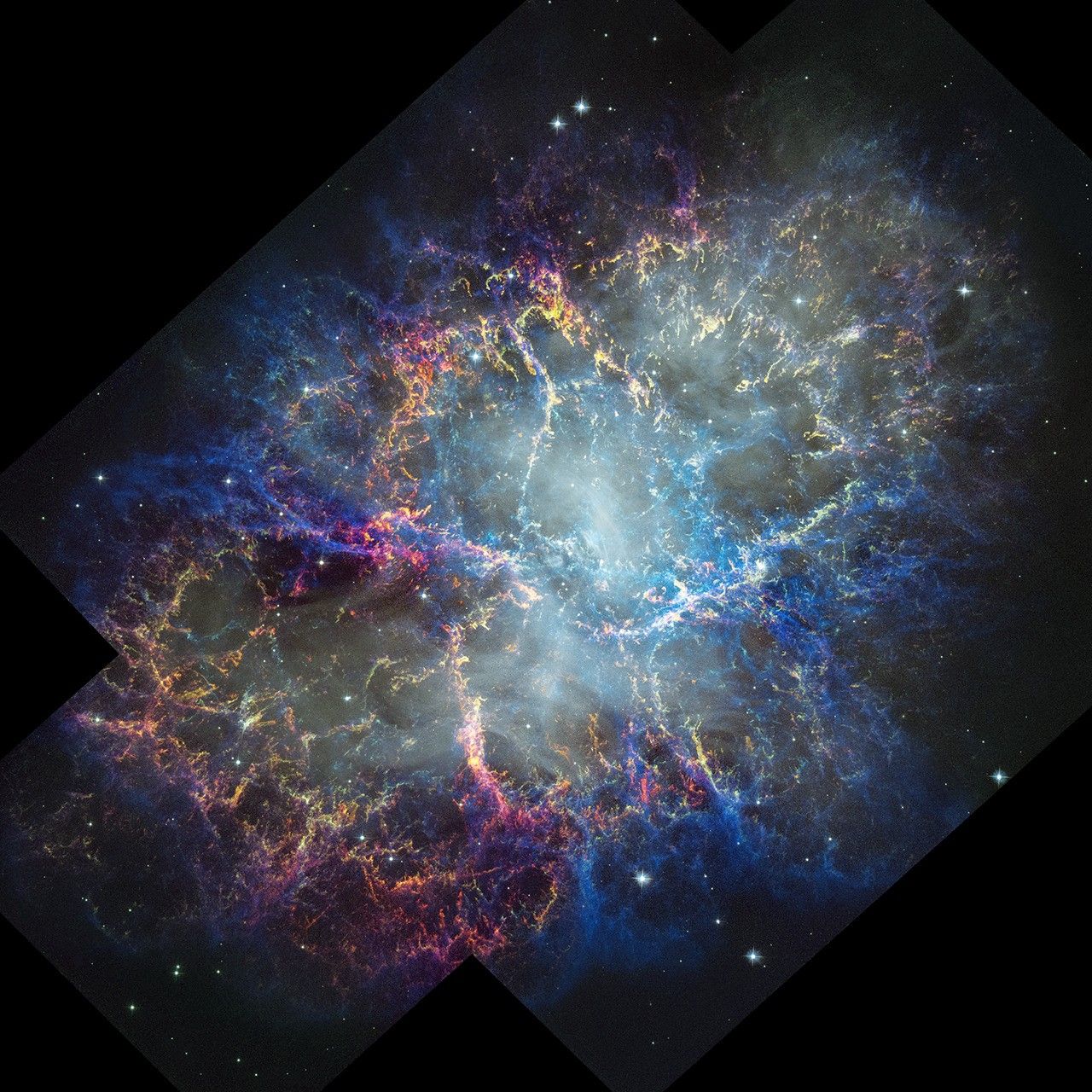
Comparing the two images shows how the Crab Nebula has expanded outward – at a rate of 3.4 million miles per hour. But, to scientists, changes in color speak to changes in temperature and the composition of the gases
“We tend to think of the sky as being unchanging, immutable,” said William Blair, an astronomer with Johns Hopkins University and the study’s lead author. “However, with the longevity of the Hubble Space Telescope, even an object like the Crab Nebula is revealed to be in motion, still expanding from the explosion nearly a millennium ago."
Video credit: NASA, ESA, STScI, William Blair (JHU) / Video: Joseph DePasquale (STScI)
While the Hubble Space Telescope is now 35 years old, the telescope's cameras have been updated over the years by astronauts, the last one being the Wide Field Camera 3, which was installed in 2009. That means the comparison images are also giving researchers a reminder of how the tech and camera resolution have changed from the 1999 photograph to the one shot in 2024.
That’s pretty good considering NASA originally expected the Hubble to have a 15-year lifespan! Researchers are continuing to study the data, including comparing the images to the infrared light images of the same nebula shot with the James Webb Space Telescope.
You may also like
Browse the best cameras for astrophotography or the best lenses for astrophotography.