Get all your news in one place.
100’s of premium titles.
One app.
Start reading
The Guardian - UK
The Guardian - UK
Environment
Juliette Jowit

Okavango Delta: Floods of Life

Okavango Delta: Fires Burning in the Kalahari Desert
The Okavango river transports freshwater and nutrients thousands of kilometres across the drylands of southern Africa, before spilling into and transforming the Kalahari desert basin. This aerial photograph also captures the smoke of fires burning in the desert
Photograph: NASA/Corbis
Okavango Delta: Reed Frog in Water Lily
A reed frog clings to a water lily. The Okavango delta is a unique natural phenomenon that acts as an oasis of wildlife – from big game such as elephants, lions and buffalo, to 99 species of dragonfly, as well as hundreds of different wildflowers. It is also extremely valuable to humans, not only for hunting and tourism but as a rich provider of food, fuel and building materials
Photograph: Frans Lanting/Corbis
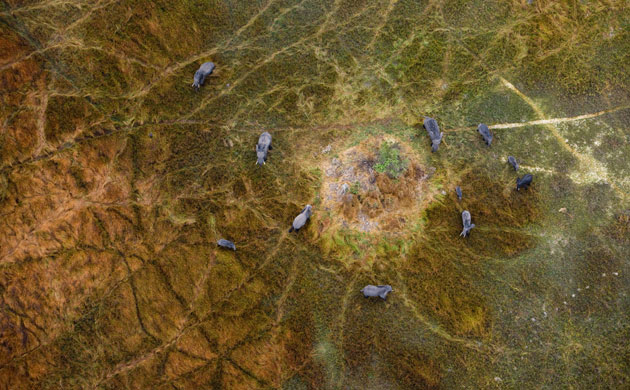
Okavango Delta: An aerial view of elephants around an island in grassland.
The threats facing the Okavango include a booming elephant population (pictured here), climate change and wildfires
Photograph: Michael Poliza/NGC/Getty
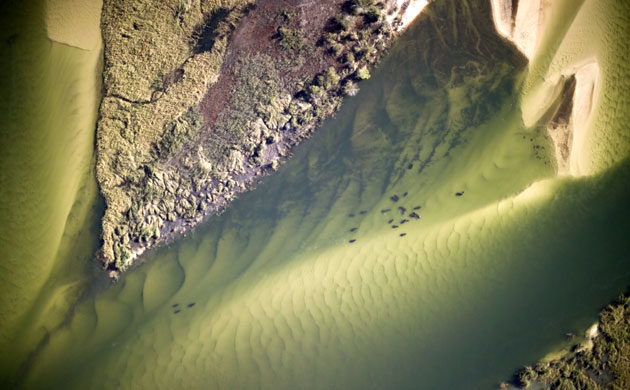
Okavango Delta: Hippos in the very clear water of the Upper Okavango River.
The river drains down in tributaries from the wet highlands of north-east Angola, crossing thousands of square kilometres of pristine wilderness, once known in Angola as terra do fim do mundo, Portuguese for the land at the ends of the earth
Photograph: Michael Fay/NGC/Getty
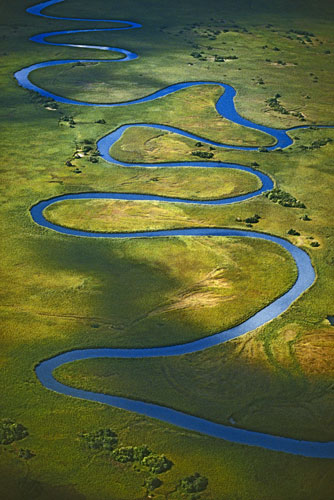
Okavango Delta: Meandering Okavango River
It sometimes forms meanders so wide that the water flows across the channel as much as it does downstream
Photograph: Frans Lanting/Corbis
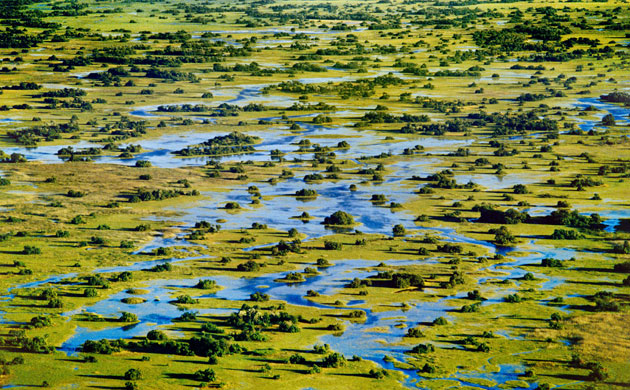
Okavango Delta: flooded delta
The water finally spills out into the bottom of the desert basin, flooding it
Photograph: Sue Flood/Getty
Okavango Delta: Marshes in Okavango Delta in Botswana
Pulses of water from rains upriver – some huge, others smaller – arrive in the "blood system" of wandering channels. Water also seeps out into backwashes of marshland, where it eventually evaporates or drains into the sand below
Photograph: Frans Lanting/Corbis
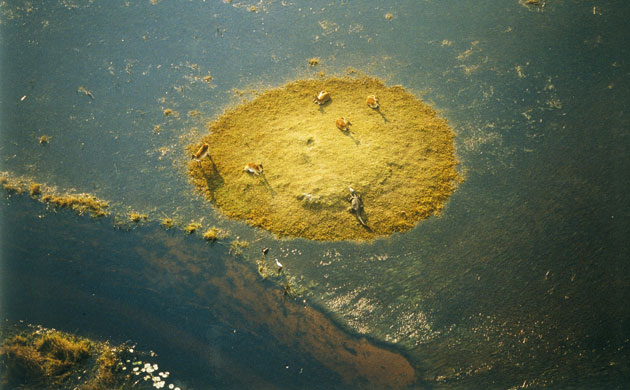
Okavango Delta:  A crocodile among lechwe
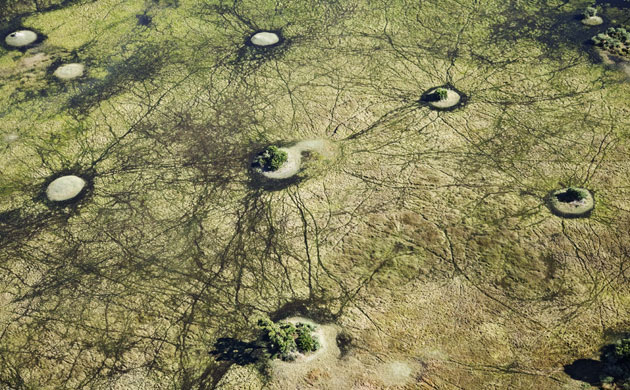
A crocodile and a group of lechwe antelope get acquainted on an island just barely above the level of the river. Islands of trees, on old termite mounds or the partially submerged ridges of old channels, act like kidneys, leeching salts out of the water and pumping the freshwater back into the atmosphere
Photograph: Bobby Haas/NGC/Getty
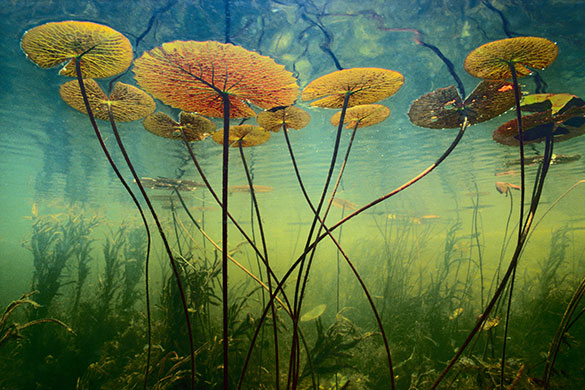
Okavango Delta: Night Blooming Water Lilies, Nymphaea nouchali
Night blooming water lilies (Nymphaea nouchali). During its long, slow journey, the river water is also filtered by the Kalahari sands, reeds and papyrus. Much of the delta water is said to be better quality than bottled water
Photograph: Frans Lanting/Corbis
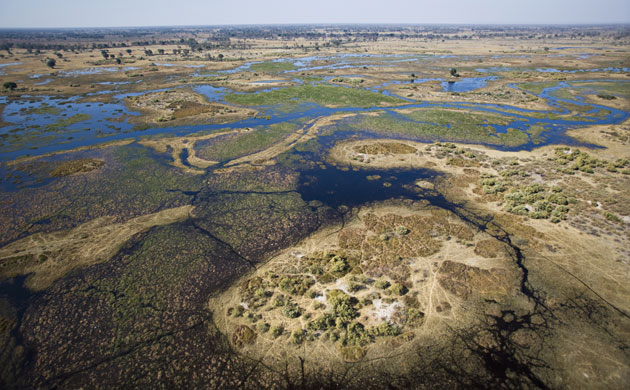
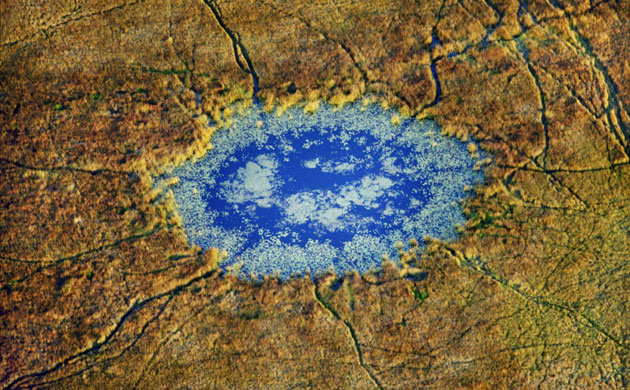
Okavango Delta: Aerial view of wetlands
Nutrients in the soils and plants build up underwater, much like the fat deposits in a body. When the water dries out, they are released from the drying peat and vegetation, as in this aerial view
Photograph: Martin Harvey/Getty
Okavango Delta: Water Hole in the Okavango Delta
A water hole. Each year floodwaters bring life, but then recede so that nutrients are returned to the soil, ready for further bouts of production in the years ahead
Photograph: Frans Lanting/Corbis
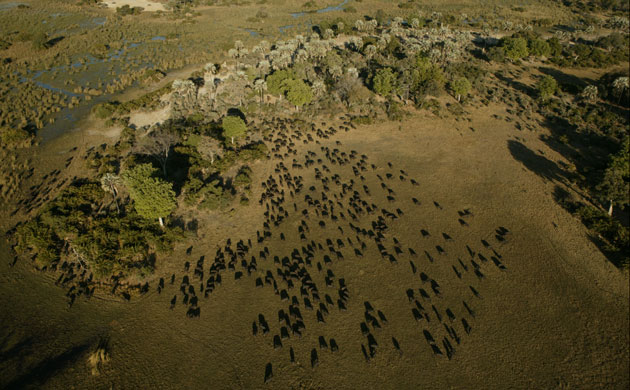
Okavango Delta: African Buffalo (Syncerus caffer)
To cope with the changing water distribution, plants and animals – such as these African buffalo (Syncerus caffer) – have learned to move with it. Alternatively, some life simply waits, for years or even decades, in the form of eggs, seeds, spores, pupae or slumbering adults, for the water to return
Photograph: Beverly Joubert/Getty
Okavango Delta: Crocodile, Crocodylus species, with dragonfly on its head
A crocodile looks nonplussed at his dragonfly visitor. Relatively few species actually live in the water, with most thriving instead in the ever-changing patchwork of nutrients of the seasonal swamps and occasional floodplains
Photograph: Beverly Joubert/NGC/Getty
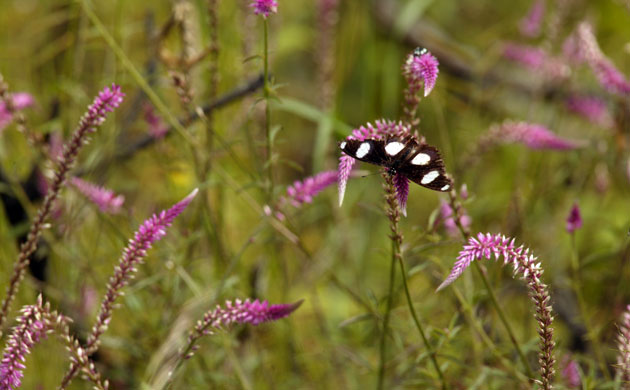
Okavango Delta: A butterfly with spread wings on a wildflower.
A butterfly spreads its wings on a wildflower. On the fertile drier plains, plants thrive: acacia and mopane woodlands; shrubs perhaps stunted by fire, frost, browsing elephants or the soil; and 1,300 flowering plants, including grasses, sedges, asters, daisies, beans and peas
Photograph: Beverly Joubert/NGC/Getty
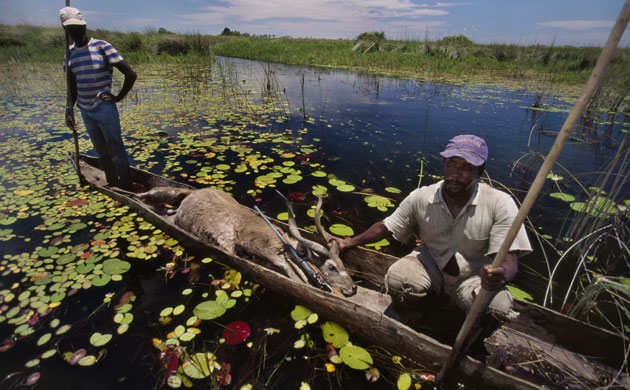
Okavango Delta: Local Hunters With Sitatunga Carcass, Botswana
Hunters – such as these men with the carcass of a sitatunga – make canoes from the hollowed-out trunks of rain trees and jackal-berries. People also eat the rhizomes of blue water lilies, hibiscus leaves and berries; other plants are used for wine, soap and to poison fish
Photograph: Frans Lanting/Corbis
Okavango Delta: Horses eat paths through aquatic vegetation S of the Okavango Delta.
Horses eat sinuous paths through the aquatic vegetation, which supports 10 times more large mammals – including lions, elephants, giraffes, buffalo and antelope – than would be expected in an area of similar rainfall and sandy soil
Photograph: Michael Fay/NGC/Getty
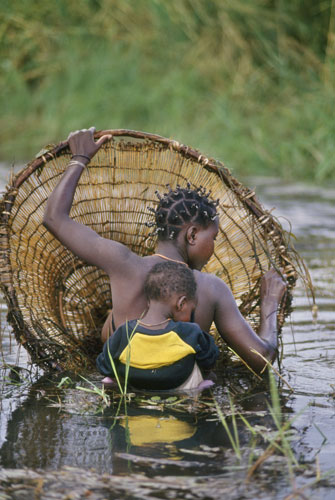
Okavango Delta: Hambukushu Woman and Child Fishing
Most of the 71 fish species are too small for people to eat, but there is a small amount of commercial fishing, and many people, such as this Hambukushu woman and her child, catch talapia and other bigger species for subsistence
Photograph: Frans Lanting/Corbis
Okavango delta :  Saddle-Billed Stork with Fish
Insects, zooplankton and fish support thousands of often colourful birds, such as this saddle-billed stork
Photograph: Theo Allofs/Corbis
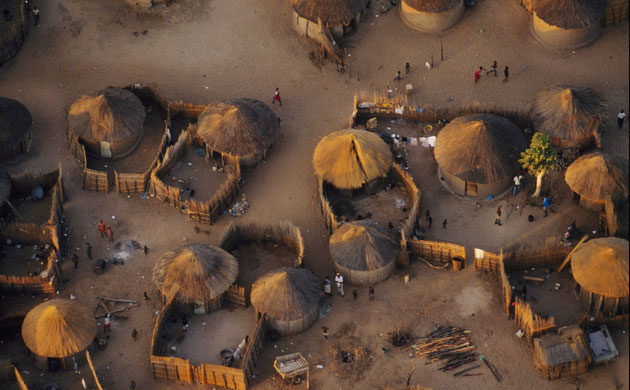
Okavango Delta: Hambukushu village in the Okavango Delta of Botswana
A Hambukushu village in Botswana. Archeologists believe men and women started to live off the delta at least 100,000 years ago. The human history has been one of frequent migration to new natural resources, or to escape disease, conflict, drought and flooding
Photograph: Frans Lanting/Corbis
Okavango Delta: Domestic Cattle in Okavango Delta
A man herds cattle. About 140,000 people live in the area, many in the town of Maun, whose population is doubling every 11 years. People are increasingly less dependent on farming and more so on salaries, business income, social benefits and subsidies
Photograph: Frans Lanting/Corbis
Okavango Delta: Red Lechwe Running
These running red lechwe make the delta look pristine, and indeed it is relatively so – but climate change, growing demand for irrigation water upstream in Angola, local contamination from chemicals (such as pesticides used to kill tsetse flies), invasive alien species and the clearing of channels are all threats
Photograph: Frans Lanting/Corbis
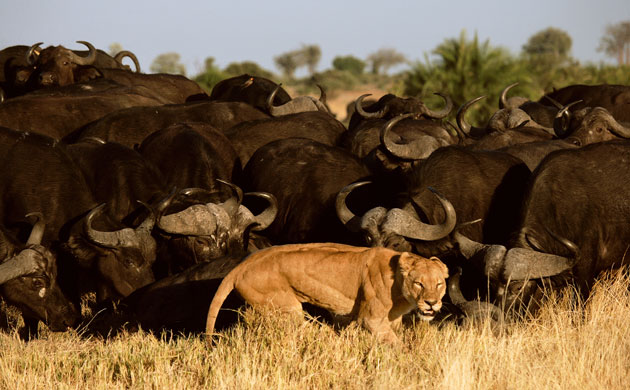
Okavango Delta: A lioness retreats before a large group of Cape buffalo.
A lioness retreats from a herd of cape buffalo. About 100,000 visitors a year to the delta region make up the bulk of Botswana's tourist economy (the country's second-biggest economic sector, after diamonds), which brings inevitable pressure for unsustainable development
Photograph: Beverly Joubert/NGC/Getty
Okavango Delta: African Elephants (Loxodonta africana) , Moremi Wildlife Reserve
Another problem is the burgeoning population of elephants, whose decimation of riverside woodland has raised concerns that they could damage the delta's "kidney" system of island trees
Photograph: Theo Allofs/Getty
Okavango Delta: Herd of African buffalo, Syncerus caffer, in mist at twilight
African buffalo at twilight. Efforts to preserve the delta must preserve the pulses of flow that sustain the wetting/drying pattern, the channels that constantly redistribute the life-giving water and nutrients, and the other processes that make the area an oasis of freshwater
Photograph: Beverly Joubert/NGC/Getty
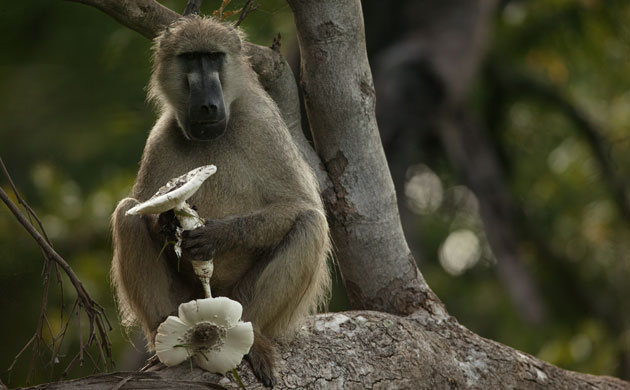
Okavango Delta:  A Chacma baboon eating a mushroom on a tree
A chacma baboon enjoys a mushroom Photograph: Beverly Joubert/NGC/Corbis
Sign up to read this article
Read news from 100’s of titles, curated specifically for you.
Already a member? Sign in here
Related Stories
Top stories on inkl right now
One subscription that gives you access to news from hundreds of sites
Already a member? Sign in here
Our Picks
Fourteen days free
Download the app
One app. One membership.
100+ trusted global sources.