NEW YORK (Reuters) - Oil prices surged more than 3 percent on Tuesday as investors grew more confident the United States and China would resolve their trade dispute without damaging the global economy, while Middle East tensions and a weak dollar also supported prices.
Brent crude futures <LCOc1> jumped $2.39, or 3.5 percent, to settle at $71.04 a barrel. This was its largest single-day percentage gain since September.
In post-settlement trading, Brent hit $71.34, its highest since December 2014.
West Texas Intermediate crude futures <CLc1> gained 3.3 percent, or $2.09, to settle at $65.51 a barrel.
"This has been another huge day," said Bill Baruch, president of Blue Line Futures in Chicago. "There's soothing trade war fears, geopolitics, and a weaker dollar at play," Baruch said.
President Xi Jinping on Tuesday promised to open China's economy further and lower import tariffs, striking a conciliatory tone on the trade tensions between his country and the United States.
Prices of both crude benchmarks have risen more than 5 percent in the past two trading days. Both have erased their losses from last week, when concerns over a possible trade war between the two largest economies contributed to declines of more than 4 percent.
Middle East tensions also supported prices, said Phillip Streible, analyst at RJO Futures in Chicago.
"Oil markets are getting a bounce on increasing speculation about Trump and Syria," Streible said.
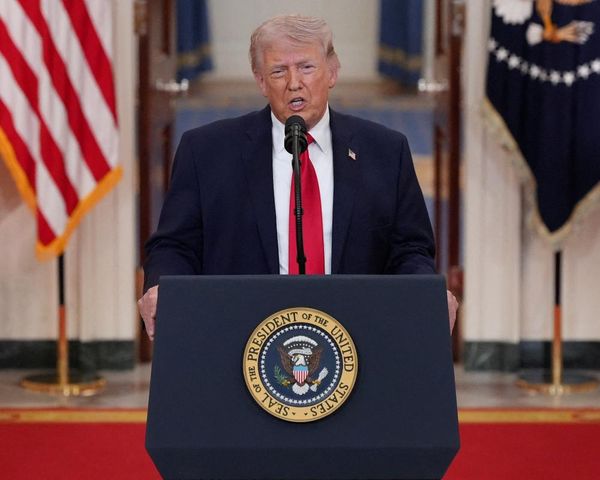
U.S. President Donald Trump promised a swift response to a suspected chemical attack in Syria. Such a response is likely to increase the push for the United States to exit the Iran nuclear deal, Streible said, given Iran's support of the Syrian government.
Departures from the accord would result in renewed sanctions against Iran, which would hurt its oil industry.
Also supportive to crude prices was the weakness of the U.S. dollar. The dollar fell against a basket of major currencies <.DXY>, hitting its lowest in nearly two weeks. Because oil is dollar-priced, a stronger greenback makes purchases in other currencies more expensive.
The American Petroleum Institute will publish its storage data later on Tuesday. Analysts anticipated a decline in crude and gasoline inventories. [nL3N1RN5CY]
The U.S. Energy Information Administration said it expected domestic crude oil production to rise by 750,000 barrels per day (bpd) to 11.44 million bpd next year, more than previously expected.
Meanwhile, Saudi Arabia's Energy Ministry said it would keep exports below 7 million bpd and restore its inventories to normal levels.
(Additional reporting by Amanda Cooper in LONDON and Henning Gloystein in SINGAPORE; Editing by David Gregorio and Will Dunham)