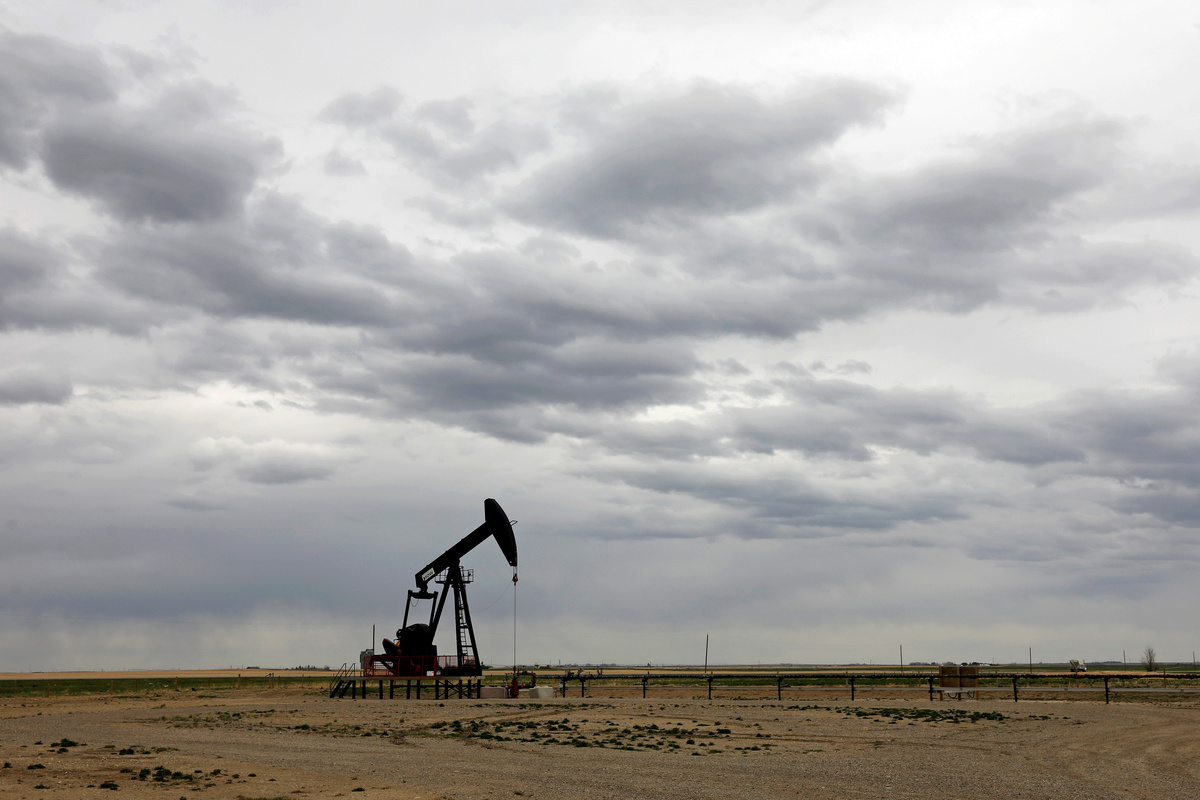
Oil fell more than 3% on Monday after OPEC+ nations agreed to extend output cuts, but Saudi Arabia and two other Gulf producers said they would not maintain supplemental reductions that amount to more than a million barrels of daily supply.
Brent crude fell, breaking a seven-day streak of gains. Brent futures <LCOc1> fell $1.50, or 3.6%, to settle at $40.80 a barrel. U.S. West Texas Intermediate crude (WTI) <CLc1>, meanwhile, fell $1.36, or 3.4%, to $38.19.
The Organization of the Petroleum Exporting Countries, Russia and other producers agreed in April to cut supply by 9.7 million barrels per day (bpd) in May and June to support prices as coronavirus lockdowns caused demand to collapse.
The group, known as OPEC+, agreed on Saturday to sustain those cuts, equal to about 10% of global supply, through July.
However, Saudi Energy Minister Prince Abdulaziz bin Salman said on Monday that the kingdom and Gulf allies Kuwait and the United Arab Emirates would not continue an additional 1.18 million bpd in reductions.
"It would be too good to be true to have a total of nearly 11 million bpd in voluntary cuts extended for a month at times when we see supply deficits," said Bjornar Tonhaugen, analyst at Rystad Energy.
U.S. shale producers, meanwhile, have started to reopen closed wells as prices have rebounded.
Analysts said this could undercut the fragile demand recovery, and undermine OPEC's efforts to shore up prices. Saudi Arabia, in addition, raised prices for its crude, anticipating stronger demand.
"U.S. production is returning to the market, and there is speculation that the huge increase in Saudi (prices) will kill already struggling refiner margins in Asia," said Bob Yawger, director of energy futures at Mizuho in New York.
China, the world's largest crude importer, said purchases hit a record high of 11.3 million bpd in May.
(Additional reporting by Noah Browning in London and Florence Tan in Singapore; Editing by Marguerita Choy and David Goodman)