In the third quarter of 2021, ICE Brent price is traded in a range between 65 and 77 USD per barrel with an average of 72.7 USD per barrel, increased from the second quarter at 69 USD per barrel. A rise of oil demand due to a relief of lockdown in several countries positively influences an increase in crude oil prices.
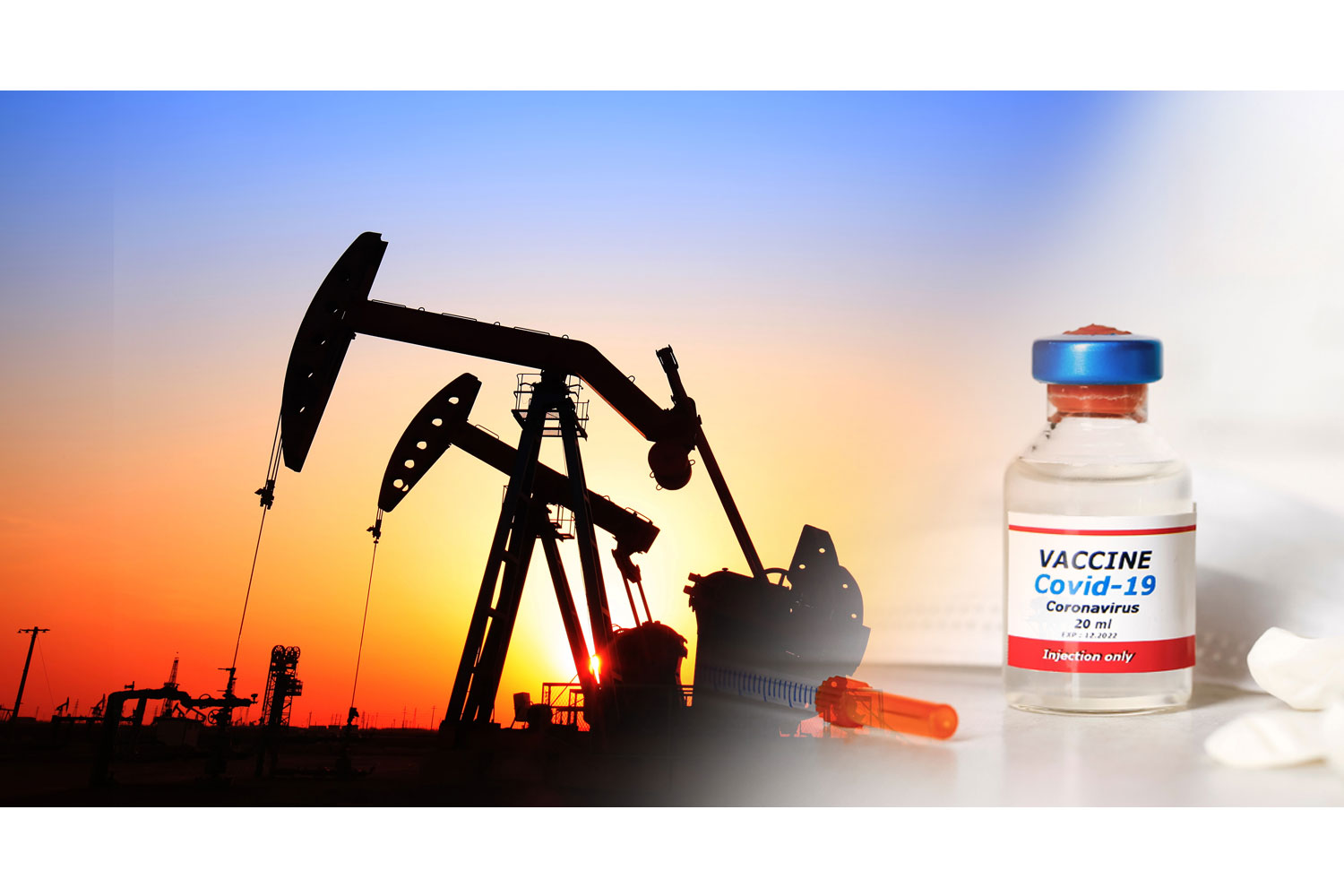
According to the report from Our World in Data on 21st September 2021, the total number of global fully vaccinated population was at 2.5 billion, which was approximately 32% of the world population. Specifically, from U.S. Energy Information Administration (EIA) monthly report in September 2021, global oil demand in 2021 is forecasted at 97.4 million barrels per day, increased by 5 million barrels per day from last year. Moreover, an increase in oil price has been induced by expansionary monetary policies from central banks in several countries including the Quantitative Easing (QE) from the U.S. Federal Reserve (FED), on top of a record-low federal funds rate at 0-0.25%.
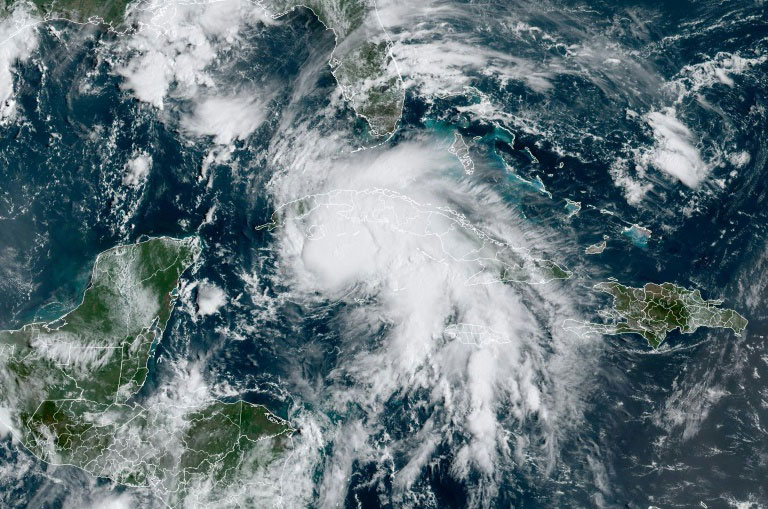
For supply side, OPEC and its allies (OPEC+) has currently concentrated on efficiently managing oil production allocations, and also monitoring monthly compliance rates for their member countries to balance the global oil market. Noticeably, OPEC+ announced an increase of the total oil production between August and December 2021 at 2 million barrels per day in total. Furthermore, the U.S. oil production has been negatively affected during Hurricane season, which runs from June to November every year. The National Oceanic and Atmospheric Administration (NOAA) expects 7-10 hurricanes in the Atlantic Ocean this year, comparing with seven hurricanes last year. Hurricane Ida (a category 4 storm with 210-250 kilometers per hour winds) hit Gulf of Mexico on 29th August 2021 caused the offshore oil and gas production and refineries’ operation to shutdown.
Another notable issue is a geopolitical situation between the United States and Iran. From the beginning of 2021, there were 6 meetings between Iran and P5+1 countries, namely U.S., UK, France, China, Russia, and Germany, regarding Joint Comprehensive Plan of Action (JCPOA) in order to agree with a discontinuation of Iran’s nuclear program. However, with the newly elected president, Ebrahim Raisi, since 5th August 2021, the negotiation has been paused without a lift of sanctions. Coming from a conservative side, Iran, under his administration, refuses the International Atomic Energy Agency (IAEA) to investigate their nuclear power plants and continues to enrich uranium.
Note that S&P Global Platts estimates Iran’s crude oil production in July 2021 at 750 thousand barrels per day. If negotiations between Iran and the major powers were successful, Iran’s crude oil production by the end of December 2021 and March 2022 would reach 1.3 million barrels per day and 1.7 million barrels per day, respectively. Notably, the recent development of political stressfulness among countries leads to a probability of failure in the agreement.
Moving to Afghanistan, though Taliban’s victory has insignificant impact on oil prices (Afghanistan does not produce a significant number of crude oil and usually imports petroleum products from Iran around 20 thousand barrels per day). The main focus; however, becomes China and its influence in the country. Reporters revealed a strong relationship between China and Taliban. China will make an entrance to explore rare earth business in Afghanistan, followed by more investments. In addition, the Chinese government may take this opportunity to strengthen its One Belt One Road initiative in the area through the country.
Mr. Disathat Panyarachun, Senior Executive Vice President, International Trading Business Unit, PTT Public Company Limited said that oil demand is expected to recover towards 100 million barrels per day in late 2022, which equals to a pre-COVID-19 level, corresponding to the estimation of EIA. Specifically, EIA forecasts global oil demand in 2022 at 101.01 million barrels per day, increased year-on-year by 3.63 million barrels per day. Moreover, PTT’s Senior Executive Vice President also expects that ICE Brent will move in a range of 70-80 USD per barrel in the last quarter of this year, as OPEC+ will effectively manage oil supplies to correspond with a demand recovery. A recent distribution of vaccines and a recovery of economies can ensure a possible strong price trend, as a higher demand is expected comparing with the previous year.

What to keep an eye on is global central banks’ policies. FED probably starts a taper of the bond-buying program (QE) in November 2021 from the current asset purchases at 120 USD billion per month, as economy improves. Furthermore, the 26th Conference of the Parties (COP) will be arranged during 31st October - 12th November 2021 in Glasgow, Scotland. The conference has a significant impact on the world’s future energy direction. Natural disasters such as major flooding in Germany, China, and U.S., wildfires in U.S., Turkey, and Italy indicate a severe climate change. The decarbonization must be thoroughly considered by policy makers in order to apply appropriate policies and regulations to enforce the industries to reduce the greenhouse gas which is a major cause of the climate change.
International Market Analysis Team,
International Trading Business Unit,
PTT Public Company Limited
Source: Reuters, S&P Global Platts, Our World in Data