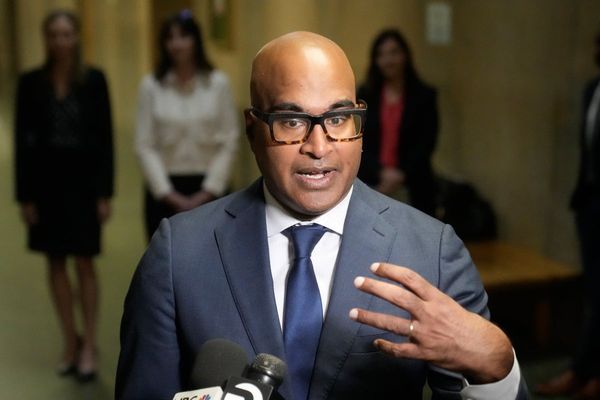
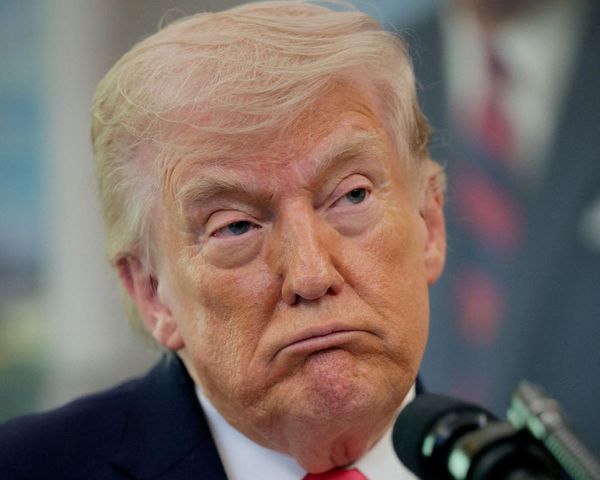
Finally, another underwhelming trading session is over in the City.
The FTSE 100 has closed 6 points lower at 7,416 points. Mark Carney’s concerns about no-deal worries hurting the economy weighted on the market, with the pound hovering below $1.27 still.
Fiona Cincotta, senior market analyst at www.cityindex.co.uk, says trade war optimism was limited too:
Comments from Treasury Secretary Steve Mnuchin that a US – Sino trade deal was 90% done has fuelled optimism that the two sides could finally achieve a trade agreement. US equities have moved higher in early trade on the news, paring some of yesterday’s Fed inspired losses.
Any good news on trade is good news for the equity markets. However, the reaction is actually fairly tame to the attention-grabbing headline, both the Dow and the S&P are up around 0.2% and parts of Europe remain in the red.
Investors are not getting carried away opting to sit on the side-lines as they look cautiously ahead to the G20 summit this weekend. A side meeting between Trump and China’s President Jinping Xi could give vital clues as to whether the two powers are onside to resolve the ongoing trade dispute.
Wall Street has opened higher, as investors are cheered by Stephen Mnuchin’s claim that the US-China trade deal is 90% complete.

Tech shares are among the risers, despite Donald Trump’s threat to sue the likes of Twitter and Google....
Donald Trump attacked tech companies today, because he reckons they discriminate against him because he’s a Republican.
He told Fox that social media firms such as Twitter are unfairly throttling his follower numbers (a claim he’s made before).
He also cites a recording released yesterday of a Google executive discussing plans to prevent another “Trump situation”.
The president says:
“Twitter is just terrible, what they do. They don’t let you get the word out.
“I’ll tell you what, they should be sued because what’s happening with the bias — and now you see it with that executive yesterday from Google. The hatred for the Republicans: It’s not even like ‘Gee! Let’s lean Democrat.’”
“These people are all Democrats, it’s totally biased toward Democrats. If I announced tomorrow that I’m going to become a nice liberal Democrat, I would pick up five times more followers.
Updated
Trump attacks 'tough guy' Powell
Take a deep breath before watching this clip of Donald Trump rubbishing America’s top central banker on Fox News today:
Trump absolutely trashes Fed Chair Jerome Powell.
— Aaron Rupar (@atrupar) June 26, 2019
"Here's a guy -- nobody ever heard of him before. And now, I made him, and he wants to show how tough he is, okay. Let him show how tough he is. He's a-- he's a-- he's not doing a good job." pic.twitter.com/SGmFI8WxNb
Back in the UK, Bathstore, the country’s biggest bathroom specialist, has collapsed into administration after failing to find a buyer, putting more than 500 jobs at risk.
Just the latest in a string of retail failures that have cost tens of thousands of jobs this year.
Here’s the full story:
Wowzers. Donald Trump has suggested he could widen his trade war to include Vietnam.
Here’s a clip from his Fox News appearance:
After spending roughly 30 minutes attacking China, Trump now says Vietnam is "almost the single worst abuser of everybody" and indicates he's considering tariffs on Vietnamese goods as well. pic.twitter.com/X5NsaVxd3E
— Aaron Rupar (@atrupar) June 26, 2019
The Financial Times have a good take on Mark Carney’s criticism of investment funds built on the “lie” of instant redemptions.
Here’s a flavour:
The Bank of England governor said that all fund investors should expect to have redemption terms that were in line with the liquidity of the assets that underpinned them and should not be able to assume they could get their hands on their money daily.
“These funds are built on a lie, which is you can have daily liquidity,” Mr Carney told MPs on the Treasury select committee. For assets that “fundamentally aren’t liquid” or might become illiquid in a market downturn, he said the damage of that “lie” for financial stability is that it “leads to an expectation for individuals that it’s not that different from having money in a bank”.
“We do have to be very deliberate about the types of measures that need to be taken — something that better aligns the redemption terms with the actual liquidity of the underlying investment is infinitely preferable to the situation we have today,” the governor said.
BoE governor Mark Carney calls for change to fund regulation https://t.co/98XGdgNhpn
— Fabrizio Goria (@FGoria) June 26, 2019
Trump attacks Powell, Japan, big tech.....
Donald Trump has used an interview on Fox News to blast a range of targets - from America’s top central banker to its largest tech companies.
Trump Says Fed'S Powell Doesn'T Do Anything For U.S. As Other Countries Devalue Their Currencies || Says Fed'S Powell Is Not Doing A Good Job || Says He Has The Right To Demote Or Fire Fed'S Powell || Fed Policy Is 'Insane,' Ecb Is Pouring Money In While Fed Is Taking Money Out
— First Squawk (@FirstSquawk) June 26, 2019
Ouch. This has gotta hurt. TRUMP SAYS U.S. SHOULD HAVE DRAGHI INSTEAD OF `OUR FED PERSON'
— Neil Hume (@humenm) June 26, 2019
“We should be suing Google and Facebook and all that, which perhaps we will,” Trump says on Fox.
— Philip Rucker (@PhilipRucker) June 26, 2019
26 Jun - 08:33:16 AM [RTRS] - TRUMP SAYS OTHER COUNTRIES HAVE DEVALUED CURRENCIES AND U.S. CANNOT BECAUSE OF FEDERAL RESERVE POLICY -FOX BUSINESS NETWORK INTERVIEW
— Alastair Williamson (@StockBoardAsset) June 26, 2019
He also took a swipe at Japan, shortly before heading to Tokyo for the G20 summit:
Hours before departing for Japan, Trump complains to Fox about Japan taking advantage of US with defense treaty: “If Japan is attacked, we will fight World War III...But if we’re attacked, Japan doesn’t have to help us. They can watch it on a Sony television.”
— Philip Rucker (@PhilipRucker) June 26, 2019
Trump just complained about U.S. treaty with Japan: If they're attacked we will "fight with our lives and with our *treasure*" pic.twitter.com/5kTrQ77WeI
— Nicole Lafond (@Nicole_Lafond) June 26, 2019
Newsflash from America: Durable goods orders fell sharply last month, raising new fears about the health of the US economy.
New orders for durable goods (such as transportation and machinery) fell by 1.3% in May, led by a drop in airline sales. That follows a 2.8% tumble in April, and is weaker than expected.
Demand for capital goods (expensive equipment) fell by 3.3%, and computer-related orders slid by 2.4%.
New orders for US manufactured #durable #goods fell to -1.3% from a month earlier in May 2019, after a revised -2.8% slump in April and worse than market expectations of a 0.1% drop. Transportation equipment, down three of the last four months, drove the decrease. #FUTURES #FX pic.twitter.com/uiBr8zj4L2
— EGM Futures (@EgmFutures) June 26, 2019
City experts say Mark Carney is correct to predict interest rates would be cut after a no-deal Brexit.
Joshua Roberts, associate director at JCRA, says investors had already worked this out for themselves:
“Carney’s comments are hardly a revelation for the market, which has been judging a rate cut as more likely than a hike for over a month.
The logic is inescapable: if the flow of goods and services between the UK and its most important trading partner is severely disrupted, the Bank of England has a duty to try and stabilise the resulting economic shock.”
Oliver Blackbourn, portfolio manager at Janus Henderson, says the Bank is in the hands of Westminster:
Carney made it clear that he and some others on the MPC favour more support in the event of a no-deal Brexit.
With the Brexit forecast assumption dependent on government policy, we are back to awaiting the new Prime Minister and their ability to manage parliament for indications of future BoE decisions.”
Bank of England faces MPs: A recap

Mark Carney has given his strongest hint yet that the Bank of England could cut interest rates back toward record lows, if Britain crashed out of the EU without a deal.
Previously, the Bank has suggested it could hike interest rates to prop up the pound and fight inflation, if no-deal caused a sterling crisis and made imports expensive and hard o obtain.
But today, Carney said:
In the event that there is no deal, the response would not be automatic, it would depend on demand, on supply and where the exchange rate went.
Some of us, myself included, have said it is not equally weighted.
However, if Britain leaves with a ‘smooth Brexit’, the Bank’s Monetary Policy Committee expect to raise rates in a gradual, limited way.
Financial markets are also anticipating the risk of a disorderly Brexit. Carney said:
The path of interest rates, in the markets judgment, is lower because they are ascribing some possibility to no-deal. And in the event of no-deal, that interest rates would be lower than they otherwise would be.
The governor reiterated that Britain couldn’t rely on “Gatt 24” to insist on tariff-free trade with the EU after a no-deal Brexit. This WTO rule could only be used as part of an agreement between London and Brussels, Carney explained.
He also slapped down suggestions that Britain should just get Brexit over with and leave on 31, pointing out that a transition period is crucial to help companies adjust.
The Bank also denied that there are too many ‘zombie companies’, propped up by low interest rates.
On world affairs, Carney said that trade war tensions have risen since the Bank issued its latest quarterly inflation report in May (just before Donald Trump announced new tariffs on China).
But he remains confident that the Federal Reserve will maintain its independence, despite political pressure from Donald Trump.
He also chastised fund managers who invest in illiquid assets but offer their customers instant redemptions, saying they are “built on a lie”.
This is a hot issue, since Neil Woodford blocked investors from quitting his equity income fund after a wave of redemptions.
Carney warned:
“This is a big deal. You can see something that could be systemic.
“These funds are built on a lie, which is that you can have daily liquidity for assets that fundamentally aren’t liquid. And that leads to an expectation of individuals that it’s not that different to having money in a bank.”
Illiquid investment funds 'built on a lie', BoE's Carney says https://t.co/D2noTJdlMe
— Jennifer Ablan (@jennablan) June 26, 2019
Updated
Mark Carney finally turns to another issue -- investment funds, which are in the spotlight since Neil Woodford locked down his equity income fund to halt a wave of redemptions.
Some funds are “built on a lie”, says Carney severely, the idea that you can have daily liquidity from a fund that holds illiquid assets.
That encourages small investors to treat such holdings as ‘money in the bank’, which you can get instant access to, the governor tells the Treasury committee.
Woodford investors now know the truth....
That’s the end of the session.
Updated
Q: Are low interest rates allowing an army of zombie firms to “stagger on”, endangering financial stability, asks Steve Baker MP.
Bank of England policymaker Michael Saunders isn’t too worried. He says the number of firms with low profits compared to their interest payments are stable. Yes, there would be more of them if interest rates were higher -- but that could also drive firms to the wall, hurting the wider economy (and creating another wave of zombies).....
Q: Young people are growing up in an era where interest rates have been extremely low for a decade - isn’t that a problem for the future?
Umbrella’s don’t cause rain, shoots back Mark Carney (quoting his MPC colleague Gertjan Vlieghe)
There are structural reasons why borrowing costs are so low - central banks are providing support to help economies. But yes, there are macro-prudential risks from such low interest rates, Carney says.
Q: Back in 2014, you told the committee that monetary policy was at “extraordinary, if not emergency” settings. Would you agree that it still is?
Carney does not -- even though interest rates (0.75%) are barely higher than five years ago (0.5%).
He argues that ‘equilibrium’ interest rates (the point where you’re neither stimulating nor strangling the economy) are lower than in 2014. So borrowing costs today are ‘accommodative’, but not extraordinarily so, the governor insists.
Mark Carney warns that “crystallising” businesses’ concerns over Brexit, by plunging out of the EU without a deal, would cause economic damage.
It would lead to some ‘capital scrapping’ as firms canned equipment, which would also hurt skilled workers, he adds.
Back in Westminster, Mark Carney has warned MPs that pay growth will probably slow this summer - having clawed its way up to 3.5% per year.
He says the ‘tightness in the labour market’ has pushed earnings up recently, but Britain has still suffered the worst decade for real pay growth since the 1850s.
George Osborne never managed to balance the books as UK chancellor, and he’s not doing much better following his switch to journalism.
Osborne’s Evening Standard lost more than £11m before tax last year, but did achieve a 2% rise in revenues in a tough market.
Jack Maidment of Mail Online suspects that Mark Carney and Boris Johnson aren’t poles apart on Gatt 24, following the governor’s comments earlier.
Seems like Mark Carney and Boris Johnson are actually in the same place on GATT.
— Jack Maidment (@jrmaidment) June 26, 2019
Mr Johnson yesterday talked about getting an 'agreement' to secure standstill.
Mr Carney just told MPs: 'There needs to be an agreement and I believe that was Plan B as described yesterday.'
The issue, though, is whether the EU would go along with Boris’s Plan B, if it didn’t provide a solution to the Irish border question, or settle Britain’s outstanding financial liabilities....
Deputy governor Sir Jon Cunliffe has warned the committee that the international economy is providing less support to the UK than in 2018.
Q: Don’t we need to conclude Brexit by Halloween, and end this nightmare, one way or another, asks Brexiteer MP Charlie Elphicke.
Mark Carney does his best impression of an Oxbridge don, telling the committee dryly that:
There’s a reason that that 40-plus trade deals stuck between advanced economies in the last quarter century have always had a transition from the status quo to the new arrangement....
I would underscore that it is highly desirable to give businesses enough time to adjust to the new reality.
Of course, it also matters what that new situation is, adds MPC member Silvana Tenreyro.
Worryingly, Mark Carney doesn’t expect the weak business investment to recover soon. Survey data suggests it was weak in the current quarter (April-June).
MPC member Michael Saunders chimes in, reiterating that market fears of a no-deal Brexit have risen.
The outlook for the economy would be very different now (ie better), if we knew now that we’d see a smooth Brexit, rather than face rolling deadlines and uncertainty, Saunders adds.
Mark Carney adds that the housing market has suffered from Brexit uncertainty, as the deadlines for Britain’s departure have been pushed back.
[prices in London and the South East have been falling for several months]
Q: Isn’t it “unreal” for the BoE to still be assuming a smooth Brexit in its forecasts, then?
Carney replies that the markets don’t believe no-deal is the most likely outlook - it’s not the official policy of the government, or either Boris Johnson or Jeremy Hunt.
But the Bank is working constantly on its no-deal preparations, in case.
Carney: No-deal Brexit fears are hurting the economy
Q: Do you think the risk of a no-deal Brexit is growing?
Carney turns the question deftly back onto the Treasury committee -- pointing out that it’s the government’s job to plot the path forwards, and parliament’s job to approve it or not.
There has been a “notable increase” in market expectations of no-deal, he adds.
This uncertainty is hurting business investment, and hurting the UK’s short-term economic performance.
Deputy governor Sir Jon Cunliffe weighs in too -- telling MPs that “we look to you”. The BoE is only a central bank, after all....
Carney: You can't use Gatt 20 in a no-deal scenario
Q: The Westminster Village have been frantically googling “Gatt 24” (after Boris Johnson suggested it could be used to guarantee free trade with the EU). You have suggested otherwise....
[Reminder for any MPs baffled by Google: Gatt 24 allows tariff-free trade for up to 10 years while a permanent trade agreement is negotiated].
Mark Carney explains that the UK cannot ‘unilaterally’ used Gatt 24 - there has to be an agreement in place too. If other WTO members agree that both are sides working towards a free trade deal, then tariff barriers can be lowered.
The governor then explains that you can’t have ‘no deal and Gatt 24’, joking that it may all come down to symantics -- but as a Canadian, he understands that ‘agreement’ means ‘deal’ in English.
Q: So Gatt 24 can’t apply in a no-deal situation?
There has to be an agreement, yes, Carney confirms. Not necessarily the Withdrawal Agreement, but something.
Carney says on the nerdy sounding GATT 24 there needs to be AN agreement for the UK to continue trading with no tariffs -- you cannot have no-deal: "an agreement is a form of deal"
— Richard Partington (@RJPartington) June 26, 2019
"Can you have no deal and use GATT XXIV?" asks Mark Carney.
— Andy Bruce (@BruceReuters) June 26, 2019
The answer is no, unless there is a credible intention to move to an FTA with the EU, Carney says.
Carney: Not worried by Trump attacks on the Fed
Q: Is that Bank of England worried by Donald Trump’s attacks on the Federal Reserve (demanding interest rate cuts)?
Mark Carney explains that central bank independence is important.
He reassures the committee that “monetary policy hasn’t been compromised in the UK” (although I do remember some criticism of the BoE by Theresa May in 2016).
He adds that he isn’t worried that the Fed will be knocked off course from pursuing low inflation and full employment, saying:
I have full confidence that the Federal Reserve will conduct a policy to achieve their dual mandate, and that the timing and extent of any policy changes will be determined by how they think they can achieve that mandate.
Q: At the May inflation report, governor, you said that global trade tensions have eased? Does that still hold true?
It held true for about 48 hours, Mark Carney grins, before Donald Trump tweeted he was hiking tariffs on Chinese imports.
Q: Has the threat to economic growth from a trade war increased?
Deputy governor Sir Jon Cunliffe agrees that tensions have increased, with America also threatening Mexico with tariffs and targeting European car sales.
Markets are more sensitive to trade developments, Cunliffe says, warning that there are now “more ingredients” for a full-blown trade war.
Q: What advice do you have for your successor, Mr Carney?
Carney (who is due to leave the Bank next January) says being governor is an “honour and a privilege”. It’s also a unique role, as the Bank is responsible for financial stability as well as monetary policy.
It requires a particular background and set of skills, Carney points out.
Updated
Q: If Britain’s next prime minister decides that leaving the EU with a deal is impossible, your next inflation report will look very different than the May one....
Carney replies that this isn’t the Plan A of either candidate, but yes, in that scenario the forecasts will change.
MPC policymaker Michael Saunders tells the committee that the UK economy could do “a little better” than the Bank forecasts, if Britain leaves the EU smoothly.
In that scenario, he argues that interest rate rises will be needed.
#Carney tells Treasury Select Committee that #BOE response in #interest rates not automatic if "no deal" #Brexit. Says in his view it is more likely that #BankofEngland would provide stimulus than tighten policy after "no deal"
— Howard Archer (@HowardArcherUK) June 26, 2019
Carney: No-deal Brexit could prompt stimulus
Q: But what if the Bank of England is wrong, and Britain crashes out of the EU without a deal?
We would change our forecasts, Mark Carney replies.
He argues that it’s not “automatic” whether the Bank would raise or lower interest rates, but several policymakers (including Carney) believe some stimulus would be needed.
That’s a hint that interest rates could be cut, to protect the economy, in a no-deal situation.
Bank of England faces MPs
Over in parliament, the Treasury Committee is holding a session with the Bank of England over its latest Quarterly Inflation Report.
In the hot seats: Dr Mark Carney, Governor of the Bank of England , Sir Jon Cunliffe, Deputy Governor for Financial Stability, and monetary policy committee members Silvana Tenreyro and Michael Saunders.
Nicky Morgan, chair of the committee, asks why the financial markets haven’t believed the Bank’s claim that interest rates will rise faster than investors think.
Carney says the Bank’s forecasts are based on the assumption that Britain will leave the EU smoothly, while the markets are factoring the risk of a disorderly no-deal Brexit.
In the Bank’s view -- a smooth Brexit will allow interest rates to rise.
As Carney puts is:
When we set out the forecast... we’re saying that in the event of a smooth transition to a deal, it would require limited and gradual interest rate increases [to keep inflation on target].
Newsflash: America’s Treasury secretary, Stephen Mnuchin, has told CNBC that the US-China trade deal is “90% complete”.
That may bolster confidence ahead of the G20 meeting (although, obviously, the agreement won’t work without that vital last 10%...)
US Equity Futures finding a bid after Mnuchin says the US-China trade deal is 90% complete.
— DailyFX Team Live (@DailyFXTeam) June 26, 2019
- Reminder that this is a reiteration from similar comments back in April and May
Ouch! Rating agency Standard & Poor’s have just slashed their forecast for Italian growth this year to virtually zero.
S&P now expect Italy to only expand by 0.1%, down from 0.7% previously, extending a long period of weak growth (or worse).
S&P SAYS CUTS ITALY'S GDP ESTIMATE FOR 2019 TO 0.1% FROM 0.7%
— Mario Cavaggioni (@CavaggioniMario) June 26, 2019
The Financial Times’s Daniel Shane says Bitcoin is “hurtling towards the $13,000 mark”, for the first time since January 2018.
Recent enthusiasm for bitcoin has been stoked by Facebook’s foray into the world of cryptocurrencies, launching its own currency called Libra. The coin is designed as a means of payment and for international money transfers.
Analysts are optimistic that Libra will help cryptocurrencies generally gain more mainstream acceptance.

World leaders haven’t even set foot in Tokyo yet, but the draft communique from the G20 meeting has already leaked.
According to Japanese media, the statement will urge support for free trade to achieve strong global growth. However, this could be queried by the US delegation, who are pushing a more protectionist, ‘America First’, agenda.
My colleague in Beijing, Lily Kuo, reports that few experts expect a substantive agreement at the G20 to end almost a year of trade tensions and months of deteriorating ties between the world’s two largest economies:

In the City, clothing retailer Bonmarché has been forced into a screeching u-turn over a takeover offer.
Bonmarché had previously rejected a bid from retail billionaire Philip Day, claiming that it undervalued the company.
But this morning, it admitted to shareholders that recent trading had been “poor”, meaning it now recommends accepting Day’s offer!
Bonmarché blamed “continued weakness in the underlying clothing market, and a lack of seasonal weather” to counteract this trend. So, given the danger that trading doesn’t improve, Day (who owns the Edinburgh Woollen Mill Group) suddenly looks less of a threat and more of a savour.
Or as Bonmarché’s board put it:
Whilst the Board’s view remains that the Offer does not adequately reflect the potential longer term value of the business, the increase in uncertainty that has developed reflecting the trading and financial position of the business during the first quarter of the financial year makes the certainty represented by the Offer potentially more attractive in the short term.
Shares in Bonmarché have promptly slumped by 20% to 11.5p, the level of Day’s offer, as hopes of a rip-roaring takeover battle fade.
European stock markets are subdued this morning, after America’s top central banker dampened hopes of hefty interest rate cuts.
Yesterday, Fed chief Jerome Powell gave a speech in New York in which he appeared to push back against Donald Trump’s demands for lower borrowing costs.
Powell declared:
The Fed is insulated from short-term political pressures — what is often referred to as our ‘independence.
Congress chose to insulate the Fed this way because it had seen the damage that often arises when policy bends to short-term political interests. Central banks in major democracies around the world have similar independence.
Powell also reiterated that the Fed will act “as appropriate” to sustain America’s economic expansion. But this still left traders disappointed - and worried they’ve been too confident in expecting a Fed rate cut in July.
Stephen Innes of Vanguard Markets says Powell:
... walked back some of the market overly zealous dovish inference.
This has pushed the main European indices down a little:
- FTSE 100: Down 8 points of 0.1% at 7,413
- German DAX: Down 35 points or 0.3% at 12,192
- French CAC: Down 9 points or 0.2% at 5,504
Neil Wilson of Markets.com also reckons Facebook’s move into digital currencies is helping push bitcoin up (as it gives the whole sector more legitimacy).
He also believes nervous investors are trying to spread their risk, in case other asset prices tumble.
The biggest players are looking at cryptocurrencies afresh and don’t want to miss out. There’s a ‘haven’ play too as nominal and real yields have retreated sharply, reducing the opportunity cost of holding (or HODLing) bitcoin.
And the liquidity injection from central banks has forced a range of assets like gold, bonds, the yen etc, so bitcoin is just being swept along by those macro currents. Whatever the cause, the momentum is powerful right now.
Bitcoin has now surged by around 150% in the last two months, from around $5,100 in late April to over $12,700 this morning
Marcus Swanepoel, CEO at cryptocurrency exchange Luno, says bitcoin’s in a bull run, for several reasons:
The bullish signals for bitcoin have been present for some time, with greater buying and interest from major banks, institutions and groups of specialist buyers adding liquidity to the market. This led to increased speculation and the price rise from April. Then the Facebook announcement of Libra showed to many financial services sectors that altcoins are going mainstream.
Finally, as the geopolitical situation remains so uncertain, strategic investors are still looking at Bitcoin and Ethereum as uncorrelated with centralised assets, so provide a quasi safe-haven option.

Updated
Introduction: Oil on a tear

Good morning, and welcome to our rolling coverage of the world economy, the financial markets, the eurozone and business.
It’s another jittery day in the markets, as geopolitical tensions and trade war anxiety give investors plenty to think about.
Oil is the big mover this morning - Brent crude has romped to $66.25 per barrel for the first time in almost a month.

This follows a report from the American Petroleum Institute showing that US crude stockpiles fell by 7.55 million barrels last week. That bigger-than-expected decline may indicate higher demand than expected.
But tensions in the Middle East are also driving oil up. Relations between Washington and Tehran deteriorated further yesterday as Donald Trump threatened to obliterate parts of Iran, after president Rouhani suggested the US leader was “afflicted by a mental disorder”.
This sort of “jaw-jaw” antics only increase worries of military action, disrupting supplies. No wonder oil is up 10% since two tankers were attacked in the Gulf of Oman two weeks ago.
Investors are also getting nervous about this week’s G20 meeting of world leaders, which kicks off on Friday. Trump is due to meet China’s Xi Jinping on Saturday, for a crucial meeting on trade.
American officials say their aim is to restart negotiations, suggesting the two sides could agree not to impose more tariffs while talks are underway. Bloomberg is reporting that the U.S. could suspend the next round of tariffs on an additional $300bn of Chinese imports.
But nothing’s guaranteed.
And in such turbulent times, some traders are turning to cryptocurrencies for protection.
Bitcoin has continued its recent strong rally, hurtling through the $12,000 mark for the first time in 15 months today. It’s currently up 8.4%, or $986, at $12,737. And with Facebook’s new Libra currency getting plenty of attention, some analysts are predicting that digital coins will keep climbing.
Also coming up today
Mark Carney, governor of the Bank of England, is being quizzed by MPs on the Treasury committee. Officially it’s about the Bank’s last quarterly inflation report, but Brexit and trade rules may also come up too (especially as Carney shot down Boris Johnson’s Brexit idea last week).
Plus, new US durable goods and trade data will show if America’s economy is suffering from the trade dispute with China.
The agenda
- 10.15am BST: Treasury committee hearing with the Bank of England
- 1.30pm BST: US durable goods orders for May
- 1.30pm BST: US trade goods for May
Updated