Ohio River towboat captain navigates a changing America
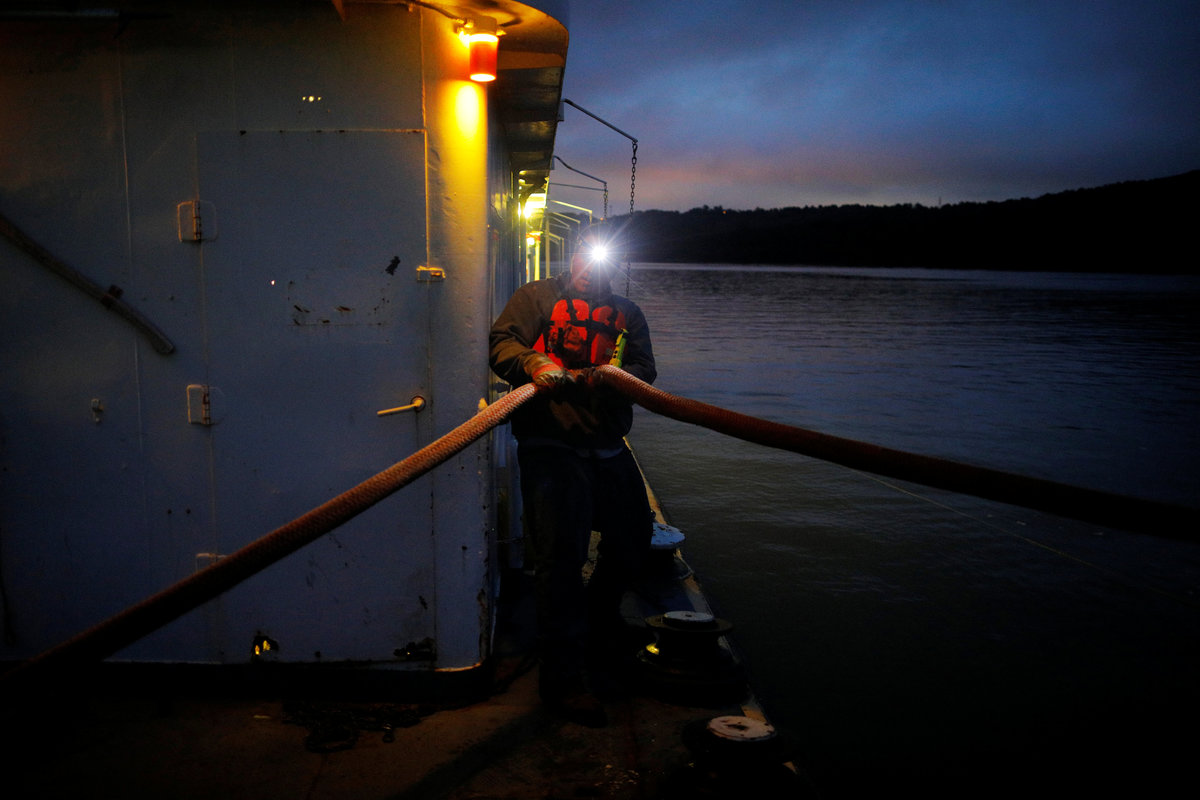
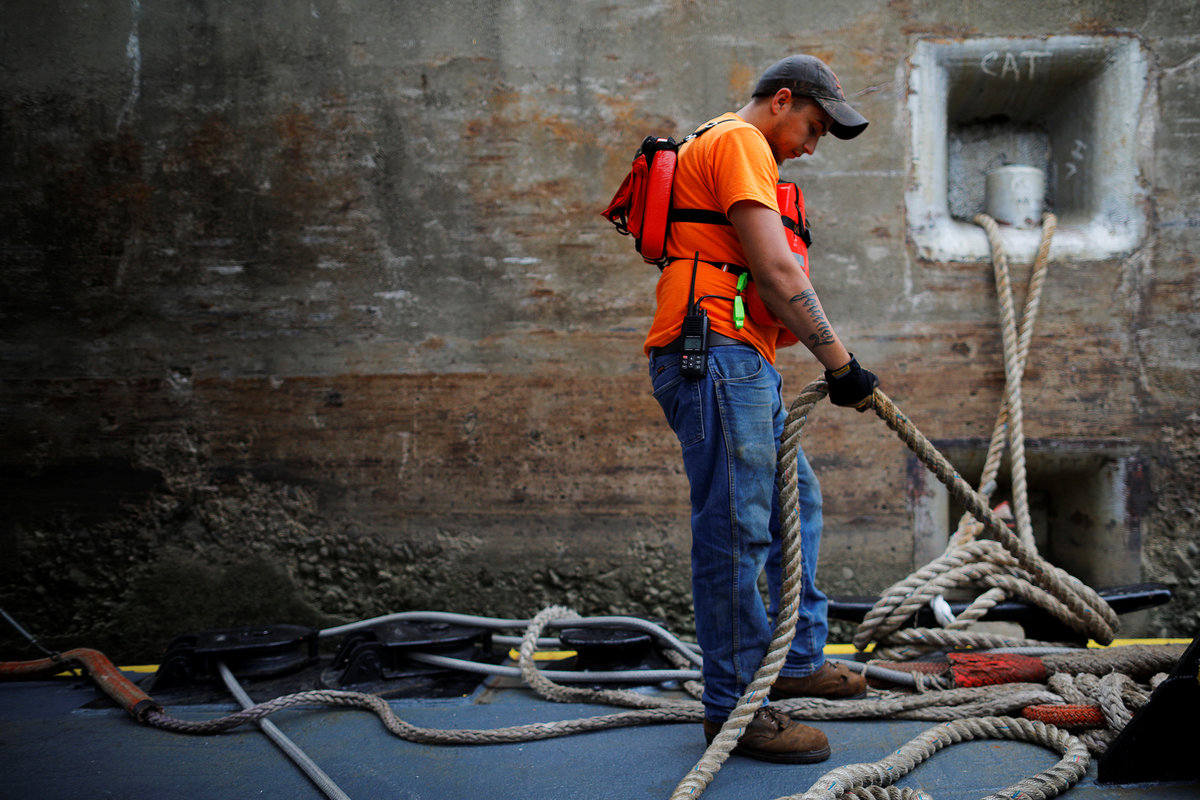
Twenty-one year-old deckhand trainee Jacob Bumgarner holds a line while wearing a headlamp shortly before sunrise on Campbell Transportation Company's towboat MK McNally on the Ohio River near, Cincinnati, Ohio, U.S., September 14, 2017. REUTERS/Brian Snyder
(Reuters) - In the 29 years that towboat captain Joe Gray has worked flotillas of barges up and down the Ohio River, he has witnessed the decline at the heart of industrial America in what is known as the country's Rust Belt.
Gray, 46, spends up to eight months a year doing 28-day stints on the barges carrying coal, corn and gravel between Pittsburgh, Pennsylvania and Cairo, Illinois. Some 600 million tons of goods still flow each year along 25,000 miles of U.S. waterways.
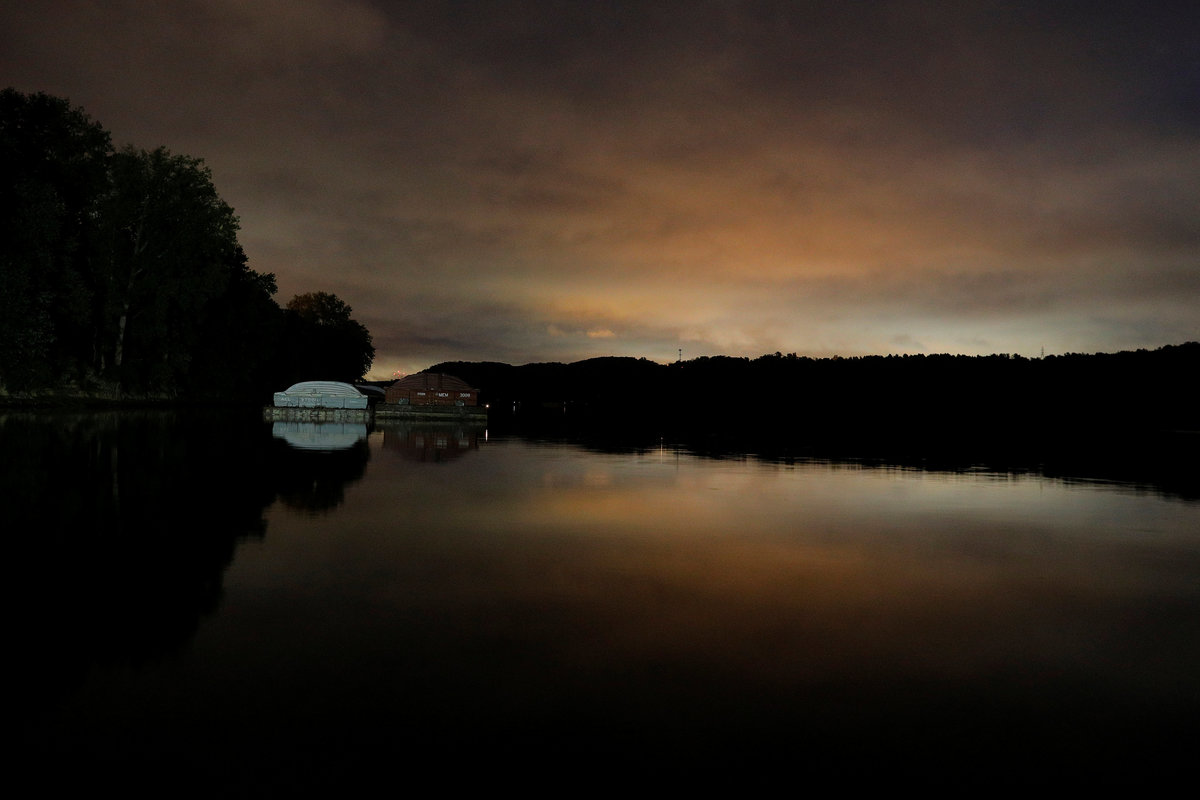
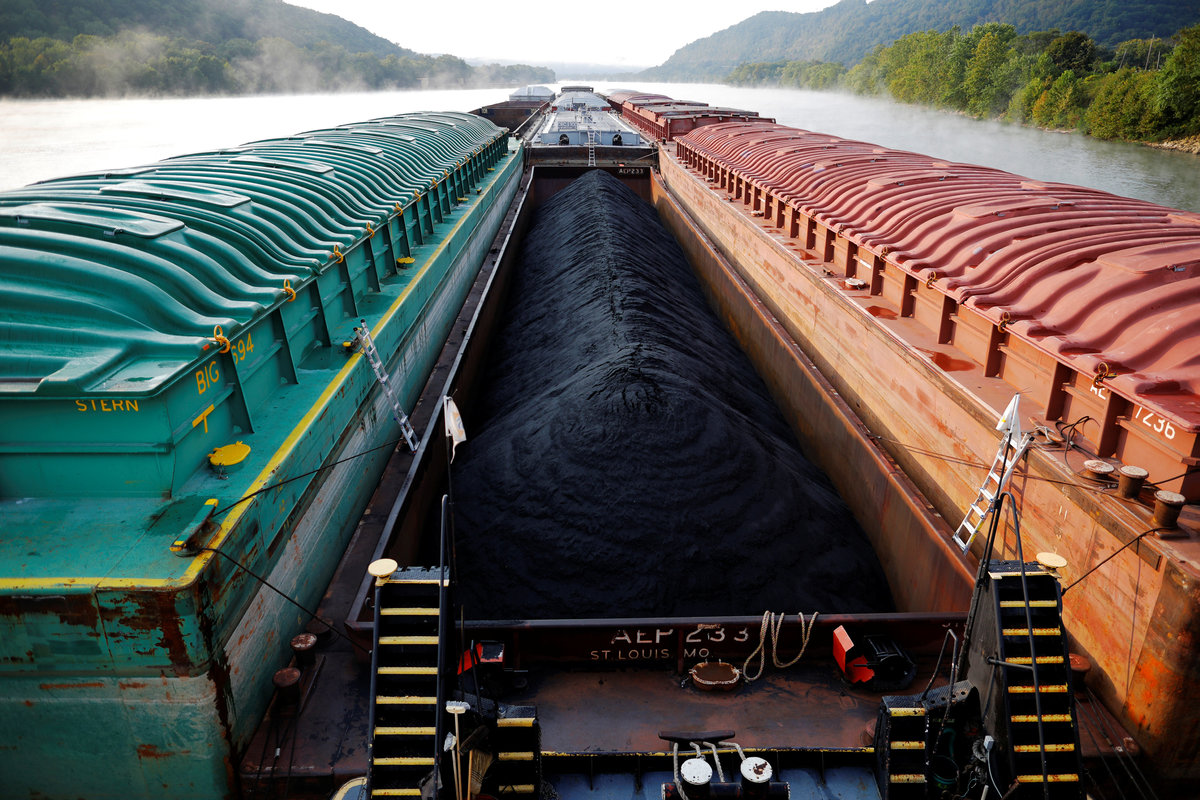
Barges sit in the Ohio River at sunrise near Cincinnati, Ohio, U.S., September 14, 2017. REUTERS/Brian Snyder
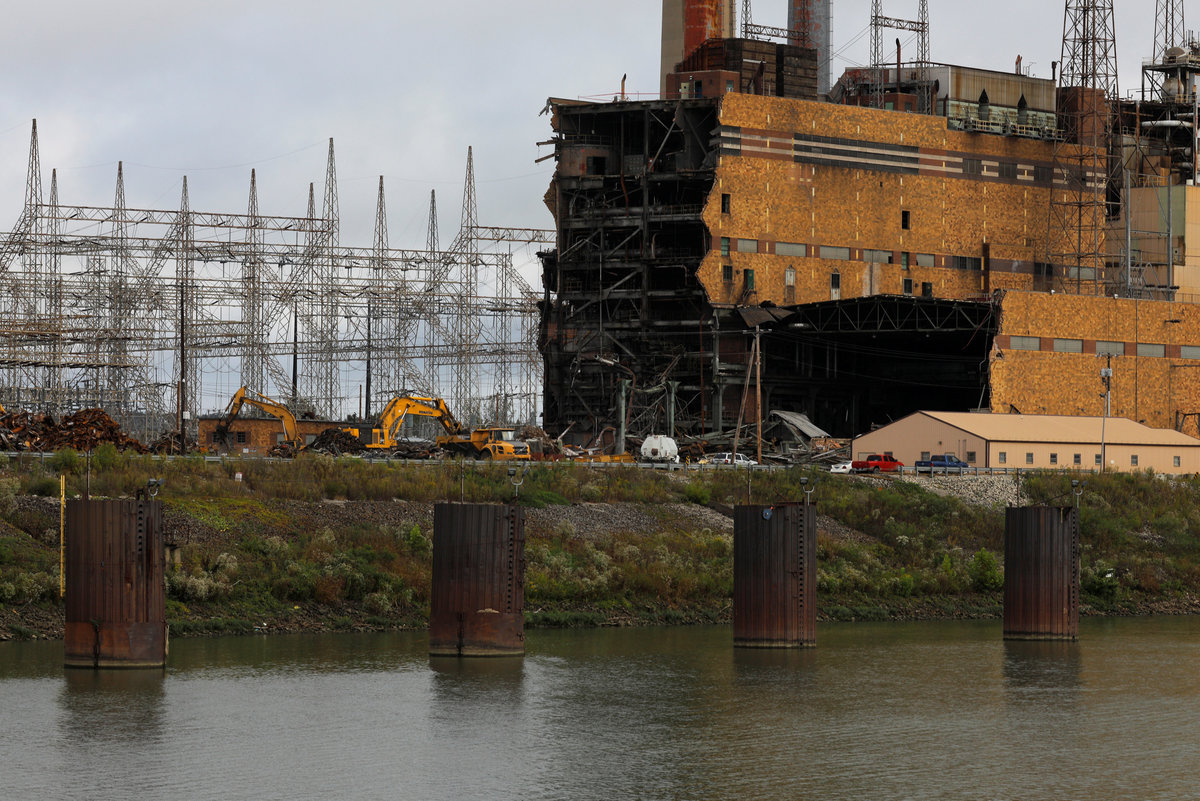
But he has seen a growing number of coal-fired power plants being dismantled, from Indiana to West Virginia, and says barges loaded with coal have dwindled in the face of cheaper natural gas and tougher environmental regulations.
It is a decline that President Donald Trump has promised to turn around, with a revival of coal, manufacturing and infrastructure. Those promises have played well among many communities along the river.
Populations in some smaller river towns have dwindled, leaving half empty downtowns and derelict factories.
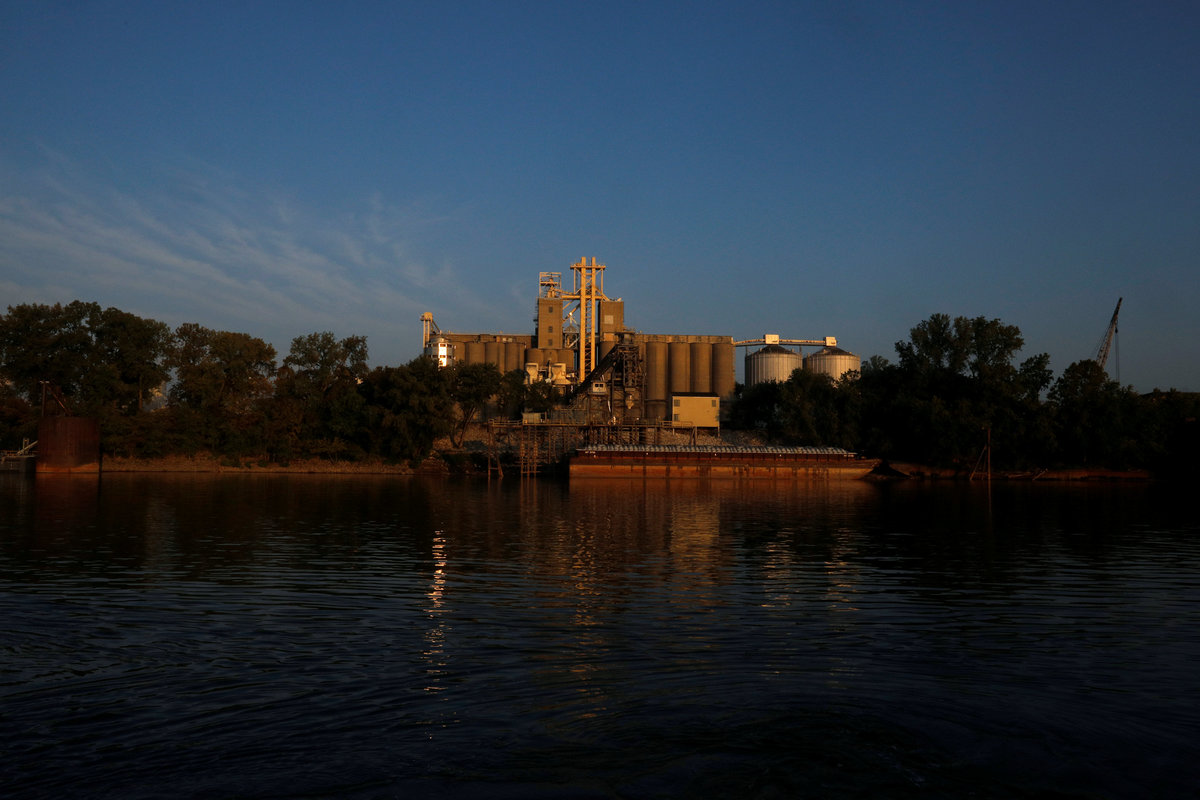
Campbell Transportation Company's towboat MK McNally passes ADM Grain Company on the Ohio River in Evansville, Indiana, U.S., September 17, 2017. REUTERS/Brian Snyder
"Them towns are all drying up," Gray said. "People are really struggling."
The population of Portsmouth, Ohio, has thinned by more than 20 percent from the 1980s, according to U.S. Census data, an era marked by the closure of an Empire-Detroit steel plant that triggered layoffs of 1,300 workers.
Nearly 36 percent of Portsmouth's residents now live below the poverty line, Census data showed, much higher than the national average of 16 percent of the population.
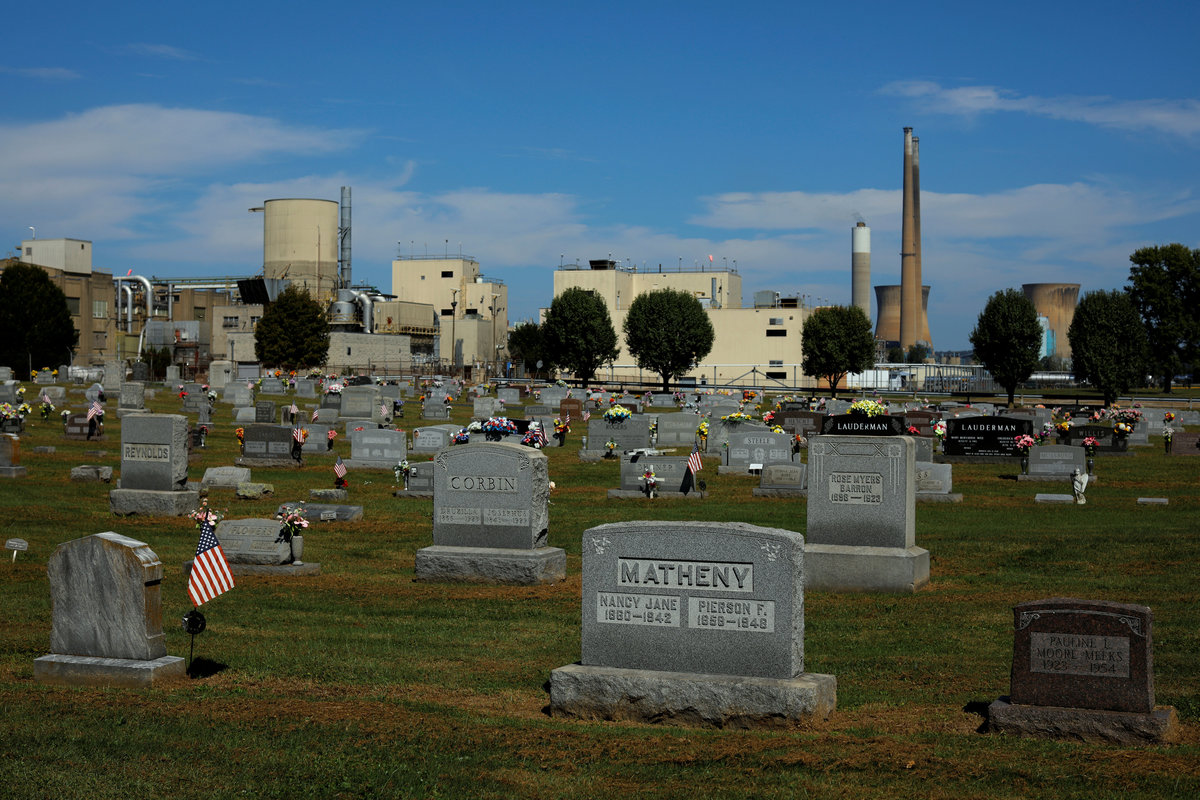
The Willow Island Baptist Church cemetery sits in front of Cytec Industries along the Ohio River in Belmont, West Virginia, U.S., September 24, 2017. REUTERS/Brian Snyder
The opioid abuse epidemic has hit particularly hard in Appalachian towns such as Portsmouth, with addiction and overdose deaths taking a further toll.
COAL NO LONGER KING
The word "Big" is painted on a barge being pushed by Campbell Transportation Company's towboat MK McNally on the Ohio River near Louisville, Kentucky, U.S., September 15, 2017. REUTERS/Brian Snyder
Although the coal industry work force has expanded slightly over the past year, U.S. coal mining jobs are down more than 70 percent since the mid-1980s, according to the U.S. Labor Department.
Coal shipments on the Ohio River have tumbled 33 percent in the past decade, U.S. Army Corps of Engineers data shows.
With good jobs scarce, Gray said towboat deckhand jobs have become more prized. Staff turnover in the barge trade is less frequent, he said.
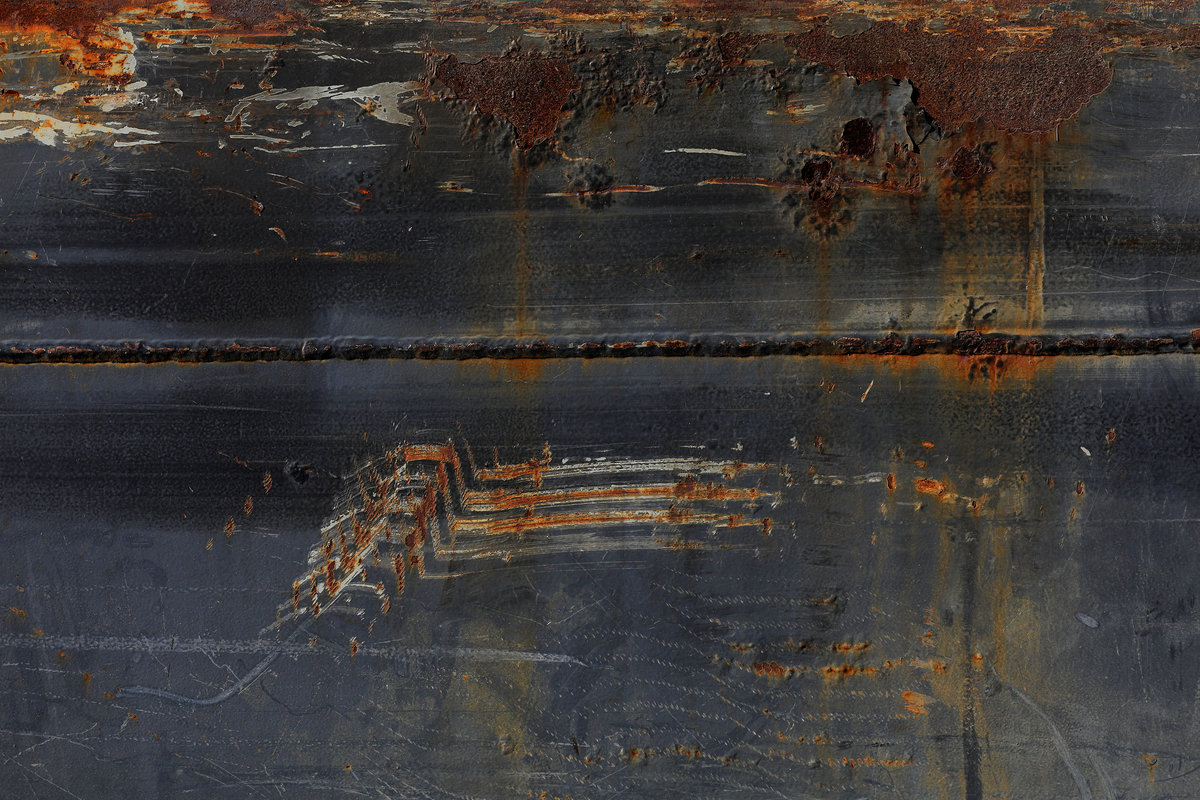
Rust and scraped-off paint are visible on a barge being pushed by Campbell Transportation Company's towboat MK McNally on the Ohio River near Brandenburg, Kentucky, U.S., September 15, 2017. REUTERS/Brian Snyder
"I've got people calling me every day wanting me to get them a job," he said.
Gray grew up in Racine, Ohio, and still lives in the small town on the river, with an old power plant directly across the water.
After his brothers worked as towboat deckhands, he followed them into the trade in 1988. He worked his way up to captain, earning $45 an hour. He has two children, one of whom also became a deckhand.
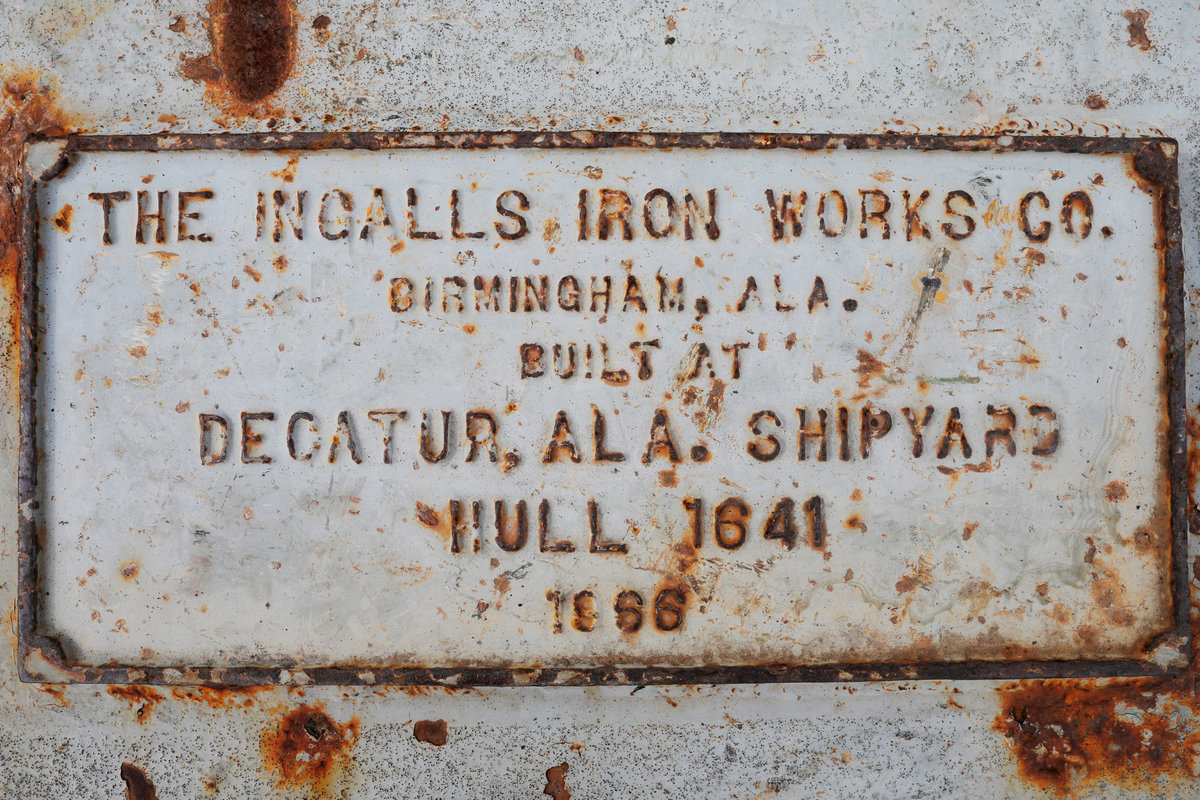
A plaque shows a barge pushed by Campbell Transportation Company's towboat MK McNally was built in 1966 on the Ohio River near Mt. Vernon, Indiana, U.S., September 17, 2017. REUTERS/Brian Snyder
But the absences have taken a personal toll.
"This river life is pretty hard on a marriage," he said.
Piloting the 126-foot towboat Tommy H., owned by his employer Campbell Transportation, he said he pushes a lot less coal these days. More often the cargo is lubricant oil or grain.
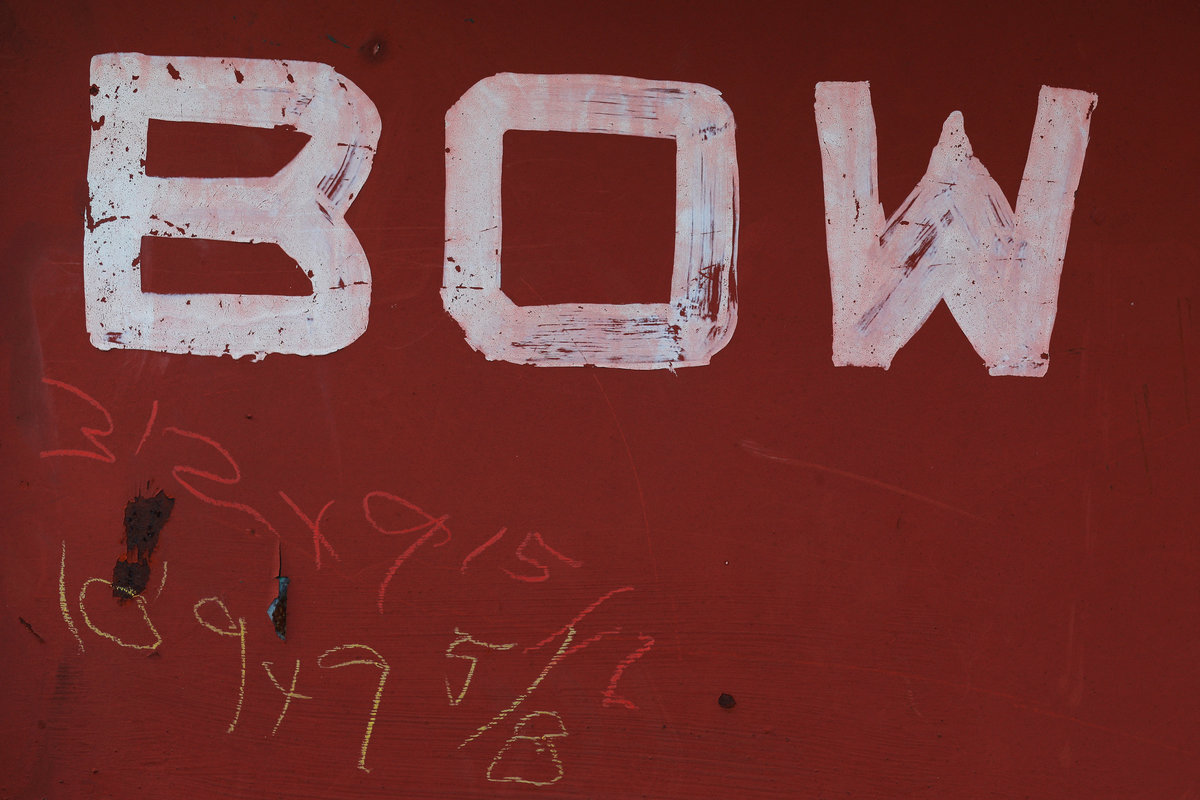
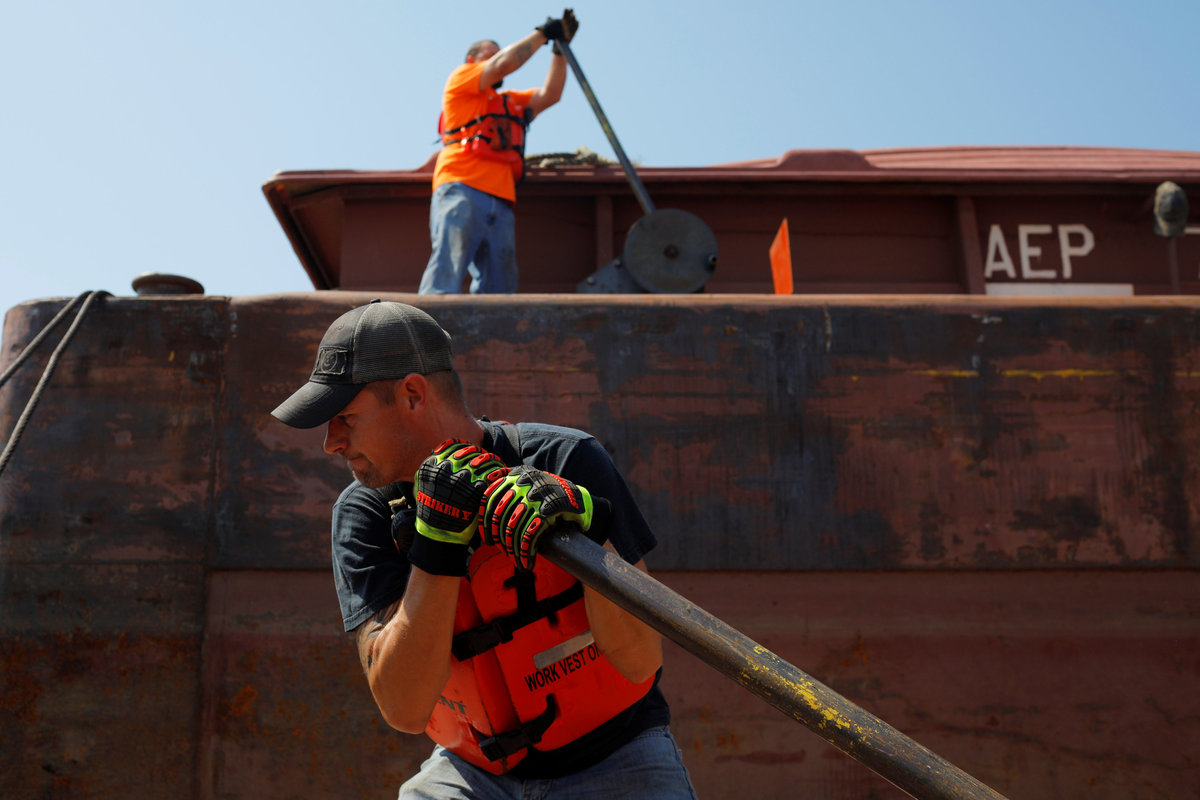
The "Bow" is marked on a barge being pushed by Campbell Transportation Company's towboat MK McNally on the Ohio River near Brandenburg, Kentucky, U.S., September 15, 2017. REUTERS/Brian Snyder
About 60 percent of U.S. grain is moved by river barges. Record U.S. harvests have made grain transportation one of the brighter lines of business for the barge trade.
Aging infrastructure means barges are sometimes victims of canal lock delays. Campbell Transportation estimated it lost $1 million in revenue in September and October because of the delays.
Gray often runs his towboat, which combined with a full complement of barges can reach to more than 1,150 feet (350.5 m) long, 24 hours a day with two teams of crew members including a relief captain, lead deckhand and sternman - working six hours on and six off.
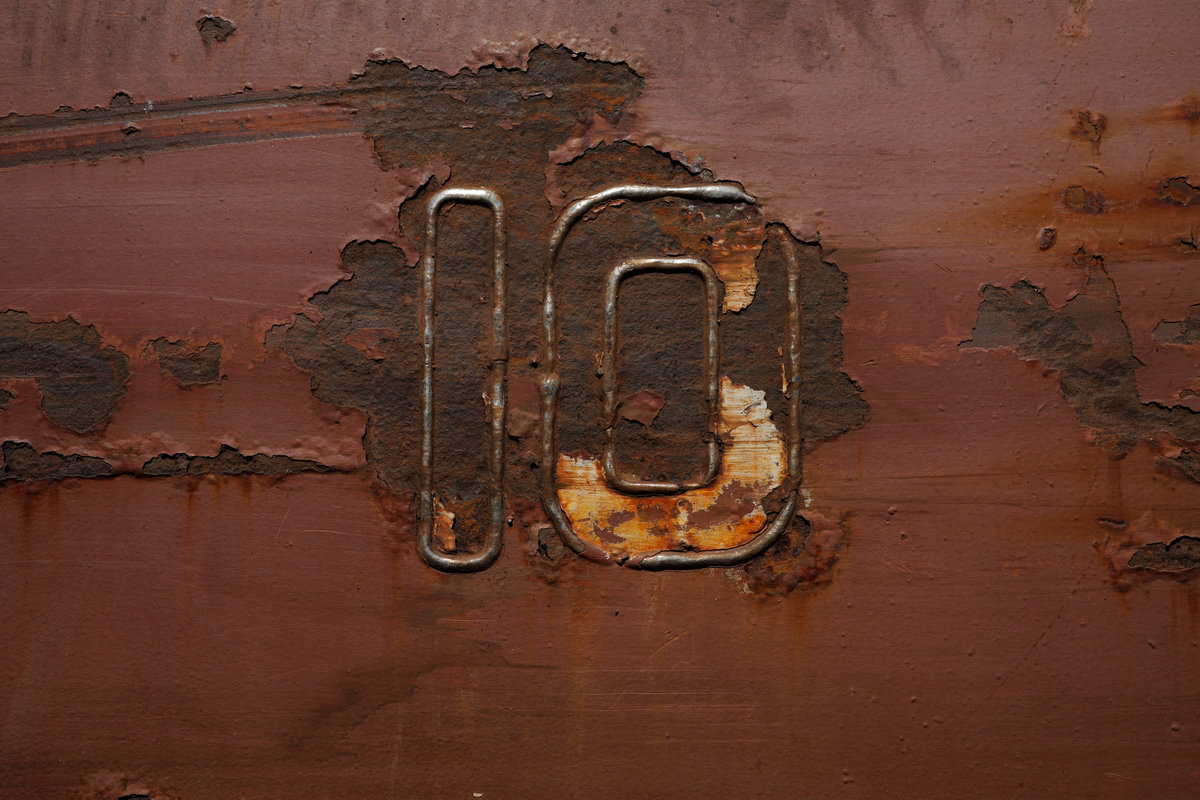
The number "10," used to mark the water level, appears on the side of a barge being pushed by Campbell Transportation Company's towboat MK McNally on the Ohio River near Louisville, Kentucky, U.S., September 15, 2017. REUTERS/Brian Snyder
Days and nights of slow motoring are broken up dropping off barges and picking up different new ones along the route, in places like Apple Grove, West Virginia and Owensboro, Kentucky. It requires nervy precision to pass narrowly through locks with just a few feet to spare on either side.
The remnants of an industrial past - docks to load coal from the mines of Appalachia and depots full of road salt or grain - line the river.
Some mid-sized cities such as Louisville have cleared out riverside industry and found new ways to thrive, Gray said.
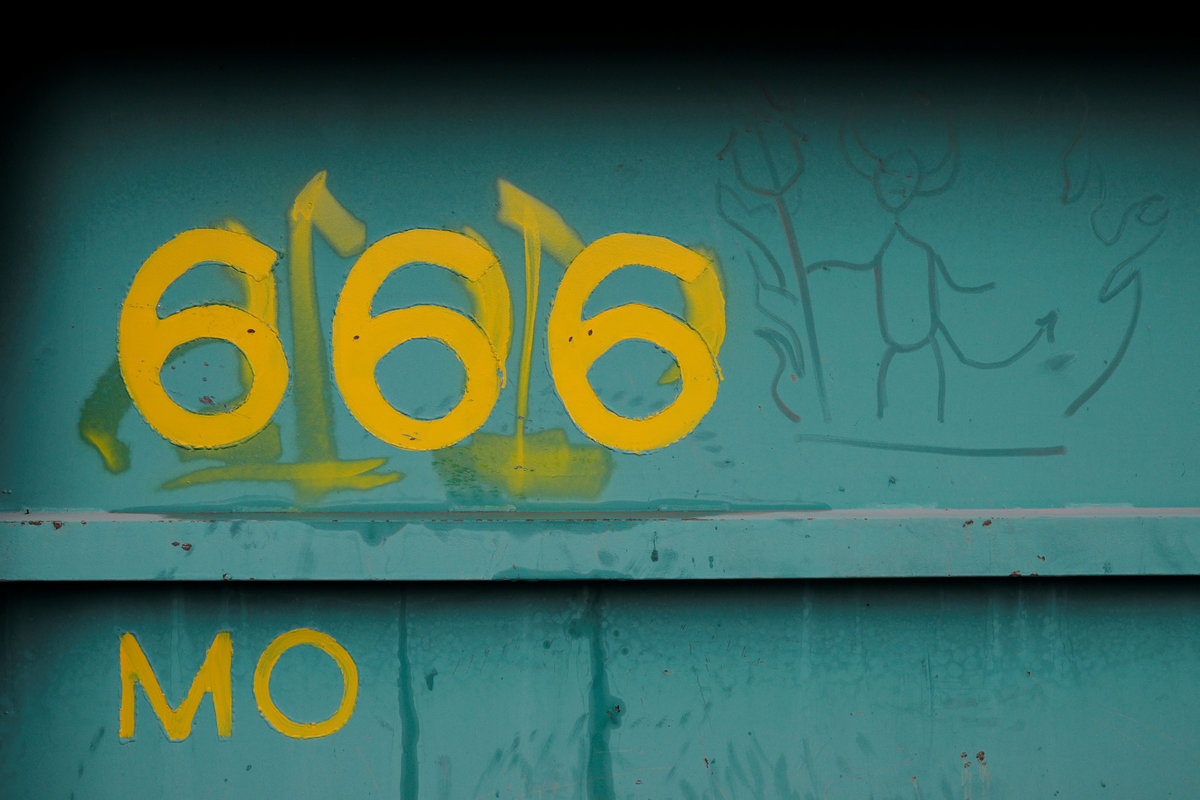
Barge number "666" is pushed by Campbell Transportation Company's towboat MK McNally on the Ohio River near Mt. Vernon, Indiana, U.S., September 18, 2017. REUTERS/Brian Snyder
Whether Trump's administration can revive other communities on the river remains to be seen.
"I'm hoping like hell that he turns this economy around," he said.
(For photo essay, see: http://reut.rs/2BF3xM8)
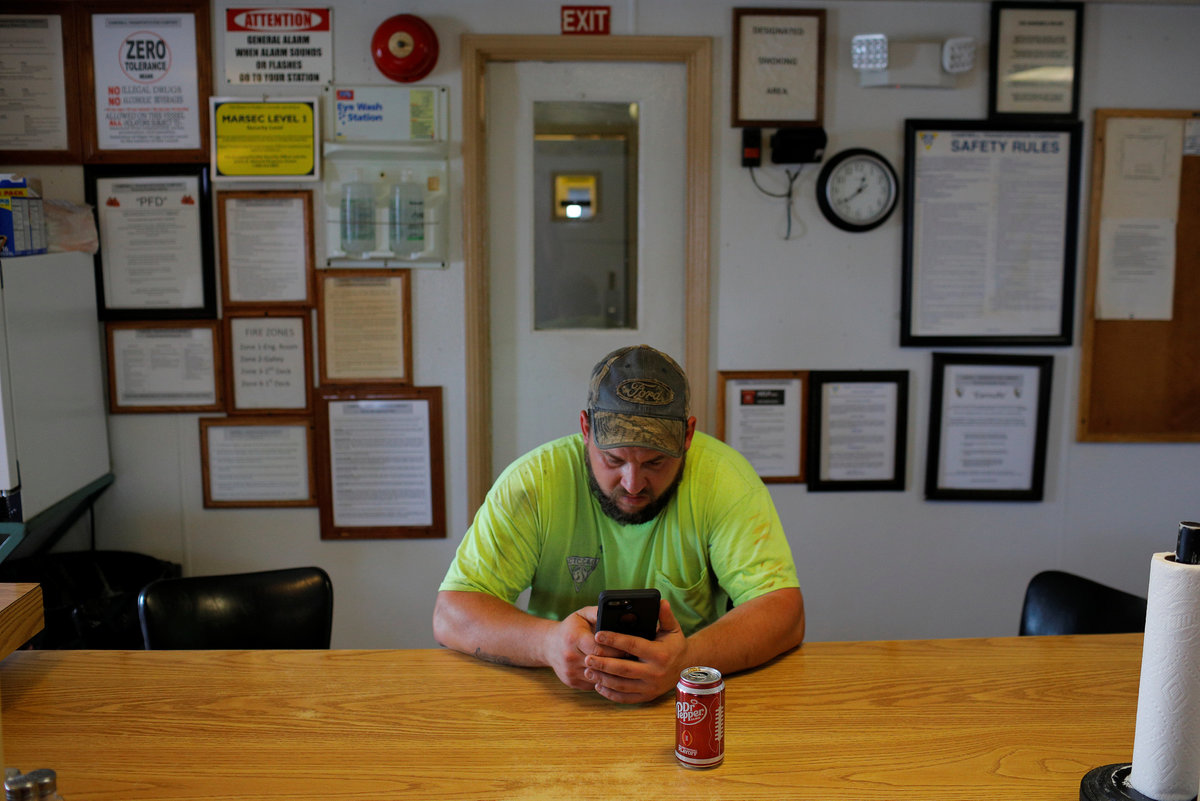
Thirty-three year-old lead deckhand Joshua Taylor uses his mobile phone in the galley of Campbell Transportation Company's towboat MK McNally on the Ohio River near Lewisport, Kentucky, U.S., September 16, 2017. REUTERS/Brian Snyder
(Additional reporting by Karl Plume and Brian Snyder; editing by Simon Webb and G Crosse)
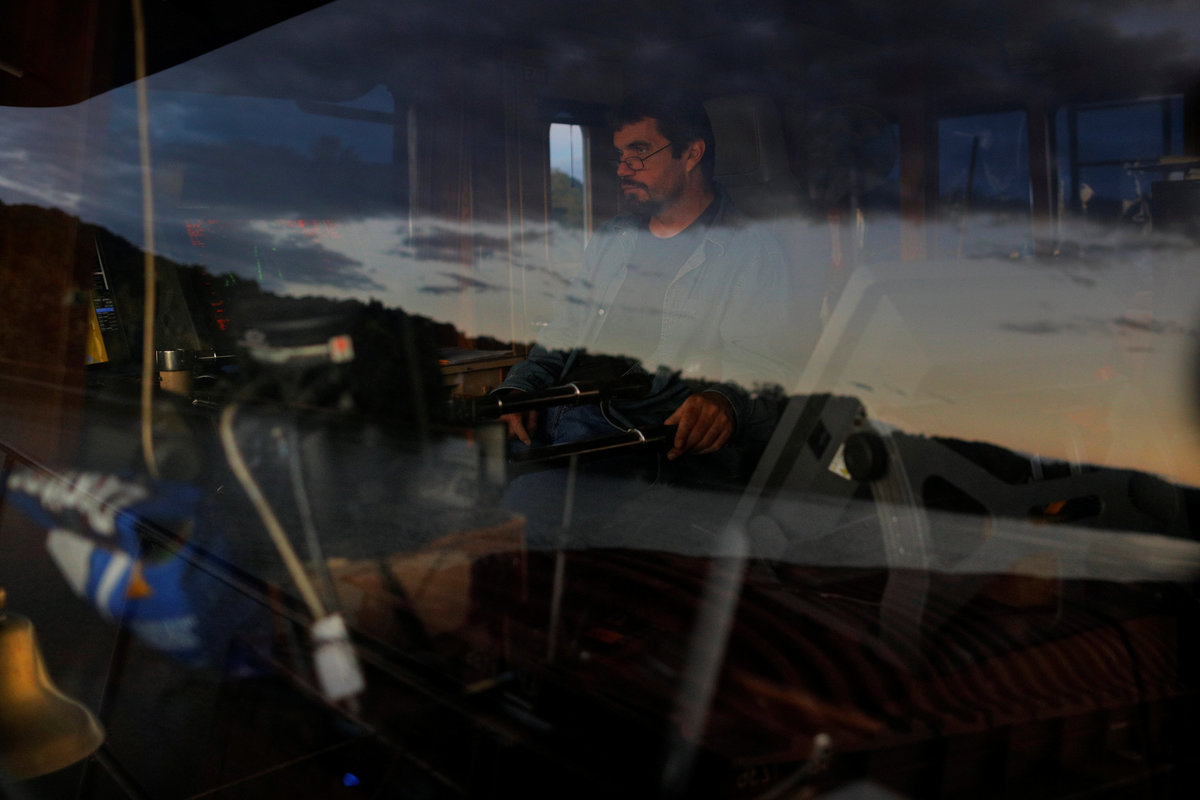
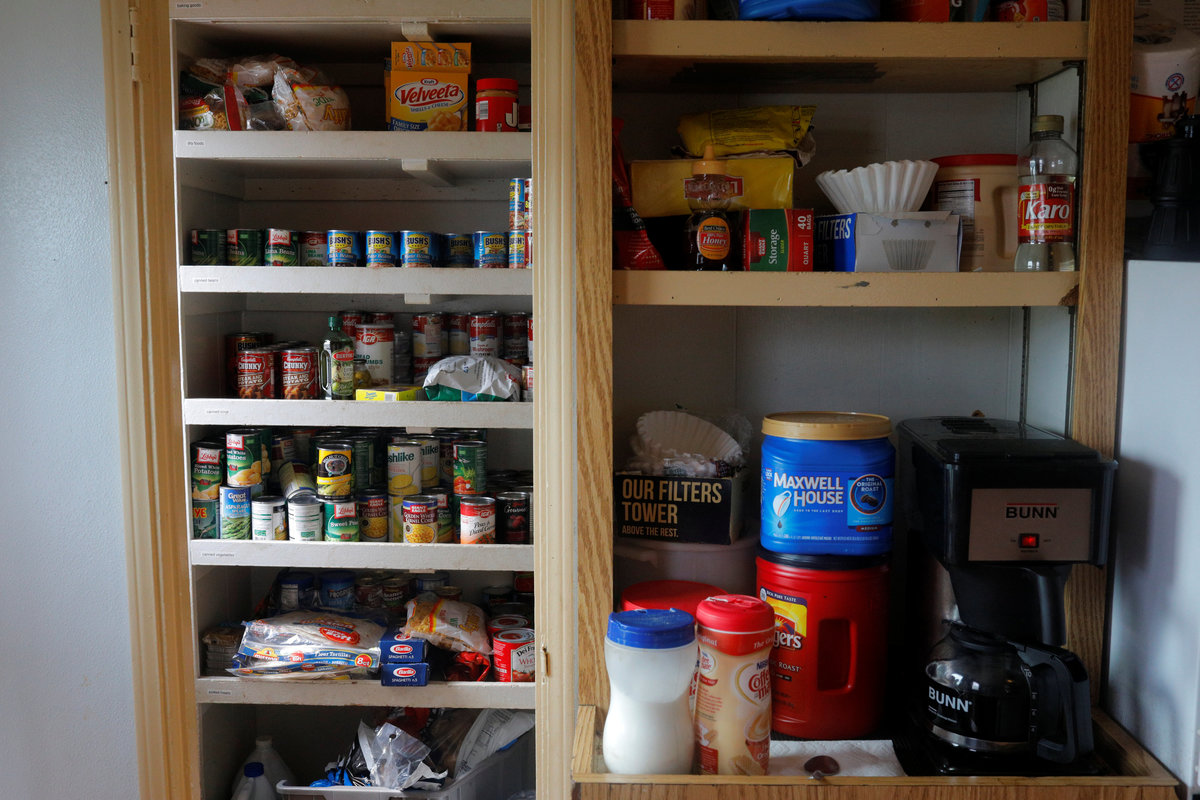
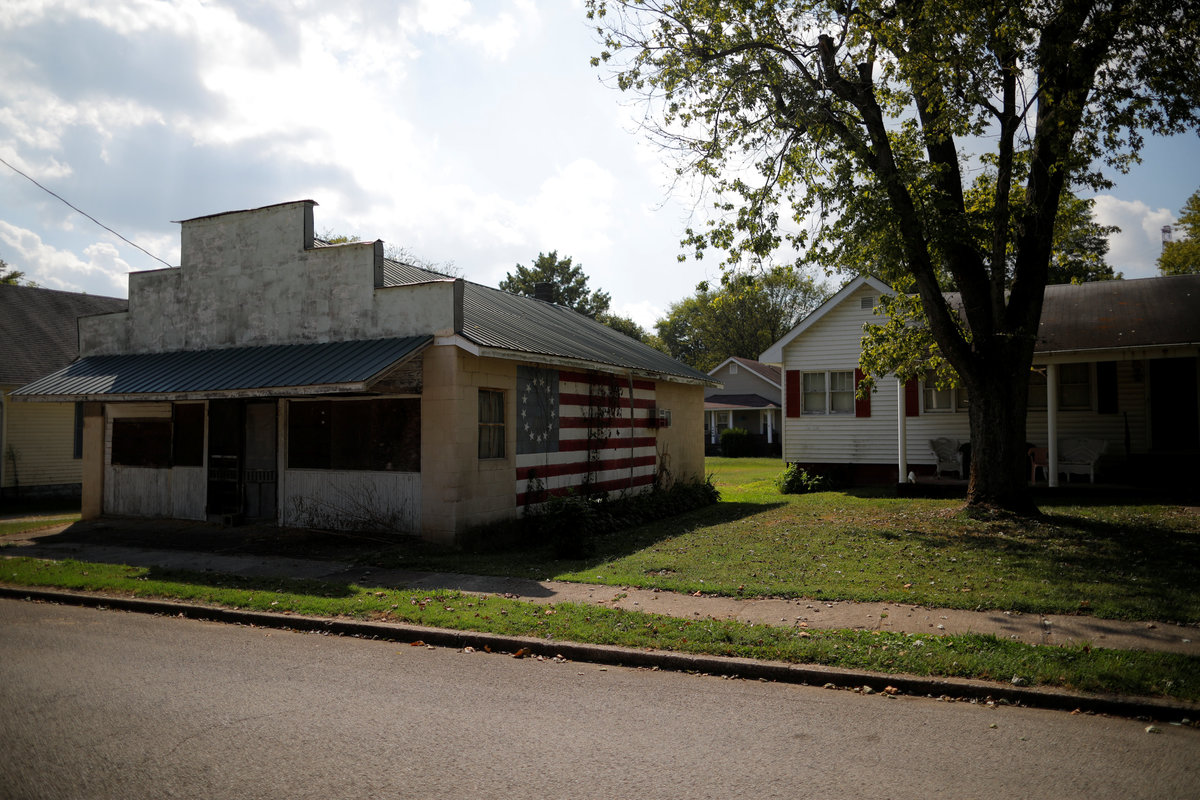
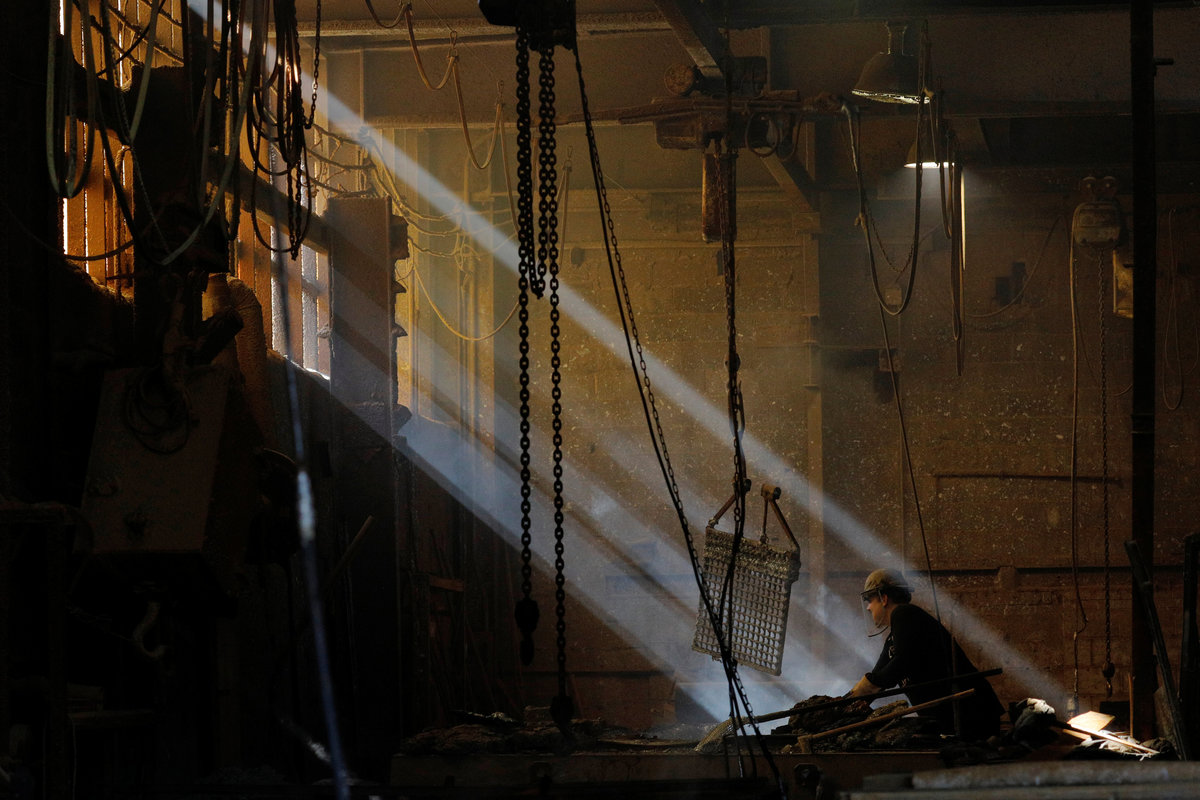
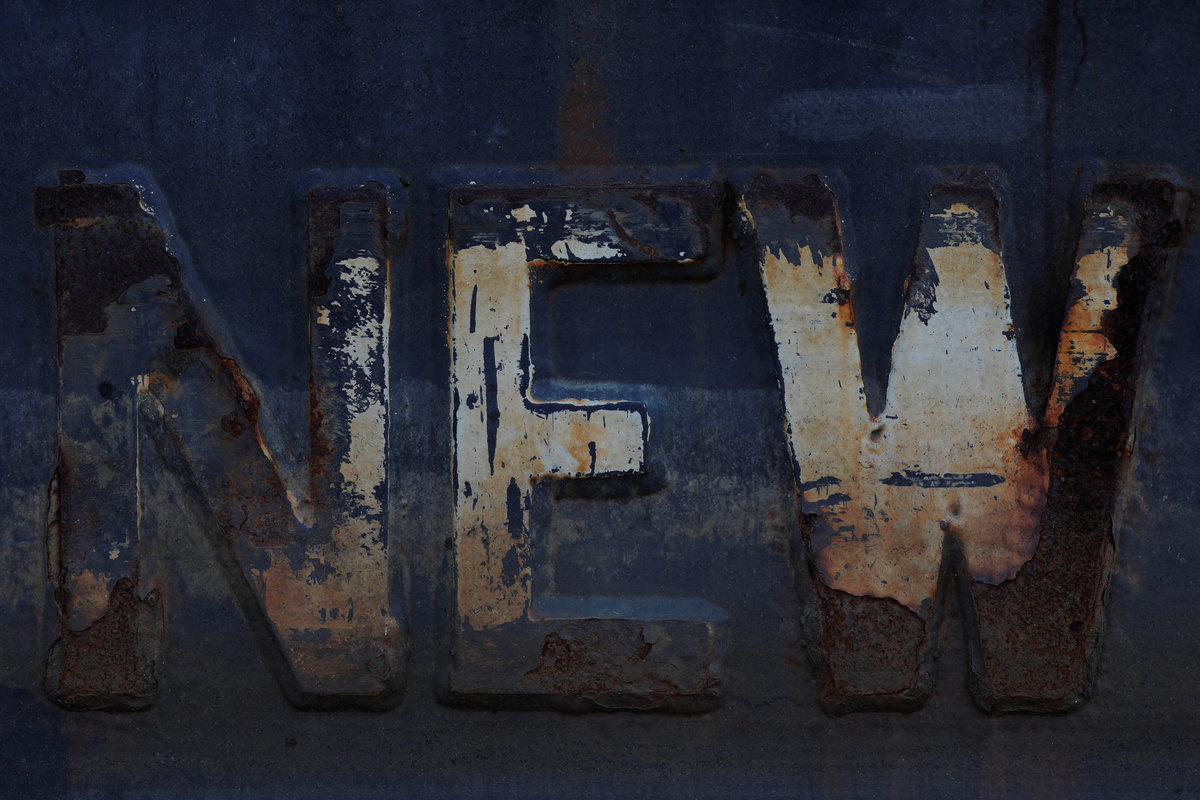
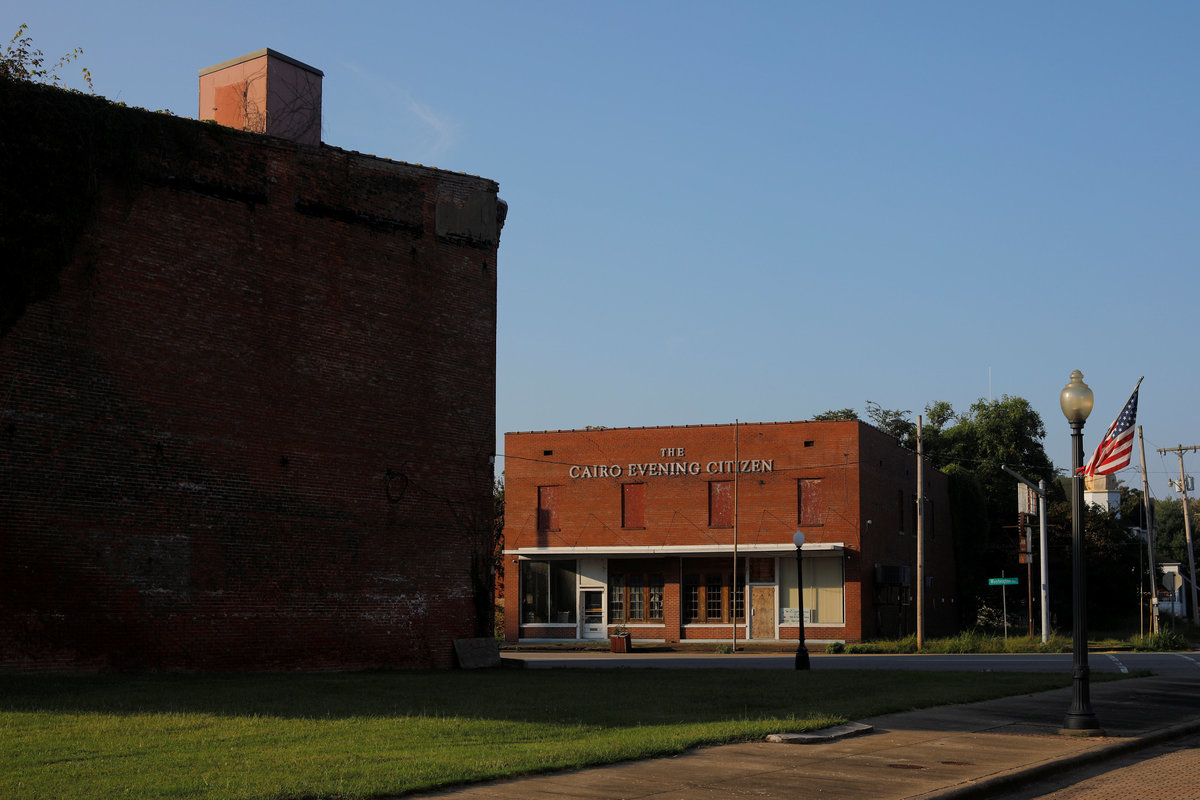
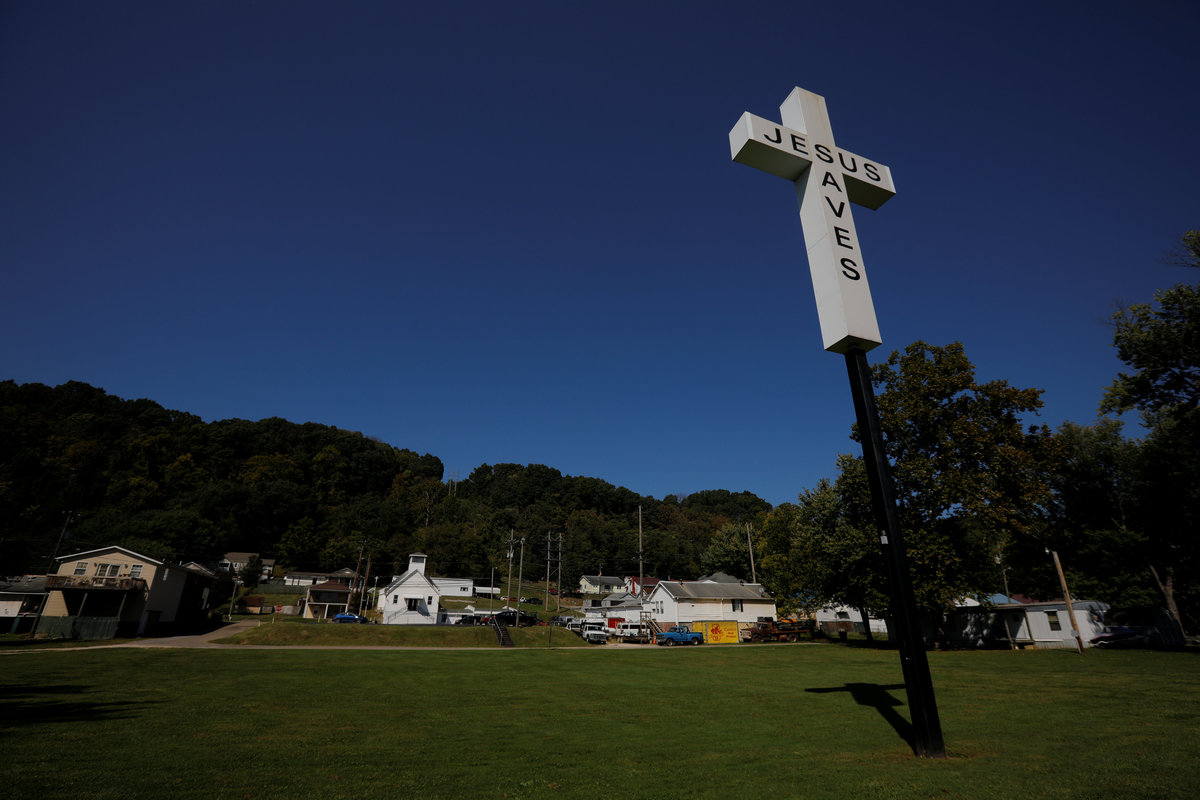
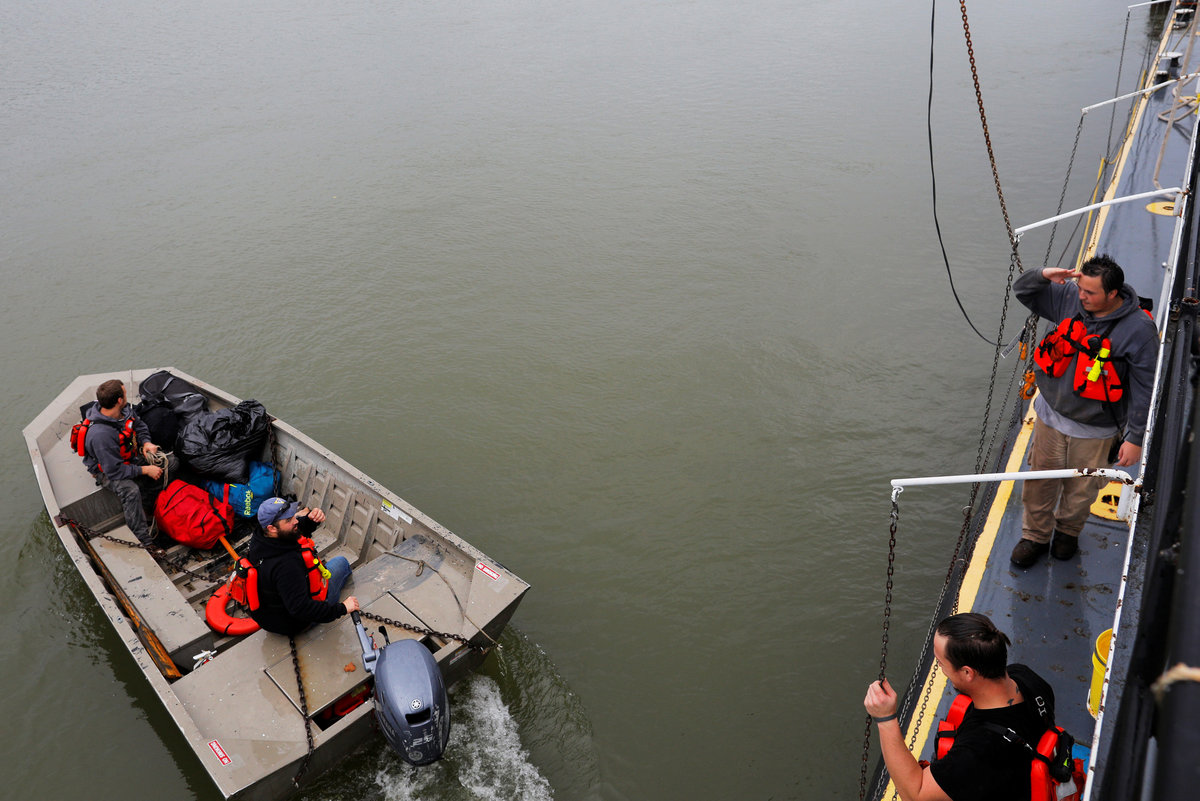
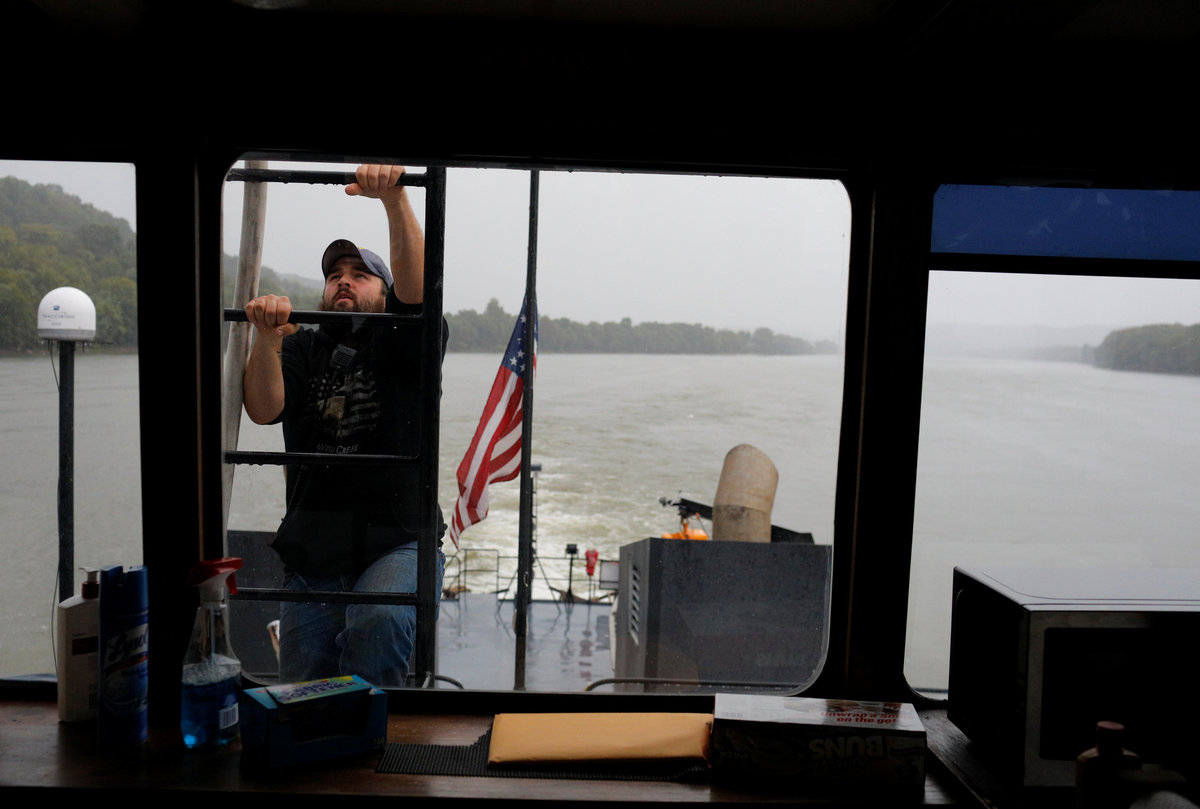
The Ohio River is reflected in the wheelhouse window as forty-six year-old Captain Joe Gray pilots Campbell Transportation Company's towboat MK McNally pushing 15 barges near Ironton, Ohio, U.S., September 12, 2017. REUTERS/Brian Snyder Canned goods sit in the pantry in the galley of Campbell Transportation Company's towboat MK McNally on the Ohio River passing Louisville, Kentucky, U.S., September 15, 2017. REUTERS/Brian SnyderThe remnants of a plant are stuck on a barge pushed by Campbell Transportation Company's towboat MK McNally on the Ohio River near Louisville, Kentucky, U.S., September 15, 2017. REUTERS/Brian Snyder A U.S. flag is painted on the side of a home along the Ohio River in Joppa, Illinois, U.S., September 19, 2017. REUTERS/Brian Snyder A worker treats metal at Neville Galvanizing on Neville Island in the Ohio River in Pittsburgh, Pennsylvania, U.S., September 25, 2017. REUTERS/Brian Snyder The water depth is marked on the walls of the Cannelton Lock on the Ohio River in Cannelton, U.S., September 16, 2017. REUTERS/Brian Snyder "NEW" is marked a barge pushed by Campbell Transportation Company's towboat MK McNally on the Ohio River near Rockport, Indiana, U.S., September 16, 2017. REUTERS/Brian Snyder The name of the Cairo Evening Citizen newspaper is seen on its shuttered offices in Cairo, Illinois, U.S., September 20, 2017. REUTERS/Brian Snyder A cross with "Jesus Saves" written on stands on the banks of the Ohio River in Chesapeake, Ohio, U.S., September 23, 2017. REUTERS/Brian Snyder Twenty-one year-old deckhand trainee Jacob Bumgarner (top R) salutes departing crew members during a crew change on Campbell Transportation Company's towboat MK McNally on the Ohio River near Chilo, Ohio, U.S., September 13, 2017. REUTERS/Brian Snyder Twenty-three year-old sternman Rocky Sheppard holds a line as Campbell Transportation Company's towboat Tommy H reaches the Montgomery Lock on the Ohio River near Industry, Pennsylvania, U.S., September 7, 2017. REUTERS/Brian Snyder The Tanners Creek Generating Station, a former 1000 MW, coal-fired electrical plant, is being taken down along the Ohio River in Lawrenceburg, Indiana, U.S., September 14, 2017.Thirty-five year-old sternman Jeremy Kinder (bottom) and thirty-three year-old lead deckhand Joshua Taylor tighten lines connecting barges pushed by Campbell Transportation Company's towboat MK McNally on the Ohio River passing Louisville, Kentucky, U.S., September 15, 2017. REUTERS/Brian Snyder Barges, including one filled with coal (C), are pushed by Campbell Transportation Company's towboat MK McNally on the Ohio River near Stratton, Ohio, U.S., September 10, 2017. REUTERS/Brian Snyder Twenty-five year-old sternman Tygert Phalen climbs a ladder on the wheelhouse of Campbell Transportation Company's towboat MK McNally on the Ohio River near Crown City, Ohio, U.S., September 12, 2017. REUTERS/Brian Snyder
Sign up to read this article
Read news from 100’s of titles, curated specifically for you.