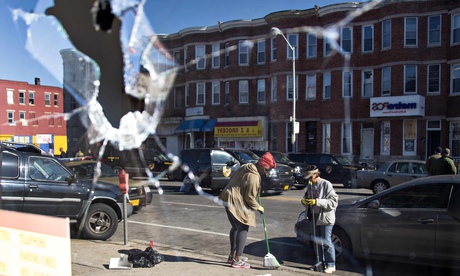
When Baltimore was last shaken by riots, 47 years ago this month, the response from both residents and government was one of divestment (Report, 28 April). Small business owners never returned to their looted shops and the city never bothered to rebuild swaths of affected streets. The result was an acceleration of a city already in decline, marked by the burned-out shells of buildings still standing decades later as reminders of the disturbances. The response this time must be different. London offers lessons for a two-pronged response. Identify and prosecute the looters, but also target investment into the physical and social fabric of those communities worst hit. Pennsylvania Avenue, once a thriving corridor of African-American life until the 1968 riots left it littered with empty lots, could be a good starting point. Baltimore is unique. It is a densely built-up city of beautiful 19th-century neighbourhoods and its citizens retain a strong and quirky identity. In a US largely characterised by suburban monotony, these are assets that could help regenerate Baltimore back to its extraordinary potential.
Alex Csicsek
London