Thailand's clean energy development was discussed at a recent state-private sector meeting, and can be successfully implemented if the nation focuses on solar power, according to an energy official who requested anonymity.
He said Thailand's solar sector offers opportunities across all scales, from micro-installations producing just a few kilowatts to gigawatt-scale projects.
This flexibility allows investments ranging from small households and micro-businesses with limited capital to billion-baht ventures by large corporations.
A study by the Department of Alternative Energy Development and Efficiency estimates Thailand has the technical potential to generate nearly 1,000GW of solar power nationwide.
The declining cost of battery energy storage systems (BESS) enables this transition, said the official.
Traditional solar systems face limitations, producing electricity only during daylight and under clear skies, with a capacity factor of around 10%. Also known as a plant factor, a capacity factor measures how much electricity a power plant actually generates compared with its maximum output if running at full capacity all the time.
BESS technology addresses this challenge by storing excess energy and releasing it when sunlight is unavailable, reducing intermittency and stabilising supply.
Other renewable sources such as wind, hydropower, biogas, biomass and waste-to-energy remain constrained by seasonality and resource availability, limiting their contribution to just a few gigawatts.
Solar power combined with BESS is expected to reshape the industry, aligning with the government's draft 2026 power development plan, which calls for renewable energy to eventually account for more than half of total generation capacity, the official said.
To encourage adoption, the government rolled out two major initiatives.
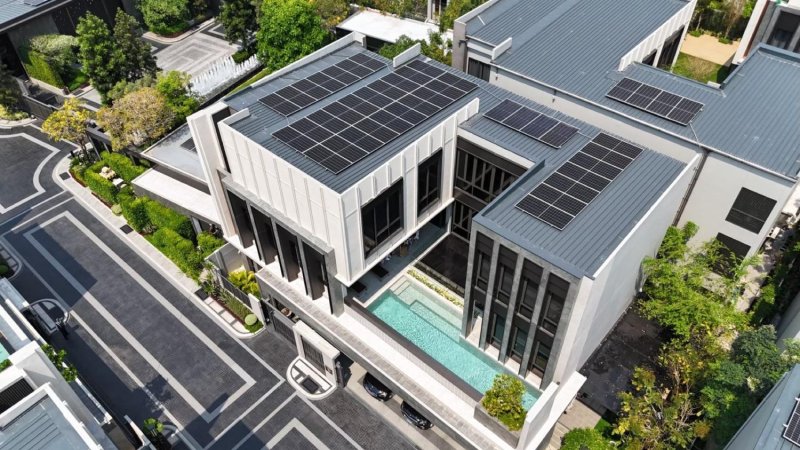
The rooftop solar buyback scheme allows households to sell electricity generated from on-grid solar panels back to the grid at 2.20 baht per unit.
A tax incentive enables households installing rooftop solar systems between March 3, 2026 and Dec 31, 2027 to deduct up to 200,000 baht from personal income tax.
The scheme covers installations up to 10KW, aiming to make self-generation more accessible to the public.