One telling rhetorical detail from Patrick Wintour’s much-read Guardian post-election autopsy of Ed Miliband’s campaign was the revelation that his team referred to policies as “offers”. “We were trying to put together the policy offer,” one speechwriter remembered, and they managed to dream up an “NHS offer”. (This did not mean discounts for multiple operations.) Most revealingly, the Miliband team spoke of specific “retail offers” to mean policies “that tested well in focus groups”. And so the country was pictured as a giant supermarket full of bovine shoppers to be tempted by cut-price promises.
Well, not promises, exactly: just as a political aspiration is the opposite of a “pledge”, employing the term “offer” can leave it usefully vague as to whether you definitely intend to provide something. People can “offer” speculatively on houses with no intention of buying them. And though an “offer” of a role on a TV show usually means a commitment, one actor friend reports having received “offers” that are just invitations to audition. An even less attractive sort of “offer”, meanwhile, is worse than empty. Quite often, writers will receive an “offer” to write for some website for no money. This is not an offer, but a request that you work for nothing.
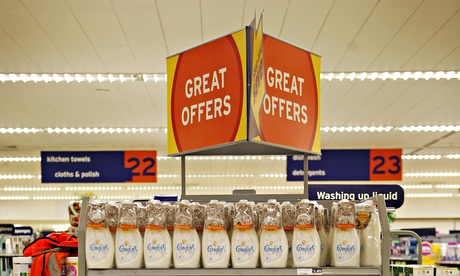
Paradoxically, indeed, offering something is often equally well described as asking really hard for it. Think of an “offer for sale” on the stock market, a usage dating from 1930, which the OED defines as “an invitation to the general public to purchase the stock of a company”. A shop “offer”, meanwhile, will usually relate to goods that the supermarket especially wants to get rid of. (A “special offer” even more so.)
Offers as requests, or demands, can be more personally directed, too. Think of the traditional “offer” of marriage, as though the proposer means to get nothing out of it. And the presentation of an “offer” can also be more nakedly an act of aggression, as in offering someone out. (Already as of Christopher Marlowe’s Tamburlaine of 1590, you could “give offer of [a] fight”.)
It’s no surprise, then, if people are suspicious of an “offer”, since the word so often indicates that someone is pretending to promise you something in order to disguise the fact that, really, they want something from you – whether it be money, sex, free labour, or your face in the gutter. Perhaps subliminally we also feel the semantic distance that the word “offer” has travelled from its original context of devotional humility: an offering or sacrifice to a just and powerful god. Thus when a group of modern “creatives” lounges around on improbably shaped office sofas to ask “What’s the offer here?”, it might seem as though the magic has gone.
But the adoption of “offer” in politics and elsewhere represents a more malignant general phenomenon, too: the supermarketisation of public language, and so of public thought. Little Piers, a school governor might note sadly, did not have a very good “offer” last term, what with all the supply teachers and cancelled ukulele lessons. Municipal authorities boast on their websites of their “local offer”, which might amount to a vague pseudo-commitment to empty bins. It is perhaps not a coincidence that much of the research on “nudging”, which became an officially sanctioned tool of social control with the creation last parliament of the “Behavioural Insights Team”, was done in supermarkets. Which is also where we get the political fetishisation of “choice” that effectively imposes greater burdens of research and anxious responsbility on to the individual citizen.
You might think that Team Miliband’s use of “retail offers” to mean hopefully attractive policy propositions drip-fed to the public was especially patronising, with its implicit contrast to some wholesale political philosophy that a nation of aisle zombies was too stupid to understand. As it happens, the electorate decided that Miliband’s policy bribes were offers they could refuse. Meanwhile, as the supermarketisation of public language continues relentlessly, I expect it is only a matter of time before someone opens a chain of euthanasia clinics called “Would You Like to Use the Self-Checkout?”