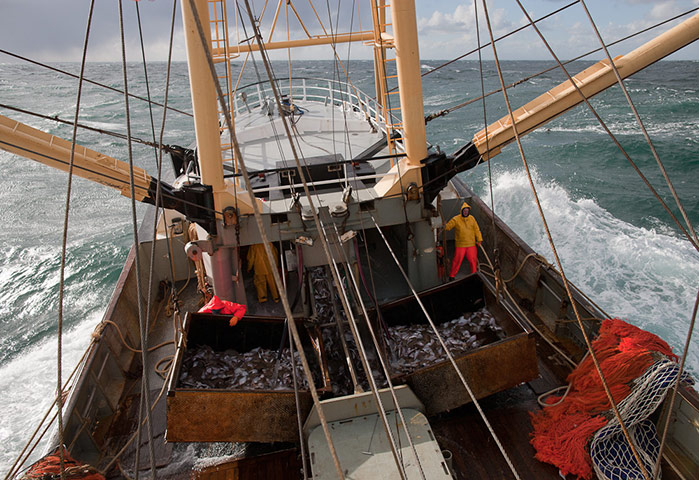
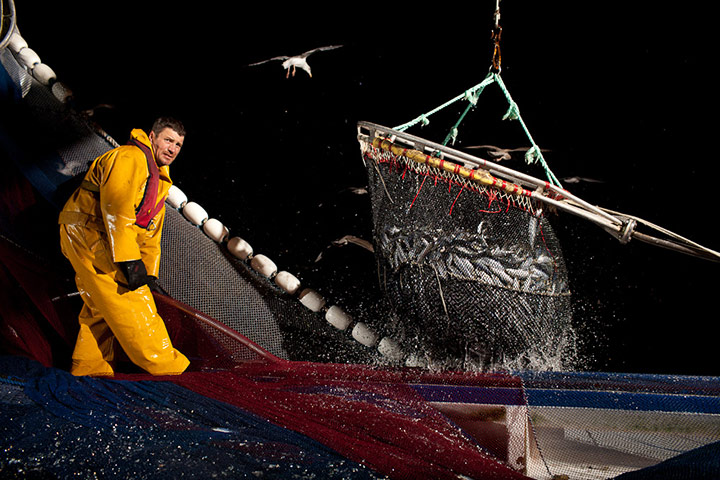
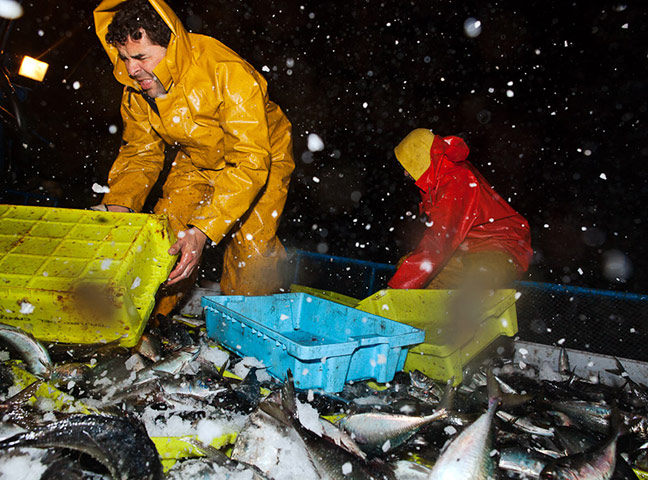
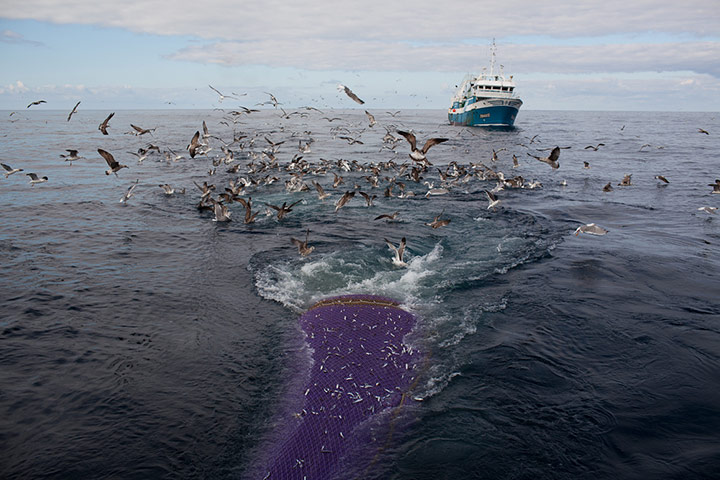
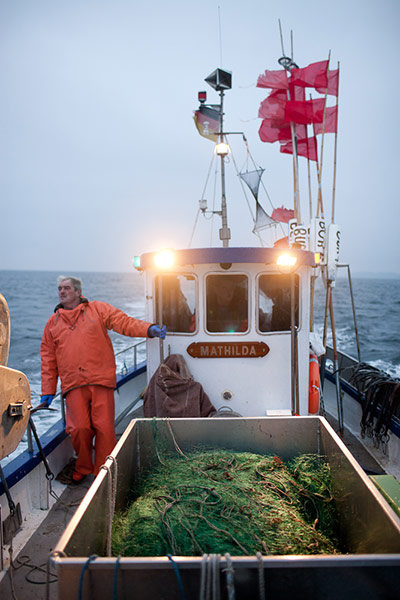
Flatfish fill the holding tanks on a beam trawler, amid heavy seas in the North Sea. The bulk of EU fisheries subsidies have gone to large-scale industrial vessels mainly for modernisation and constructionPhotograph: Corey Arnold/Ocean2012A deckhand on a purse seine boat observes a scoop of mackerel and sardines coming over the rail and into the fish holdsPhotograph: Corey Arnold/Ocean2012A large catch of horse mackerel aboard a small purse seine boat. More than 70% of EU fish stocks are overfished and many are at high risk of depletion. For 14% of the stocks there is “emergency” scientific advice that fishing should be ceasedPhotograph: Corey Arnold/Ocean2012
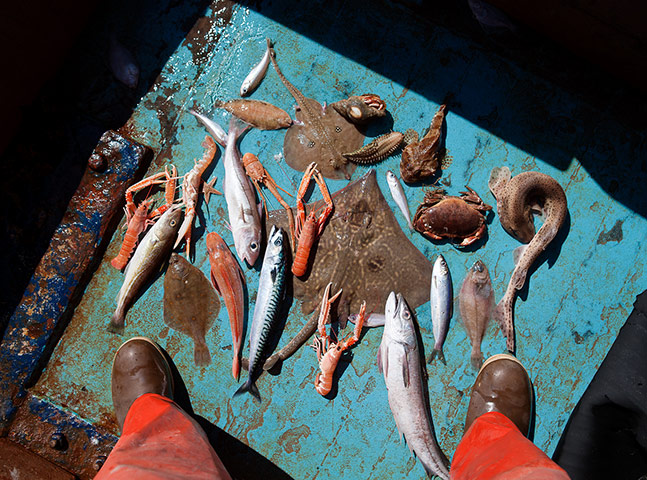
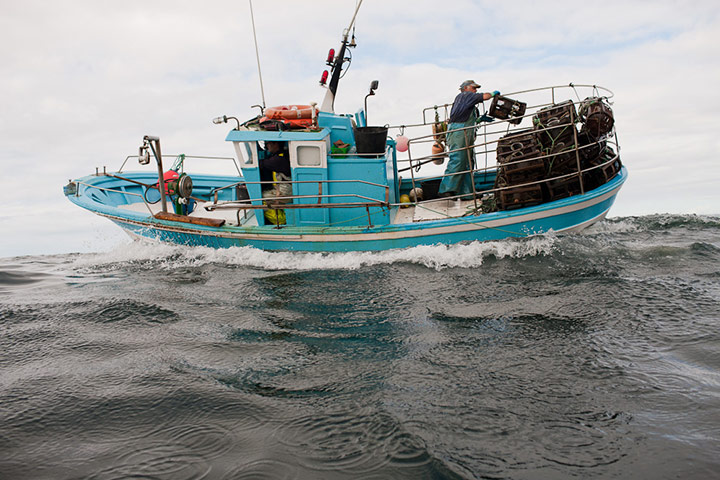
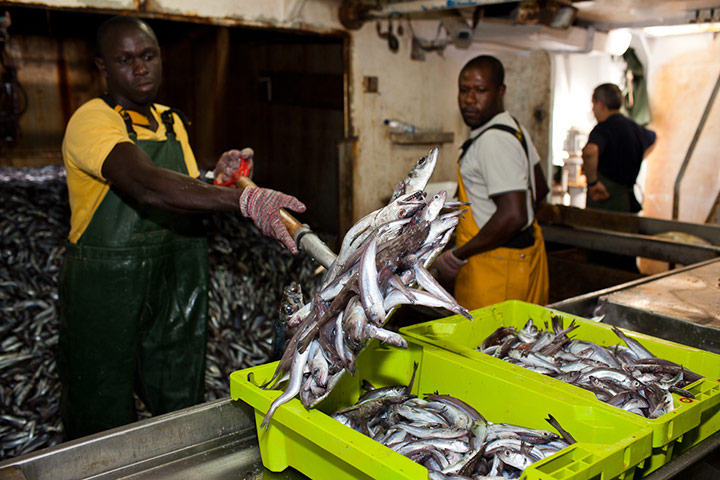
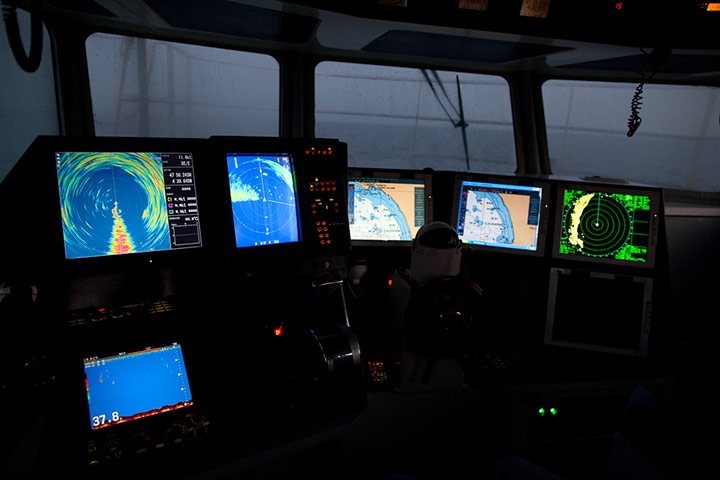
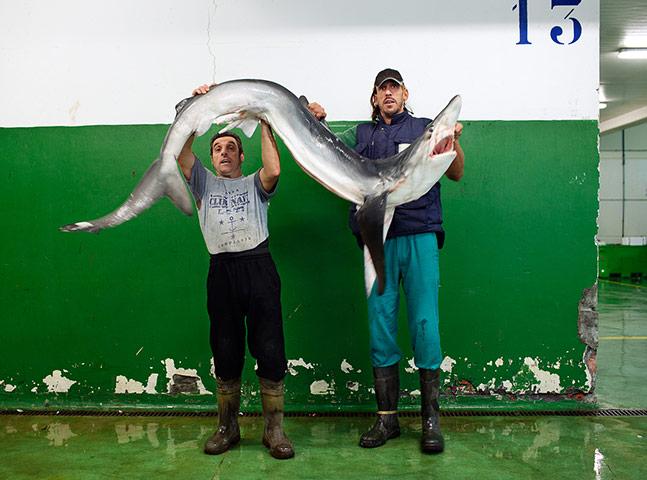
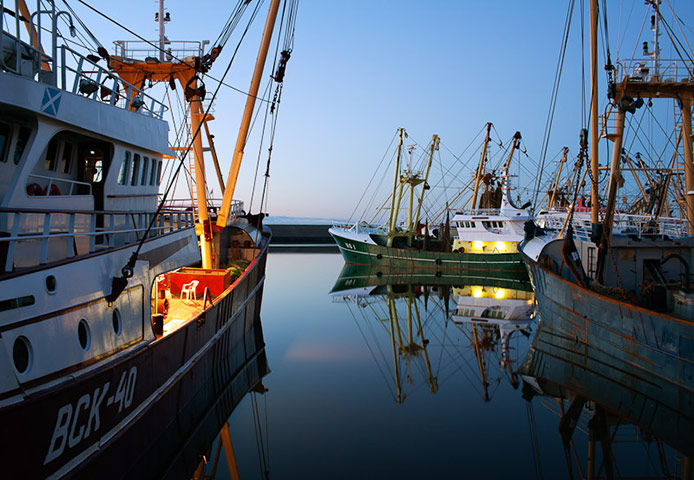
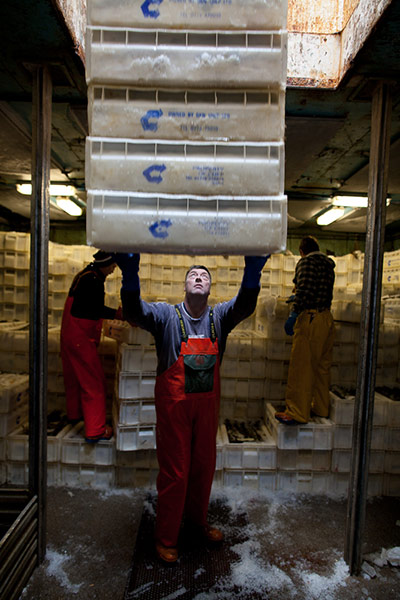
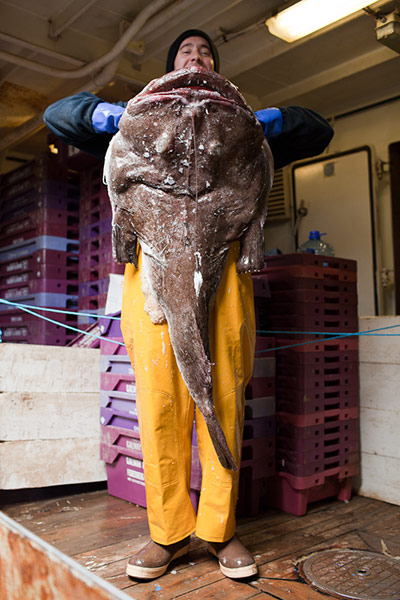
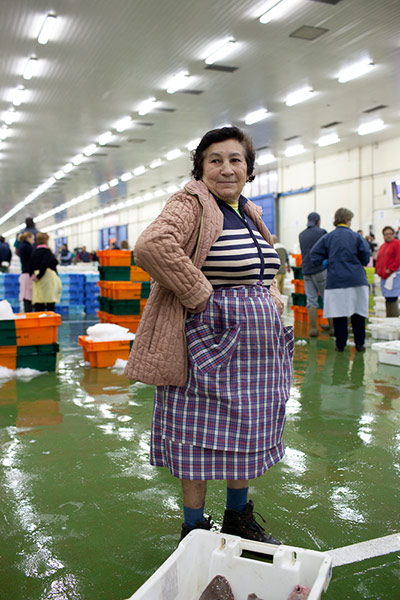
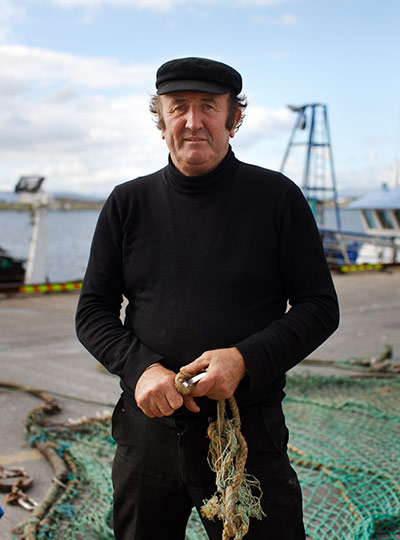
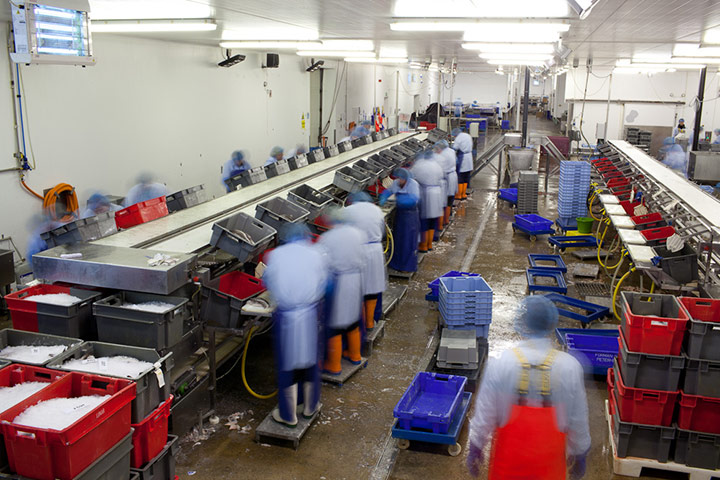
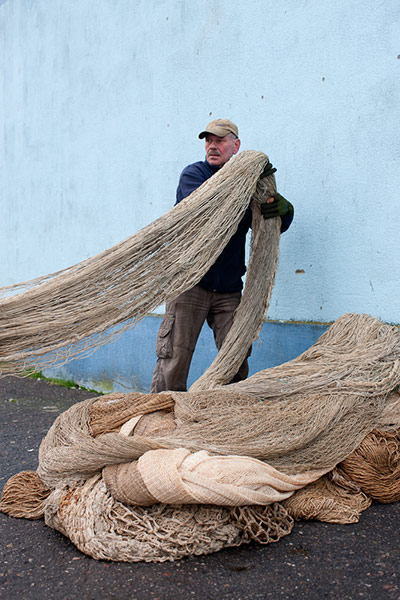
A sample of the common bycatch species from an inshore prawn trawler. These are the different species of sea life caught in one three-hour towPhotograph: Corey Arnold/Ocean2012A pair of fishing boats trawl in the Bay of Biscay for cod, hake and horse mackerelPhotograph: Corey Arnold/Ocean2012A father and son team set octopus pots off the coast of Galicia, north-west Spain. There are about 85,000 vessels in the EU fishing fleet, varying from small artisanal boats to large factory ships operating across the globePhotograph: Corey Arnold/Ocean2012Mafu, and Moses, workers from Senegal and Ghana, aboard the Andrekala Berria trawler, shovelling its catch of primarily blue whiting into boxes. Spain is the largest fleet in the EU in terms of the size and power, and its fish consumption continues to rise despite European fish stocks being in an extremely poor statePhotograph: Corey Arnold/Ocean2012The inside of an average purse seine vessel, this one off Duarnenez, Britanny. Among the displays are directional sonar, plotters and radar. EU fleet has reduced in size by 2-3% per year since 2002, though this has been offset by technological advances and increased efficiencyPhotograph: Corey Arnold/Ocean2012Vigo fish market workers hold up a large blue shark in Vigo, Spain. Sharks grow slowly, mature late and produce few young over long lifetimes, leaving them exceptionally vulnerable to overexploitation and slow to recover from depletionPhotograph: Corey Arnold/Ocean2012Beam trawlers at the dock in Harlingen, the Netherlands. The total income generated by the fisheries sector in 2005 was €10.9bn – 0.1% of EU GDPPhotograph: Corey Arnold/Ocean2012A father-and-son team headi out early morning to set gillnets for cod in the Baltic sea. Employment in the EU fishing sector decreased by 23% between 1997 and 2005Photograph: Corey Arnold/Ocean2012A Scottish fisherman offloads boxes of whitefish from the hold of a trawler. Smaller, familly run fleets will continue to go out of business unless fishing rights are allocated fairly and with sustainability in mind.Photograph: OCEAN2012A huge monkfish is proudly displayed aboard the trawler in Rossaveal, Ireland. Some scientists estimate that as much as 90% of the entire ocean's large fish have been fished outPhotograph: Ocean2012A fish market auction in Vigo, Spain. Women make up a quarter of the fishing sector workforce in the EUPhotograph: Corey Arnold/Ocean2012The captain of the Glor Na dTonn (Gaelic for "voice of the waves"), a twin rig prawn trawler, mends his trawl in RossavealPhotograph: Corey Arnold/Ocean2012A mackerel processing facility at Lunar Fishing near Aberdeen, ScotlandPhotograph: Ocean2012A man hauls in a trawl net in Wladyslawowo harbour, PolandPhotograph: Corey Arnold/Ocean2012
Sign up to read this article
Read news from 100’s of titles, curated specifically for you.