With the ongoing launch of incendiary balloons and projectiles from the Gaza Strip, and the wave of military operations in Jerusalem and the West Bank against Israeli soldiers, Israeli Prime Minister Benjamin Netanyahu issued a set of threats on Thursday. He also canceled a press conference and went “to the field” to be with the soldiers who were being hit.
Meanwhile, settlement leaders launched a campaign calling for a response to the Palestinians by annexing settlements, as well as the Jordan Valley and the northern Dead Sea to Israel.
However, despite the increase in the number of Palestinian attacks over the past days, Israeli security and intelligence officials said the recent developments were “limited,” adding “they could expand, but could also drop.”
Security sources in Tel Aviv said: “There is more than one indication that the situation is fragile, but at present, it is still restrained.”
“Security coordination between the Israeli army and the Palestinian security services is ongoing, while the Palestinian president has declared his adherence to using only peaceful means to respond to the [deal of the century],” they added.
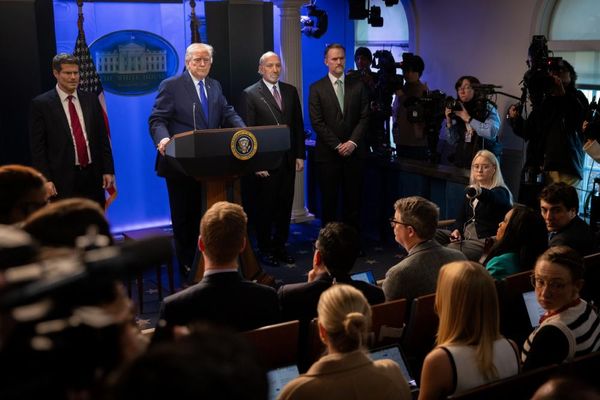
However, the same sources did not rule out a flare-up any moment, especially if Israel undertakes to unilaterally implement the terms of the deal, which was announced by US President Donald Trump last week.
“The Palestinians are waiting for Israel to take practical steps in the policy of annexation. They are now behaving cautiously. If the government implements the annexations, there could be a flare-up, whether by popular uprising or by random or organized individual operations,” said General Amos Yadlin, the executive director of Tel Aviv University’s Institute for National Security Studies (INSS) and former head of the Israeli military intelligence.
Eitan Dengot, a former Israeli Army general, said: “The Palestinians know what price they would pay if they resort to violence, and I don’t think that Abu Mazen (Palestinian President Mahmoud Abbas) wants to end the last phase of his rule by setting fire again. I believe that Hamas is more cautious… and the Israeli army is certainly not concerned with an escalation, especially on the eve of the elections.”
“Therefore, I think that things will be limited, although the Palestinians do not like the [Deal of the Century],” he noted.
Palestinians strongly reject the US plan to resolve the Israeli-Palestinian conflict, seen as heavily favoring Israel.