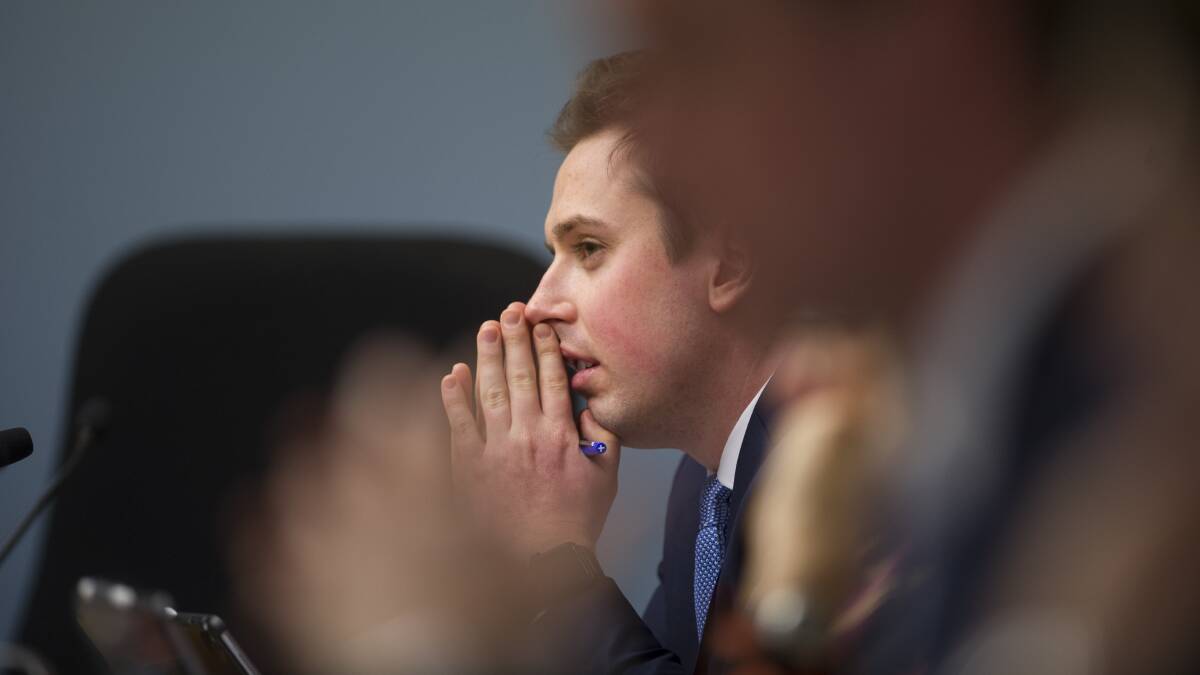
It was a visit to a medically supervised injecting clinic in Kings Cross early this year that reaffirmed Labor backbencher Michael Pettersson's view about the need for legislators to address the despair and misery associated with illicit drug use.
"Talking to people in there about their life experiences made me realise that we, as a society, have an obligation to do better," he said.
"Marginalising and criminalising illicit drug users is a completely non-productive thing for a society to do."
However, he freely admitted his controversial legislation, poised for introduction to the territory's Legislative Assembly, presented concepts which broader parts of the ACT community would find challenging to process and understand.
And now, in just a few pandemic-wrought months, the social and economic environment into which a major drug law reform legislation would have been presented to the ACT has been turned upside down.
Those health care networks which, under this proposed reform, would need more money, more support, and more staff are now under pressure from another, and unexpected, front.
The COVID Delta variant has gatecrashed its way into the ACT hospital system and put people of all ages, from babies to seniors, into the Canberra hospital's ICU beds.
The death and suffering the contagion has created since the August 12 lockdown across the ACT, and the uncertainty now which is wracking the community as a COVID-affected NSW prepares to open up and allow freer travel between local government areas has cast major doubt on whether the territory can ill-afford an added strain on its healthcare networks.
RELATED NEWS: Questions linger over death in Taylor stairwell
The Canberra Hospital, as the major tertiary treatment centre not just for the ACT but across southern NSW, will be right in the firing line in the months ahead as restrictions ease and case numbers almost certainly escalate.
In a few short months, the timing of proposed drug law reform in the ACT has gone from marginal to unimaginable.
Mr Pettersson said drug and alcohol services in Canberra, and right across the country, were "chronically and criminally" underfunded, and organisations like the Canberra Alliance for Harm Minimisation and advocacy (CAHMA) cannot meet the demand for services.
Distrust is a core issue with those drug addicts "living on the margins".
He said there was one "very good reason" why outsourcing these services works: "Drug addicts generally don't trust government-run services.
"Even if the government was to in-source some of these [drug treatment] services, it may run counter to the effectiveness of those services."
What remains, however, is the undeniable knowledge that should the ACT proceed down this difficult legislative path, the amount of public funding dedicated to drug education, support, messaging and rehabilitation must increase in manifold terms.
Other jurisdictions know these pressures. In 2001, Portugal decriminalised personal possession of all drugs as it reorientated toward a health-led approach, but the promised levels of health funding support have not eventuated.