Levels of obesity have risen faster in areas of Los Angeles covered by a fast-food ban than in those parts of the city not included in the ban, a new study has found.
Consumption of fast food increased at a similar level across both ban and non-ban areas, the Rand Corporation report published on Thursday revealed.
Fast-food restaurants were prohibited from opening or expanding in south LA in 2008, but the study, published online by the journal Social Science & Medicine, found that from 2007-12 the number of obese or overweight people in that part of the city increased from 63% to 75% – while in the rest of LA the increase was much smaller, from 57% to 58%.
Meanwhile fast-food consumption had increased at a statistically similar level in all areas since the ban was passed.
Roland Sturm, lead author of the study and a senior economist at Rand, which is a nonprofit research organization, said the findings should not come as a surprise, since “most food outlets in the area are small food stores or small restaurants with limited seating that are not affected by the policy”.
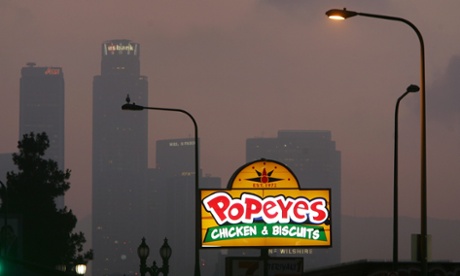
The policy restricts the opening or expansion of any “stand-alone fast-food restaurant” in Baldwin Hills, Leimert Park and portions of south and south-east Los Angeles.
“The one bright spot we found is that soft-drink consumption dropped, but the decrease was similar in all areas across Los Angeles,” said co-author Aiko Hattori of the University of North Carolina, Chapel Hill. “Unfortunately, the rates of overweight and obesity increased, and they increased fastest in the area subject to the fast-food ban.”
LA councilman Bernard C Parks, who co-wrote the original policy, told the LA Times he was surprised at the findings. “We never believed it was going to be an overnight situation where all of a sudden the community was going to be healthy,” he said.