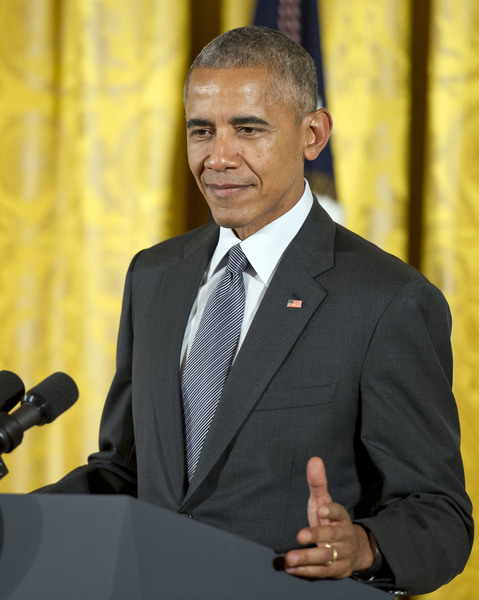
WASHINGTON _ President Barack Obama vetoed legislation Friday that could allow Americans to sue Saudi Arabia over whether it supported some of the Sept. 11 hijackers, potentially triggering the first veto override of his presidency.
Obama's veto was the 12th in his eight years in office. But given the breadth of support for the bipartisan measure _ it passed unanimously in both the House and Senate _ the veto could be the first lawmakers are able to overcome with an override vote.
That step is not assured, though. The administration has begun courting lawmakers, particularly fellow Democrats, who may agree with the spirit of the legislation but could be swayed to Obama's side by arguments about the potential geopolitical ramifications of the bill.
The legislation would revive a lawsuit brought by families of Sept. 11 victims against the Saudi government by clarifying a 1976 law governing the principle of sovereign immunity. The measure specifies that foreign governments could be held liable in American courts for terrorist attacks in the U.S.
The White House has warned that enacting the legislation could prompt legal and economic retaliation from foreign governments. It has raised the specter of the U.S. government being sued in courts all over the world, and pointed to Saudi Arabia's threat to sell off hundreds of billions of dollars in U.S. debt and other assets, though the effectiveness of that threat has been called into question.
"The concept of sovereign immunity is one that protects the United States as much as any other country in the world given the way that the United States is engaged in the world," White House press secretary Josh Earnest said ahead of the president's veto. "It's not hard to imagine other countries using this law as an excuse to haul U.S. diplomats or U.S. service members or even U.S. companies into courts all around the world."
The law would also likely further strain relations with Saudi Arabia, a critical Middle East partner with whom the U.S. is already on rocky ground. For years, the nations have been bound together by U.S. dependence on Saudi oil and a shared suspicion of and isolation of Iran. Now, U.S. dependency on the Saudi oil reserves is on the wane, and Obama has shaken the foundations of the partnership by engaging in diplomatic talks with Iran that resulted in a deal to limit its nuclear program. And though the Saudis have for decades counted on the U.S. to bolster stable regimes in the Arab world, the U.S. hasn't followed the advice of Saudi kings in recent years, notably on Iraq and Egypt.
The White House is trying to sell its complicated argument against a more straightforward emotional plea by 9/11 victims' families seeking justice. But aides say lawmakers have been open to the concerns the White House has raised in private conversations.
"The real question for members of Congress will be whether or not they're prepared to cast a vote that is consistent with the views and feelings that they express in private," Earnest told reporters this week in New York as Obama attended the United Nations General Assembly.
Congress' first priority in the next week will be passing a new government funding measure before the current one expires Sept. 30. If lawmakers put off an override vote until after an extended campaign recess set to begin in October, it would offer the White House more time to make its case.
"It floated right through the Senate, it seemed like _ why wouldn't you want people to be able to sue? _ and through the House. Now people are stopping and actually reading it," said Sen. Richard J. Durbin, D-Ill., the minority whip.
"There was always a thought this would never go anywhere. And it did. The administration takes it seriously, and I will, too," he added.
The victims' relatives have lobbied aggressively for the proposal. Supporters of the legislation, who include the Senate's No. 2 Republican as well as Sen. Charles E. Schumer of New York, set to become the Senate Democratic leader in 2017, say it will help bring closure to the victims of the nation's deadliest attack by allowing them to prosecute even its potential government sponsors.
They say the sovereign immunity law had been previously interpreted to allow such cases to proceed until 2005, without the kind of repercussions the administration now warns about.
"There are always diplomatic considerations that get in the way of justice, but if a court proves the Saudis were complicit in 9/11, they should be held accountable," Schumer said in a statement. "If they've done nothing wrong, they have nothing to worry about."
The U.S. government does not hold Saudi leadership accountable for the attacks, and there is no evidence in the 9/11 Commission report that the kingdom backed al-Qaida or Osama bin Laden. But the panel did determine that some senior leaders supported extremist causes, and that monitoring all such funding remains elusive.
If a president vetoes a bill, it can still become law with an affirmative vote by two-thirds of both the House and Senate. In 2015, the Senate fell just short in an effort to bypass Obama and approve the Keystone XL pipeline, an early priority of the chamber's new Republican majority.
Senate Majority Leader Mitch McConnell (R-Ky.) signaled this week his chamber would move quickly to hold an override vote.
"Our assumption is that the veto will be overridden," he said Tuesday.
Even as McConnell indicated he believed there was still overwhelming support for the legislation, he helped lead opposition to another vote this week that would impact the U.S.-Saudi relationship: a resolution that aimed to block a proposed $1.15 billion arms deal with the Gulf power.
"It's important to the United States to maintain as good a relationship with Saudi Arabia as possible," McConnell said.
President George W. Bush's final two vetoes were each overridden by what was then a Democratic-led Congress in 2008, including a major agriculture bill and legislation to prevent reduced doctors' payments under Medicare.