WASHINGTON _ President Barack Obama has ordered a "full review" of alleged Russian meddling in the 2016 elections, but the report may not be made public, a top White House official said Friday.
The report will be finished before Obama leaves office Jan. 20, said the president's adviser for homeland security and counterterrorism, Lisa Monaco, and will be distributed to Congress and some other government agencies.
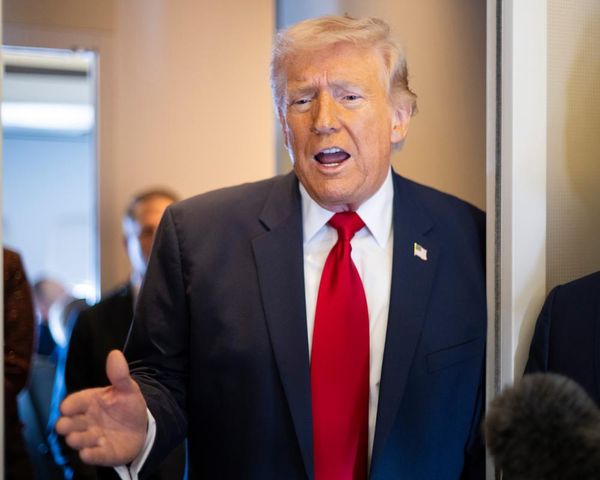
The issue simmers on Capitol Hill, where legislators on both sides of the aisle have called on the White House to reveal publicly what it knows about alleged Russian meddling in the elections. A handful of Republican legislators plan hearings on the matter in 2017, putting them on a collision course with President-elect Donald Trump, who dismisses reports of foreign hacking and says he wants to work more closely with Russian President Vladimir Putin.
In an unusual coincidence of views, both the Republican chairman and the Democratic ranking member of the House intelligence panel called for more forceful responses to Moscow.
If the White House doesn't take action, said Rep. Adam Schiff, the California Democrat who is senior member of his party on the committee, "we can expect to see a lot more of this in the near future."
Rep. Devin Nunes, R-Calif., who chairs the intelligence committee, said Obama had "ignored pleas ... to take more forceful action against the Kremlin's aggression."
Monaco, speaking at a newsmakers' breakfast sponsored by The Christian Science Monitor, opened the session by saying the administration's policy is to "impose costs" on outside forces who use digital weapons to harm the United States and employ "all elements of national power against the cyber threat."
She noted the "malicious cyber activity" that occurred during the campaign, but was cautious in directly addressing Russia's role.
"The president has directed the intelligence community to conduct a full review of what happened during the 2016 election process and to capture lessons learned from that and to report to a range of stakeholders to include Congress," Monaco said.
Later at the White House, deputy press secretary Eric Schultz said the review "is going to be a deep dive."
He said the intelligence review was not an effort to challenge the outcome of the vote, which the White House previously affirmed was "free and fair" and reflected the will of American voters. He added that the review would span the presidential election cycles of 2008, 2012 and 2016, and that the analysis would be "broad and deep at the same time."
Monaco suggested high sensitivity to what would be released because of a need to be "very attentive to not disclose any sources and methods that may impede our ability to identify and attribute such attacks in the future."
Schultz echoed those concerns: "We're going to make public as much as we can. As you can imagine, something like this might include sensitive and even classified information. When that report is submitted, we're going to take a look. We want to brief Congress and the relevant stakeholders, possible state directors."
The government on Oct. 7 officially accused Russia of hacking emails and documents from the Democratic National Committee and the Hillary Clinton campaign. Those emails turned up on WikiLeaks, a group dedicated to releasing secret government documents. The leak led to the resignation of the DNC chairwoman, Rep. Debbie Wasserman Schultz of Florida.
Throughout the month of October, WikiLeaks released nearly daily batches of thousands emails hacked from the account of the chair of the Hillary Clinton campaign, John Podesta, drawing considerable media attention.
In the run-up to the Nov. 8 vote, hackers are also believed to have tried to penetrate election systems in Arizona and Illinois.
During the campaign, Trump made light of the Russian hacking accusations, even suggesting at one news conference that perhaps Russia could locate emails that had been purged from files Clinton surrendered to the State Department from her home server. He also has dismissed Russia's alleged role, declaring that whoever hacked the DNC computers "could be somebody sitting on their bed that weighs 400 pounds."
In a recent interview with Time magazine, Trump went further, saying, "I don't believe they interfered."
For her part, Clinton directly blamed Russia for the hacking and in a debate with Trump Oct. 19 demanded that he condemn Russia.
"This has come from the highest levels of the Russian government, clearly from Putin himself, in an effort _ as 17 of our intelligence agencies have confirmed _ to influence our election," Clinton said.
After the vote, the White House dismissed any impact on the outcome of the election from hacking.
"We stand behind our election results, which accurately reflect the will of the American people," a White House statement said on Nov. 25.
But while the White House has said the election itself was unaffected by hacking, it hasn't addressed whether it believes there was a substantive impact from the constant leaks of internal emails dating back to before the Democratic convention in late July.
In the meeting with reporters, Monaco noted that Chinese agents hacked into the Obama campaign in 2008, and suggested that election meddling by foreign powers may be part of a persistent new reality.
"We may have crossed into a new threshold, and it is incumbent upon us to take stock of that, to review, to conduct some after action, to understand what this means, what has happened, and to impart lessons learned," she said.