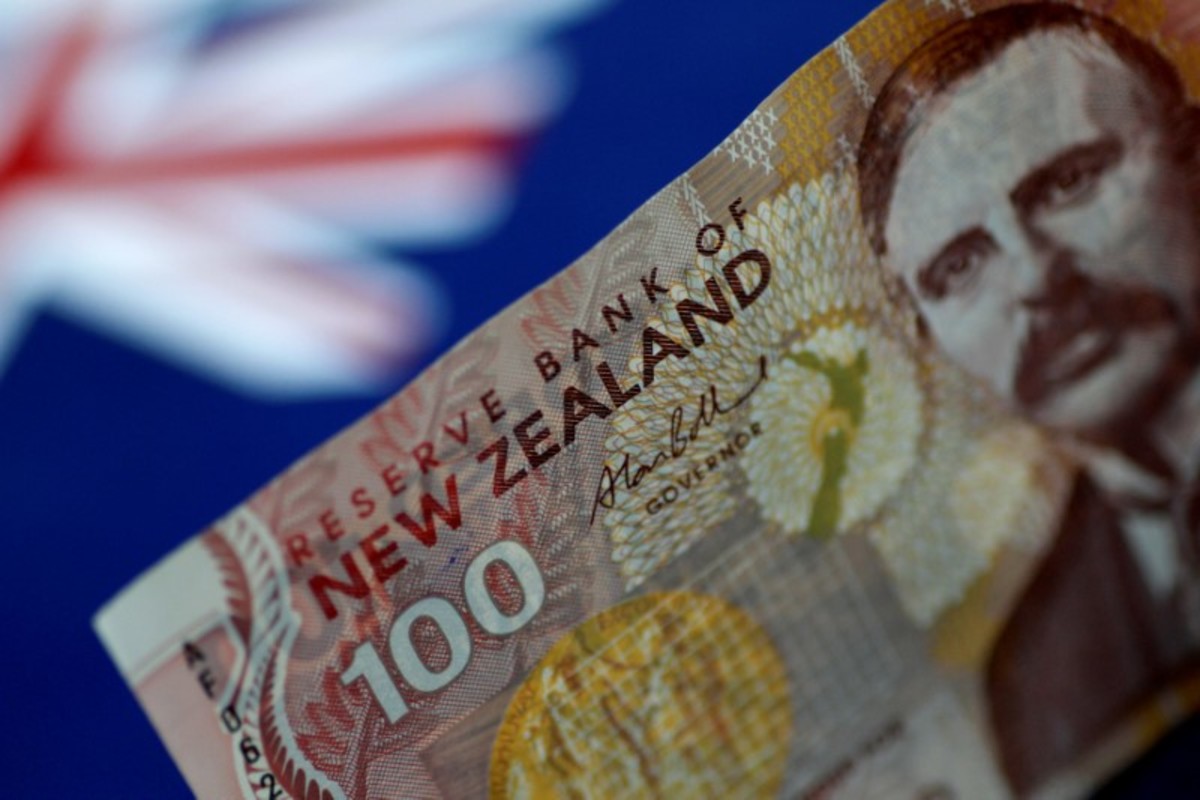
SYDNEY (Reuters) - The New Zealand dollar slipped to one-week lows on Wednesday after data showed surprisingly weaker employment and wage growth in the second quarter, while its Australian counterpart pulled further away from its recent two-year peak.
The New Zealand dollar <NZD=D4> fell 0.6 percent to $0.7425, in its third straight day of losses. Its session low of $0.7416 was its lowest since July 26.
Data out on Wednesday showed employment fell and quarterly wage inflation remained sluggish.
"The softness in employment growth is surprising, especially given employment indicators were robust over the quarter," ASB economist Kim Mundy said in a note to clients.
"This release reinforces the idea that the Reserve Bank will be in no rush to raise interest rates any time soon. We now expect the RBNZ will leave the official cash rate on hold until February 2019," compared with a previous estimate of November 2018, Mundy said.
The Reserve Bank of New Zealand (RBNZ) is due to meet on Aug. 10 for a monetary policy decision. It slashed rates throughout 2016 to record lows of 1.75 percent and has signalled it will keep rates on hold, possibly until 2020.
Across the Tasman Sea, the Australian dollar <AUD=D4> edged down 0.2 percent to $0.7951, moving further away from last Thursday's high of $0.8066 - a level not seen since May 2015.
The Aussie briefly rose as high as $0.7975 after local data showed a surge in building approvals for new homes in June, underscoring strength in economic activity in the second quarter.
The Australian currency is up nearly 7 percent since early June, largely driven by a broad sell-off in the U.S. dollar which has succumbed to political woes and receding expectations that the U.S. Federal Reserve will stick to its tightening plans as inflation remains muted.
The Aussie is favoured by investors seeking carry trades in which they use low-yielding, perceived safe haven assets, such as the yen, to purchase higher-yielding currencies.
The Reserve Bank of Australia (RBA) on Tuesday warned of the damage a soaring Aussie could do to the economy, but it is largely powerless to tame the high-flying currency.
The RBA has ruled out cutting rates further, in large part for fear of driving a borrowing-led bubble in the property market, and shuns intervention except in extreme circumstances.
New Zealand government bonds <0#NZTSY=> gained, sending yields 4-5 basis points lower at the long end and about 2 basis points lower at the short end of the curve.
Australian government bond futures rose, with the three-year bond contract <YTTc1> up 1 tick at 98.040. The 10-year contract <YTCc1> added 1.5 ticks to 97.2950.
(Editing by Lisa Twaronite & Shri Navaratnam)