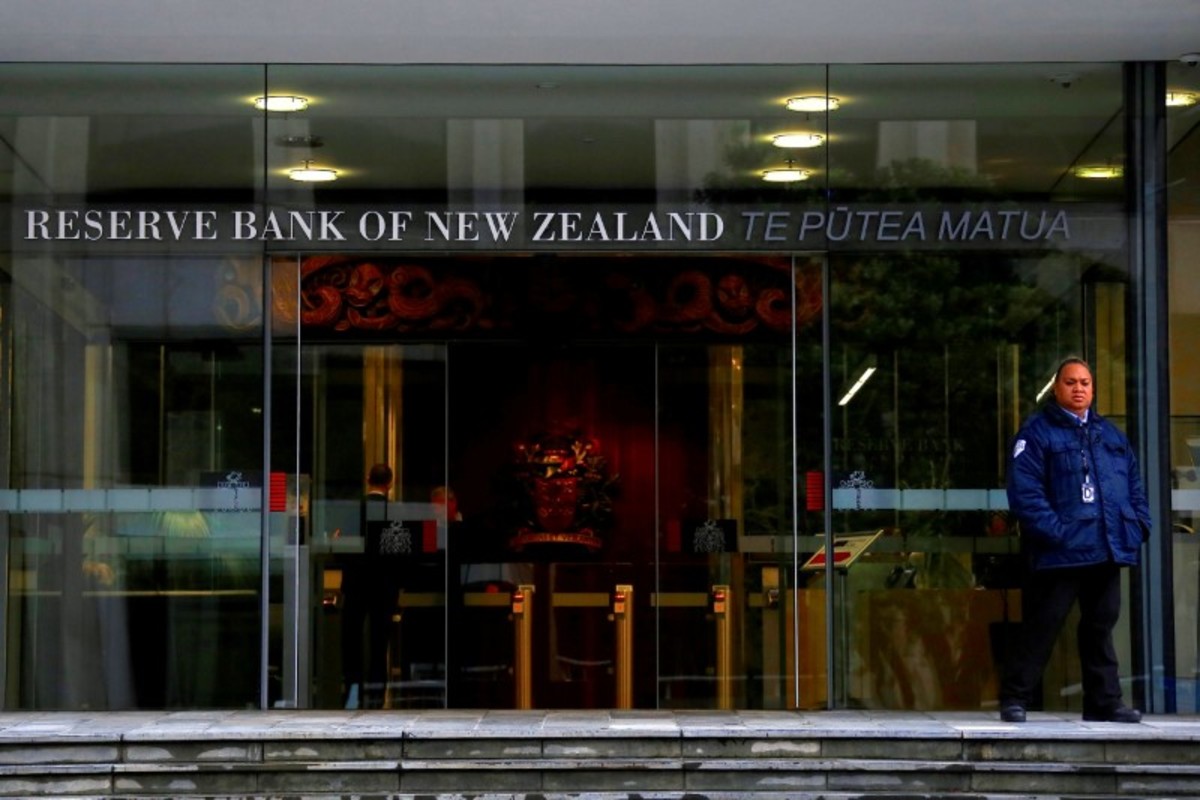
WELLINGTON (Reuters) - New Zealand's central bank looks set to keep rates on hold at a record low at its policy review on Thursday, with economists expecting it to adopt a more dovish tone on emerging risks to economic growth.
All 16 economists polled by Reuters forecast the Reserve Bank of New Zealand (RBNZ) will hold rates at 1.75 percent at its meeting on Aug. 9.
Since the previous policy review in June, business confidence has sunk to decade lows, raising concerns about firms holding off on investment, which could then weigh on activity and slow growth in gross domestic product (GDP).
"The Reserve Bank of New Zealand will probably acknowledge the recent softening in activity by revising down the GDP growth forecasts... and perhaps even pushing back the timing of when it expects to raise interest rates," said Paul Dales, chief economist for Australia and New Zealand at Capital Economics.
The government has broadened the RBNZ's mandate this year, adding a second goal of maximising sustainable employment alongside inflation targeting.
All but one economist polled by Reuters thought the central bank would keep rates steady until the end of the first quarter of 2019. Ten of the 15 analysts who made projections further than the first quarter predicted the RBNZ would have lifted rates by the end of 2019.
Adding to the headwinds were global trade tensions, which are a risk to New Zealand's open, export-dependent economy.
The economy grew 0.5 percent in the March quarter, less than the RBNZ's forecast of 0.7 percent. And while the central bank expects annual GDP growth to average 3.1 percent over the next four years, most economists see it remaining below 3 percent.
Still, the unemployment rate is near an eight-year low and higher oil prices and a weaker currency are expected to add to headline inflation.
Core inflation was 1.7 percent in the second quarter, the RBNZ said, a seven-year high but still below the target midpoint of 2 percent.
"The RBNZ will want to see core inflation much closer to the midpoint of the target band, or even an overshoot, before an OCR hike will be on the table, particularly given the softer activity outlook," said Sharon Zollner, chief economist at ANZ Bank.
(Reporting by Charlotte Greenfield; Editing by Sam Holmes)