I love nursing, but it is hard. You come on shift and get handover information about all the people on your ward. Each one is an individual complicated person. They are sick, in pain, stressed and tired. They have families who want to know what's going on. They have medications due, IV fluids, they need help mobilising, showering, toileting, sometimes they need help to eat or even to understand where they are and why they need to stay in hospital.
The phone is ringing, I really should go to my break soon, there are discharges and admissions, transport is coming. There are junior staff that need support, someone's going to x-ray, an IV pump is beeping, there are wound dressings to change, buzzers are going off, someone spilled their drink, asked 'can I make them a coffee?', vital signs need to be checked, antibiotics need to be made up and given, someone needs pain relief, there are blood sugars to check - how is it lunch time already? It's a whirlwind. And of course, we're documenting everything as we go.
I can list all of the tasks but it is viscerally different to be there at the bedside. At different times there's crying, vomiting, anger or rage, confusion, blood and grief. That's the environment in which you have to have excellent time management and judgement.
How much I can get done, depends on how many staff are on the floor.
How many patients I have to look after, dictates the kind of care I can provide. I feel bad when I have to rush someone's shower or cut off their story. When I don't have time to give someone a shave or stay and hold their hand because I have so many other things that I have to be doing.
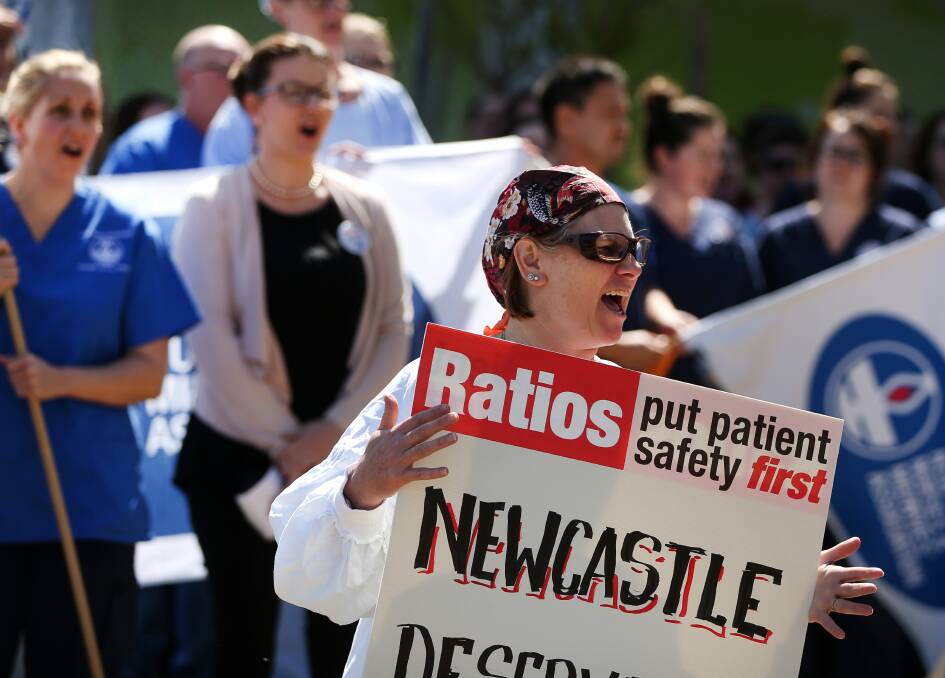
Legislated nurse-to-patient ratios save lives, save money and increase nurses job satisfaction. We know this because nurses in Victoria and Queensland have ratios. Studies found during the first three years that ratios were introduced in Queensland, they prevented 145 deaths, 255 readmissions, 29,200 hospital days and saved $81 million. This is what the NSW government is saying no to right now, by refusing to introduce shift-by-shift ratios in NSW.
We don't go into nursing to become millionaires, but we do hope to be able to raise a family and keep up with the cost of living
That normal workday? That was before COVID by the way. Everything now takes longer, gloving and gowning, extra cleaning of surfaces and equipment. It's hot and sweaty in those plastic gowns, the mask makes your glasses fog up and it's harder to communicate, especially with elderly patients.
In 2020, we were really worried about bringing COVID home to our families, especially those of us with vulnerable loved ones. But we rose to the challenge, we worked hard, and we kept ourselves and our community safe. Premier Gladys Berejiklian said, "We are deeply grateful for their hard work, skill, care and the sacrifices they have made to keep us all safe."
She showed that gratitude with a 0.3 per cent pay rise. In her government's eyes we were not even worth a pay rise that kept up with the cost of living, let alone one that reflected the value of the lives we saved or the economic shutdown we helped avoid. I know many of us had partners that lost work in the pandemic as well, just how far did that 60 cents a day go?
Now in 2021, we as nurses and midwives, have asked for safe staffing ratios and a respectful pay rise. We don't go into nursing to become millionaires, but we do hope to be able to raise a family and keep up with the cost of living. We expect to be adequately compensated for the weekends, the midnights, the Christmas mornings that we spend looking after other people's families and missing out on our own. For the stress, the heartbreak, the risk, the exhaustion that is all part of being in a frontline caring profession. We see nurses leaving and who can blame them?
Does the government think wage freezes and understaffing are going to retain valuable experienced nurses? Or attract the next generation? Stagnant wages aren't just bad for nurses and midwives, they're bad for the economy and the local businesses that depend on our custom.
If the NSW government thinks we're going to tolerate these unreasonable, unsafe workloads for disrespectful wages, they are wrong. If they think we're going to continue to put our backs, our mental health and our professional registrations on the line because they won't legislate safe ratios, they're wrong.
We are not making unreasonable requests here. We want to be able to provide care that is safe and that we can be proud of. We deserve to be paid a wage that reflects how hard we work and how valuable we are to society.
That is what the state government is saying no to.
NSW deserves better.
.jpg?w=600)