As the number of workers continues to fall short of demand, many businesses are making efforts to boost productivity and introducing new ways to revolutionize the way work gets done.
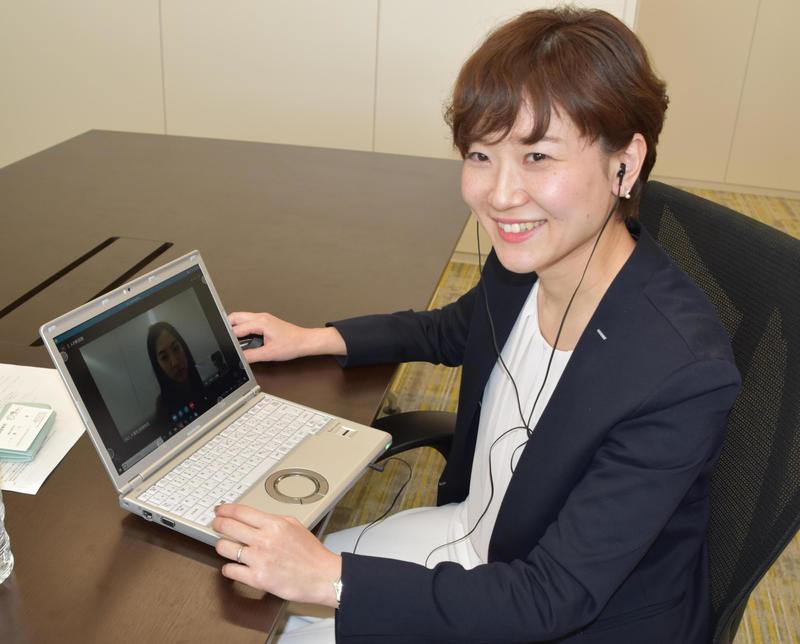
One of these ways is the use of technology that allows employees to telecommute from anywhere outside of the workplace. Should this become commonplace, working and raising children at the same time will become easier and it could create a work environment that's easier for women.
At the Chiba branch of Suntory Liquors Ltd., Kaoru Ichinose, 36, makes use of the telecommuting system once or twice a week, working on her computer from home.
"At home, it's quiet and I can concentrate, so I can make good use of my time while I work," she says, explaining the benefits of the system. Because she commutes fewer hours, taking her two young children to and from nursery school has become much easier. She quickly changed over to the telecommuting system after the typhoon in September last year, which brought transportation to a standstill.
The Suntory Group first introduced the telecommuting system in 2007. Since the planned power outages and the large number of people stranded due to mass transit disruptions after the Great East Japan earthquake of 2011, the number of people using the system has increased, with 80% of eligible employees, excluding factory workers, using it. Regardless of the reason, it's possible to make use of the system in 10-minute increments, allowing parents to leave work early to take care of their children, and any work that hasn't been finished can be completed at home.
The number of workplaces implementing the telecommuting system is increasing. According to a survey on the trends of communications use conducted by the Internal Affairs and Communication Ministry, 19.1% of businesses had introduced the system in 2018, an increase from the 13.9% of the previous year. The chief goals of the introduction of the system were to be of help to employees currently caring for children or the elderly and to improve overall productivity.
While many of the companies that introduced the system have seen positive effects, some industries lag behind. For example, 39.9% of companies in the telecommunications industry and 37.9% of companies in the finance and insurance industry have introduced the telecommuting system, compared with 16.2% in the services industry and 8.7% in the transport and mailing industries. In terms of size of businesses, about half of the major companies have introduced the system, while only about 10% of small and midsize companies have.
To promote work style reforms, the government has set a goal of increasing the rate of implementation of the telecommuting system to 34.5% in fiscal 2020. Japan Telework Association's head of the secretariat, Mika Togashi, said, "It's important that managers are at the forefront of this movement with the idea that 'if we don't make working conditions more flexible, we won't be able to acquire capable personnel.'"
In order to eliminate the gender gap in the workplace, not only does telecommuting need to become more commonplace, but measures such as an increase in paid paternity leave and reducing the number of children on waiting lists for nursery schools need to be put into effect to lighten the unbalanced burden of parenting on women.
Read more from The Japan News at https://japannews.yomiuri.co.jp/