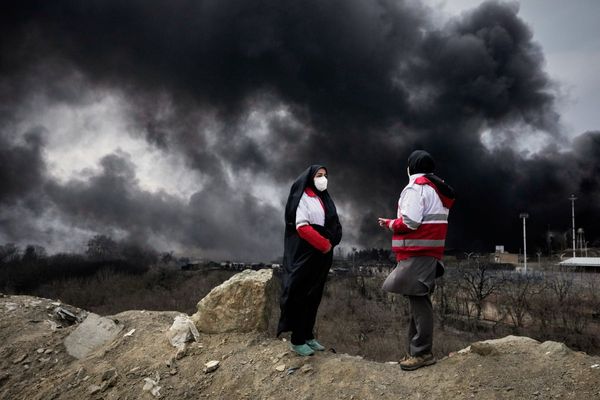
The number of children worrying about war, terrorism and global events has increased significantly, a survey has revealed.
One in three children aged nine to 16 said they were more worried about conflict in the world than anything else, according to the study by the research company Childwise.
Girls were more likely to worry about global events than boys, and Donald Trump, North Korea and global warming were particular subjects of concern, the survey found.
“There has been a notable change since 2015 with today’s children most concerned about global events,” said Simon Leggett, a research director at Childwise. “Their main concern on the world stage is war and terrorism. One in three are most concerned about global events, rising from one in four in 2015.”
The survey found children tended to get their information from friends, family and social media. “That means they may have the awareness but not the depth of knowledge, especially among the younger age groups,” said Leggett.
However, global events were not the only thing troubling youngsters: 79% said they felt stressed by school work, 72% experienced feelings of worry or anxiety, 58% had fears they were not good enough and 57% felt they did not look good enough.
For older children, concern about their mental health was also a big issue. Those aged 16 were as worried about their own state of mind as global events, the report concluded.
The survey also found for the first time that more children use devices other than TVs to watch video content.
Children aged five to 16 are spending on average just over two and a half hours a day watching content – up marginally on last year. Boys aged 13-14 watched the most, clocking up three and a half hours a day on average. One in six boys of this age said they watched more than six hours a day, with binge-watching a growing habit among children.
Leggett said: “This year, for the first time, most children now use devices, such as a mobile phone or a laptop, to watch video content. TV sets have been the focal point in a lot of homes for many years, but they are falling out of favour among children. Viewing has changed to become personal and private rather than a group activity gathered round a traditional television set.”
The report also found fewer children are receiving pocket money; 7% reported they did not get regular income or one-off handouts from their relatives – almost double the proportion last year, leading to a significant drop in spending.
- The Childwise Monitor 2018 surveyed more than 2,000 children in schools across the UK.