Nuclear, climate threats keep Doomsday Clock close to apocalypse
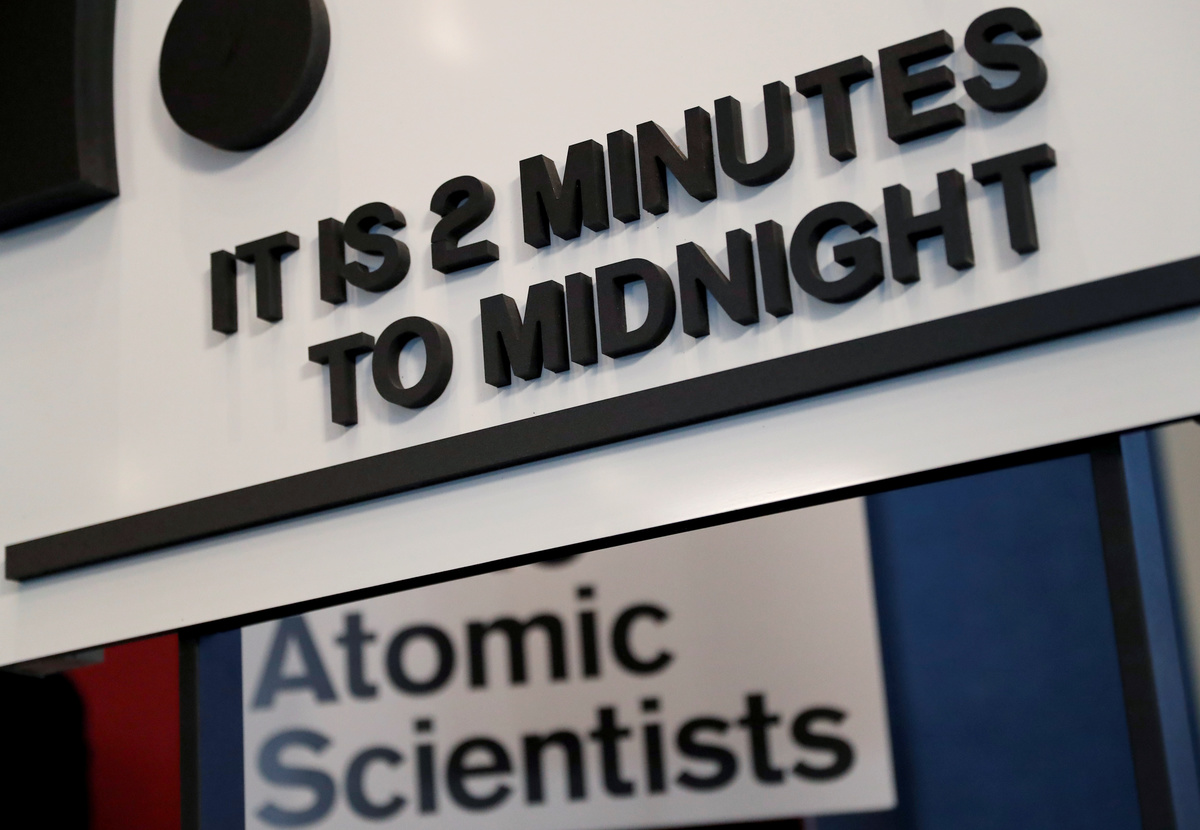
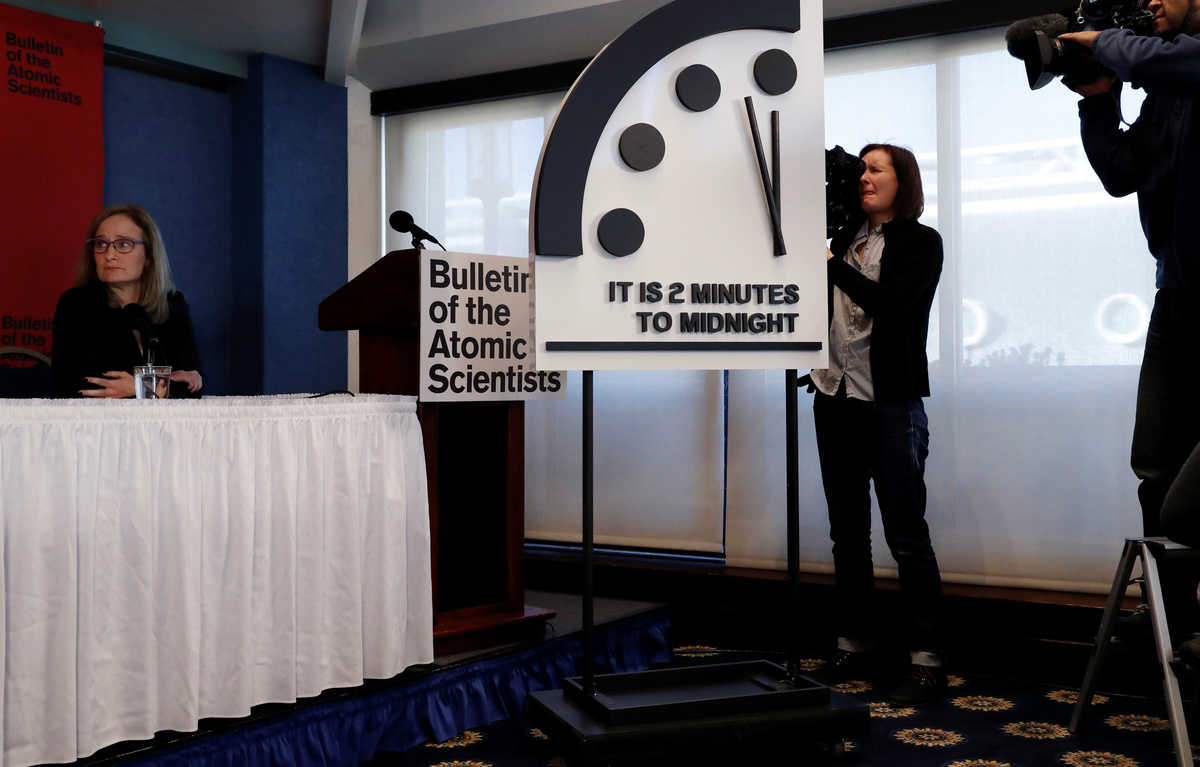
The updated time designation is visible underneath the ‘Doomsday Clock’ during a news conference.” in Washington, U.S. January 25, 2018. REUTERS/Leah Millis
(Reuters) - A renewed nuclear arms race, rising greenhouse gas emissions and the emergence of state-sponsored disinformation campaigns have left the modern world as close to annihilation as it was at the height of the Cold War, atomic scientists said on Thursday.
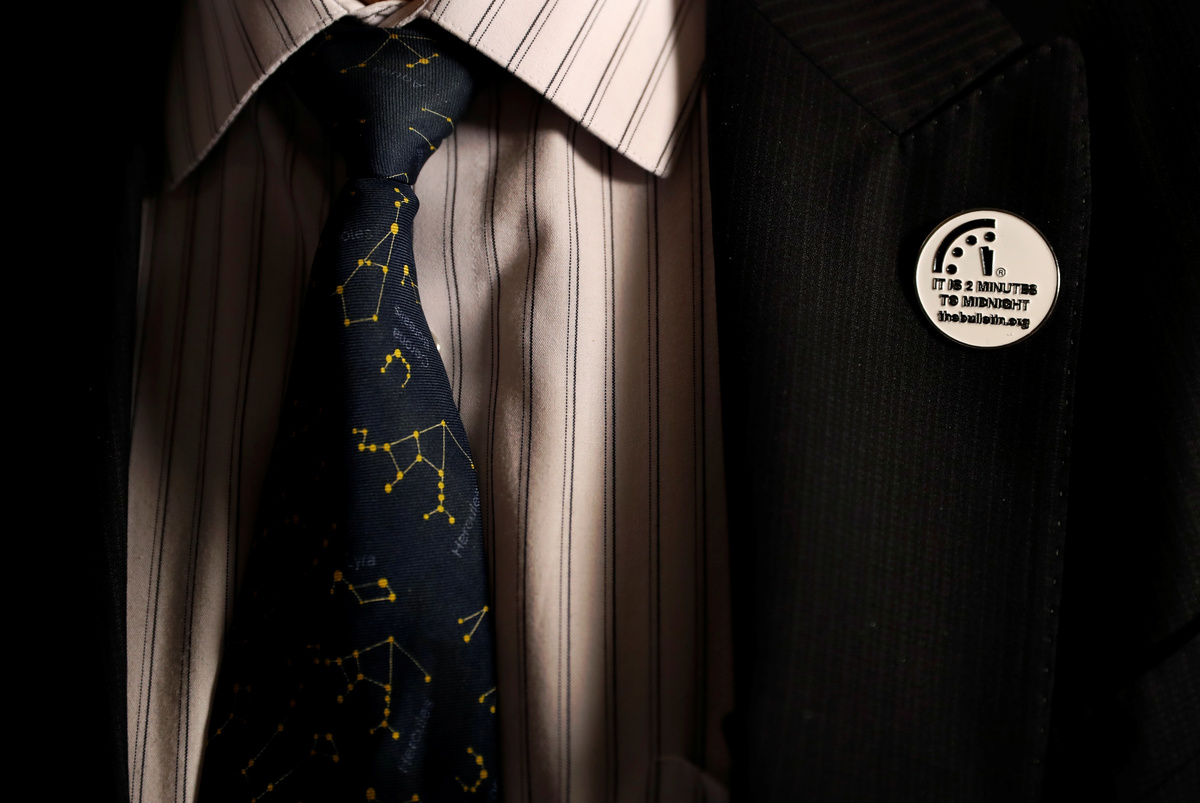
The Doomsday Clock, created by the Bulletin of the Atomic Scientists as an indicator of the world's susceptibility to apocalypse, remained at two minutes to midnight for a second year running in what the scientists called a dangerous "new abnormal."
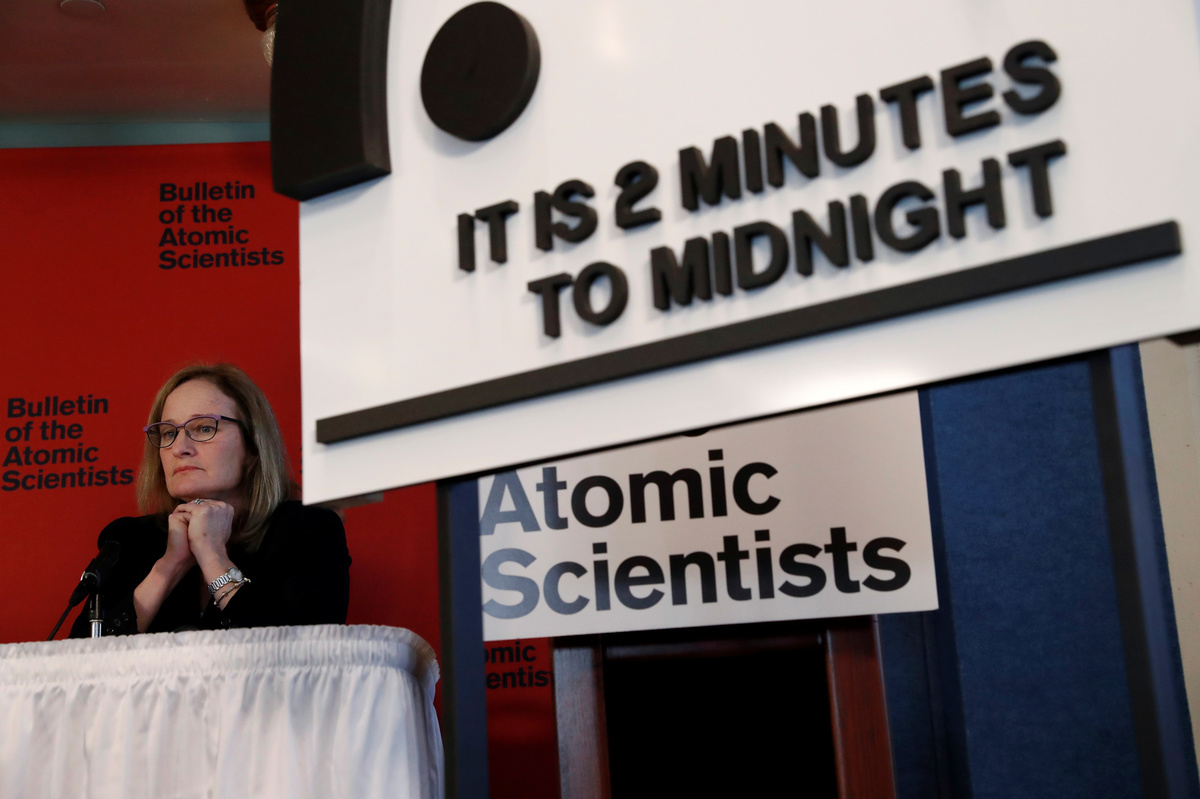
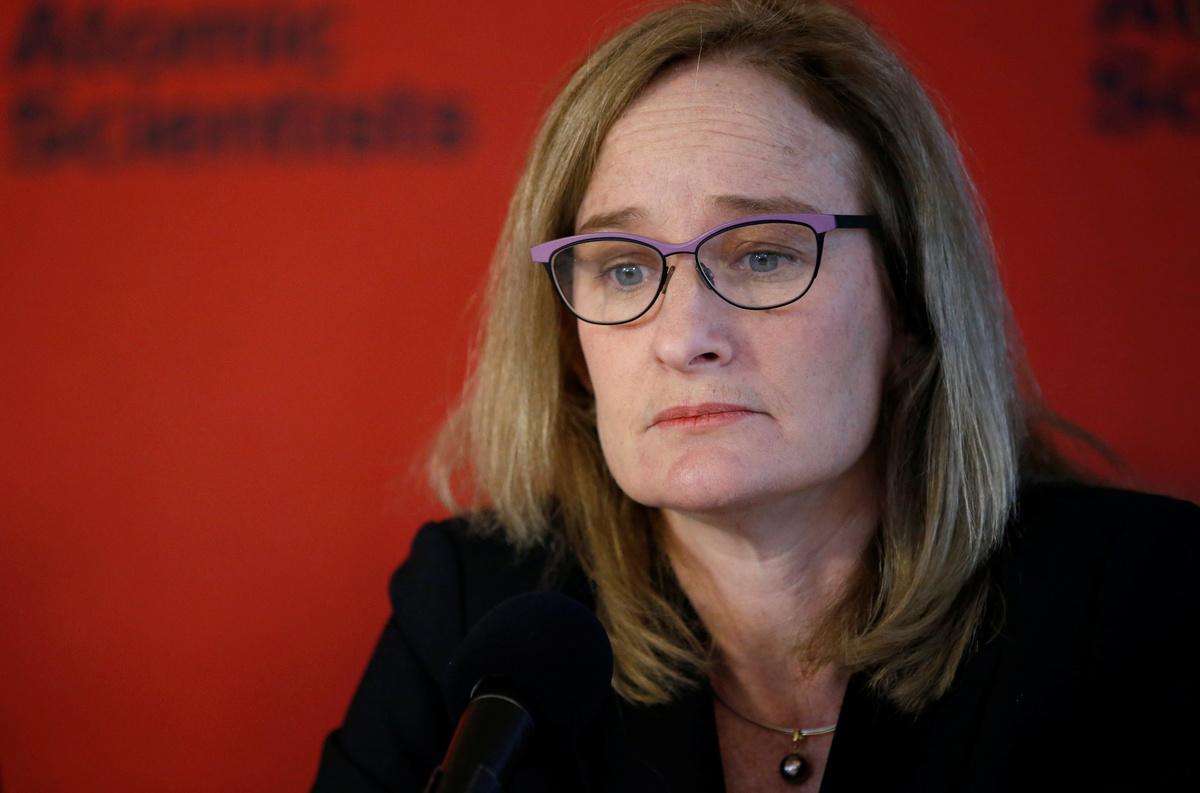
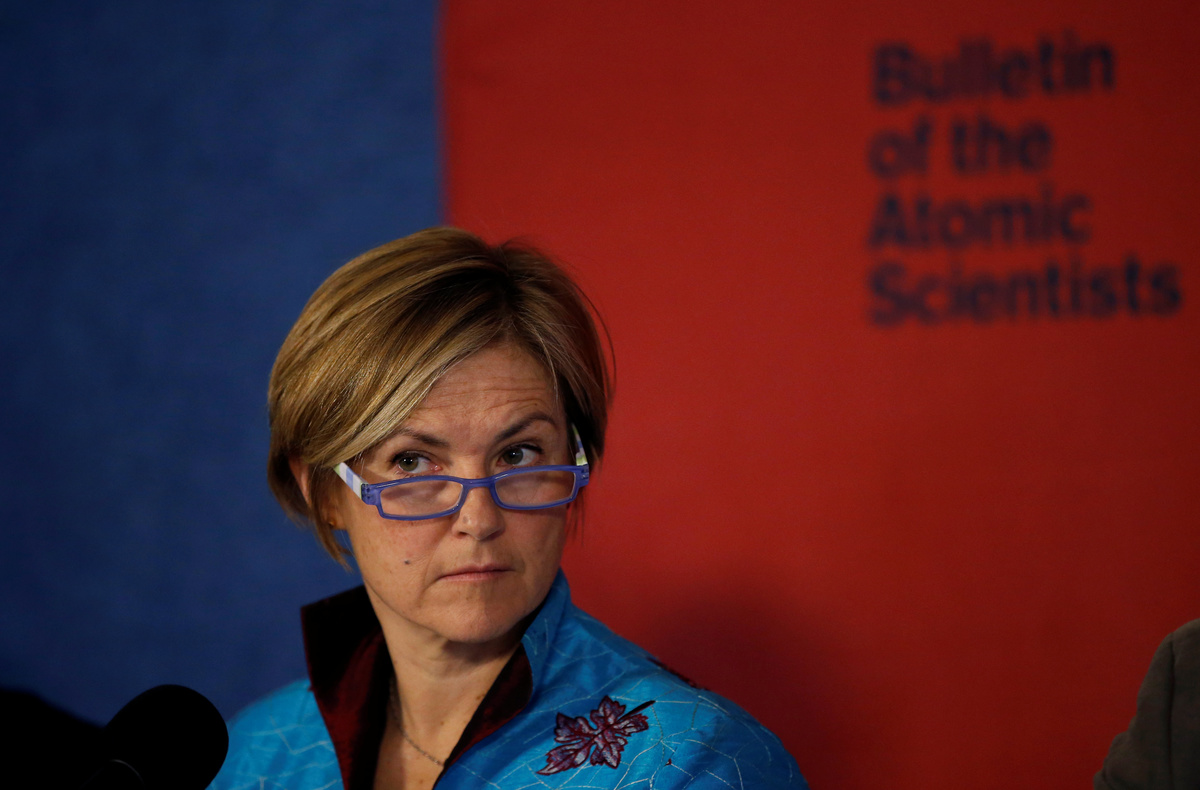
Rachel Bronson, president and CEO of the Bulletin of the Atomic Scientists listens to her fellow members talk about their decision to move the 'Doomsday Clock' hands to two minutes until midnight at a news conference in Washington, U.S. January 25, 2018. REUTERS/Leah Millis
"Though unchanged from 2018, this setting should be taken not as a sign of stability but as a stark warning to leaders and citizens around the world," the Chicago-based group said in a statement.
Humanity's two simultaneous existential threats of nuclear war and climate change were exacerbated during the past year by the "increased use of information warfare to undermine democracy around the world," the group said.
"In many forums, including particularly social media, nationalist leaders and their surrogates lied shamelessly, insisting that their lies were truth, and the truth 'fake news,'" it said.
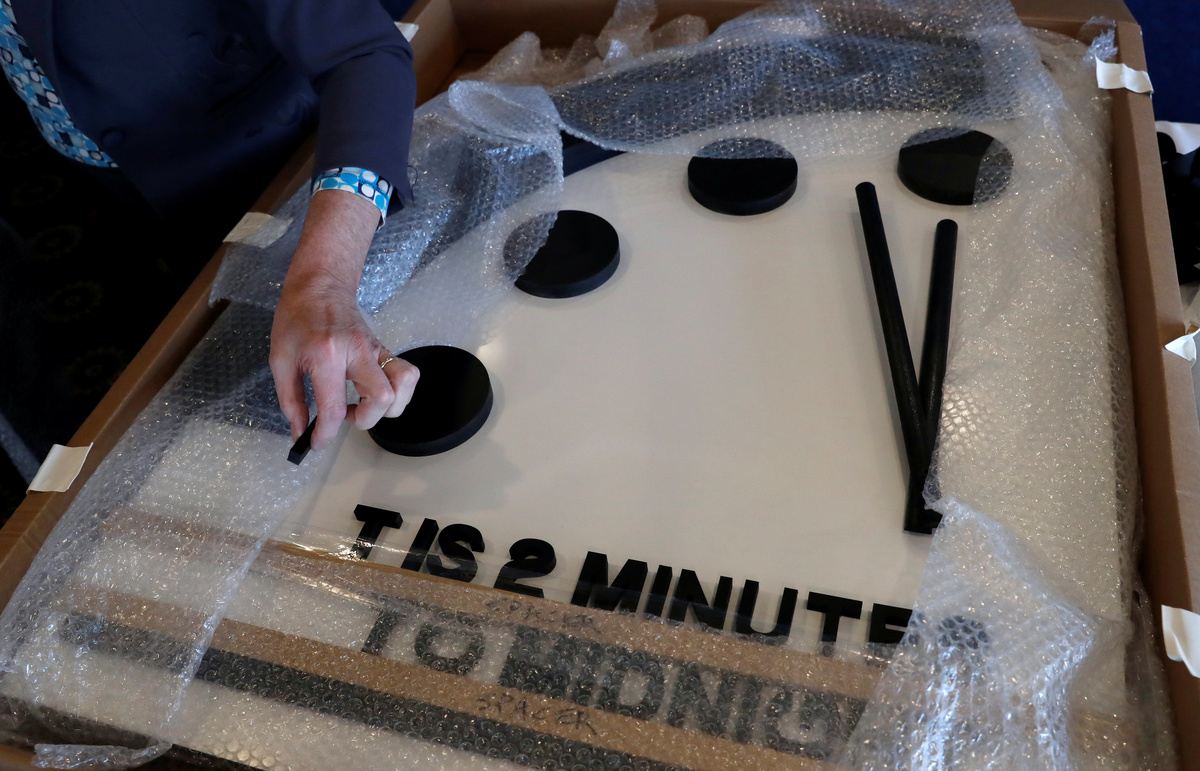
FILE PHOTO: Hilary Howes packs up the 'Doomsday Clock' after it was announced by the Bulletin of the Atomic Scientists that the hands have been moved to two minutes until midnight at a news conference in Washington, U.S. January 25, 2018. REUTERS/Leah Millis
Since the election of U.S. President Donald Trump in 2016, the clock has closed in on midnight in successive 30-second moves in 2017 and 2018, in part because of escalating tensions with North Korea over its nuclear program.
The last time the clock was as close to midnight as it has been in the past two years was in 1953, when the U.S.-Soviet arms race escalated as Moscow tested a hydrogen bomb in August after the detonation of an American H-bomb the previous November.
Despite a softening of barbed rhetoric between Trump and North Korean leader Kim Jong Un over the past year, the group saw rising threats in nuclear-armed nations' programs of "'nuclear modernization' that are all but indistinguishable from a worldwide arms race."
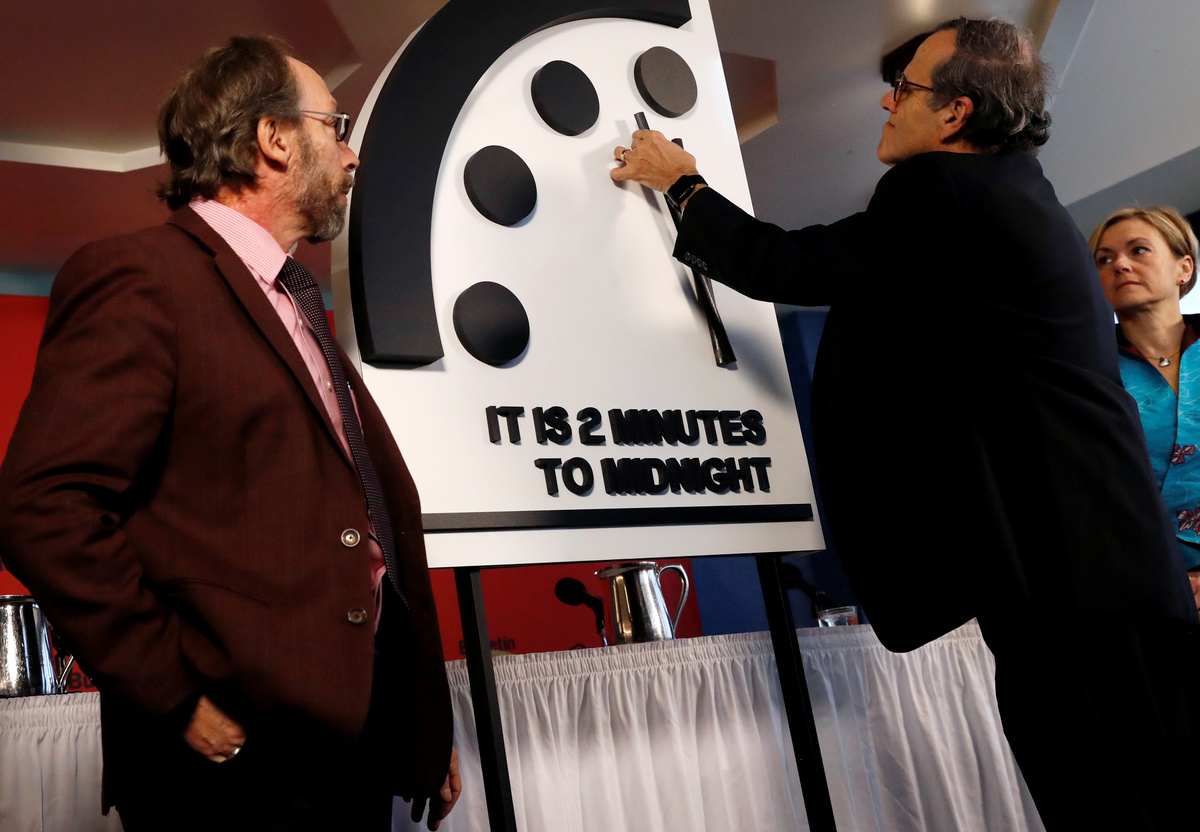
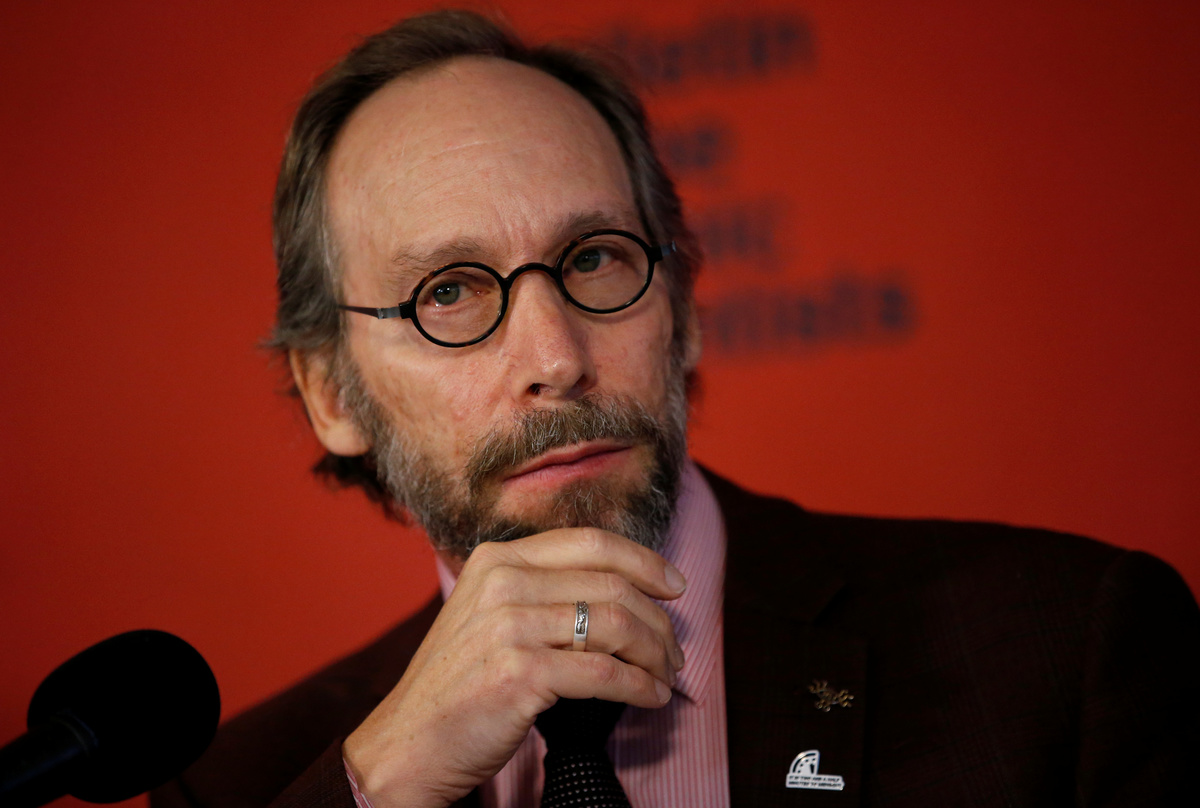
Members of the Bulletin of the Atomic Scientists, (L-R), Lawrence Krauss, Robert Rosner and Sharon Squassoni move the 'Doomsday Clock' hands to two minutes until midnight at a news conference in Washington, U.S. January 25, 2018. REUTERS/Leah Millis
On climate, the group said carbon dioxide emissions resumed an upward climb in the past two years.
To turn back the clock, it recommended steps including fortifying and extending U.S.-Russian nuclear treaties with limits on modernization programs, adopting safeguards to prevent peacetime military incidents along NATO countries' borders, citizen demands for action on climate change and multilateral talks to discourage the misuse of information technology.
The bulletin was founded by scientists who helped develop the United States' first atomic weapons. When the clock was created in 1947, it was set at seven minutes to midnight.
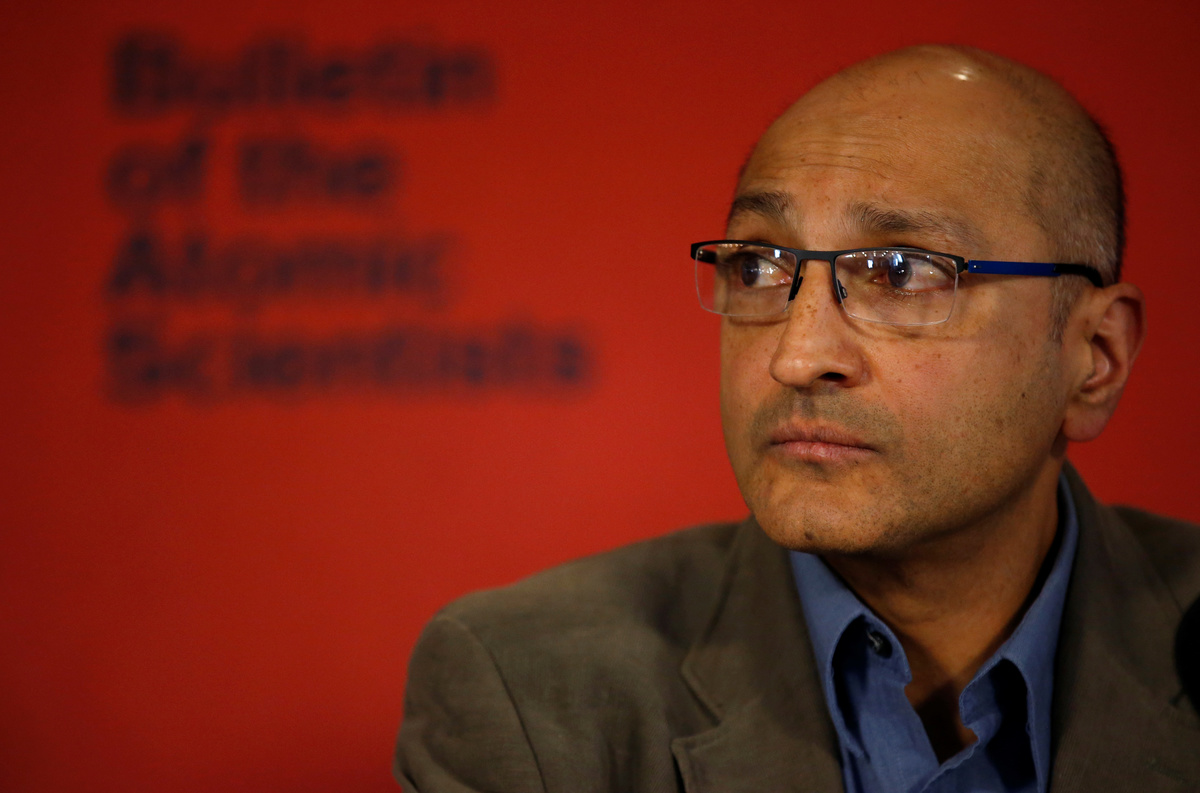
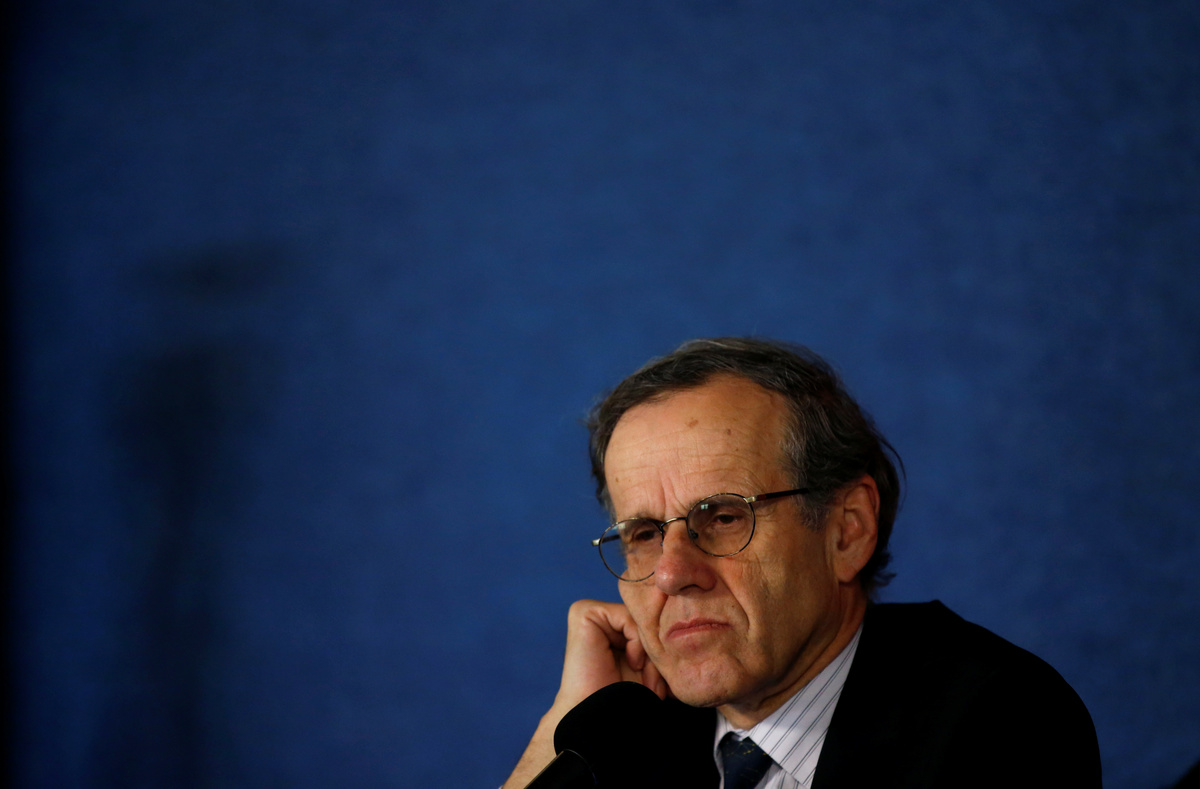
Sivan Kartha listens to fellow members of the Bulletin of the Atomic Scientists talk about their decision to move the 'Doomsday Clock' hands to two minutes until midnight at a press conference in Washington, U.S. January 25, 2018. REUTERS/Leah Millis
(Reporting by Peter Szekely in New York; Editing by Tom Brown)
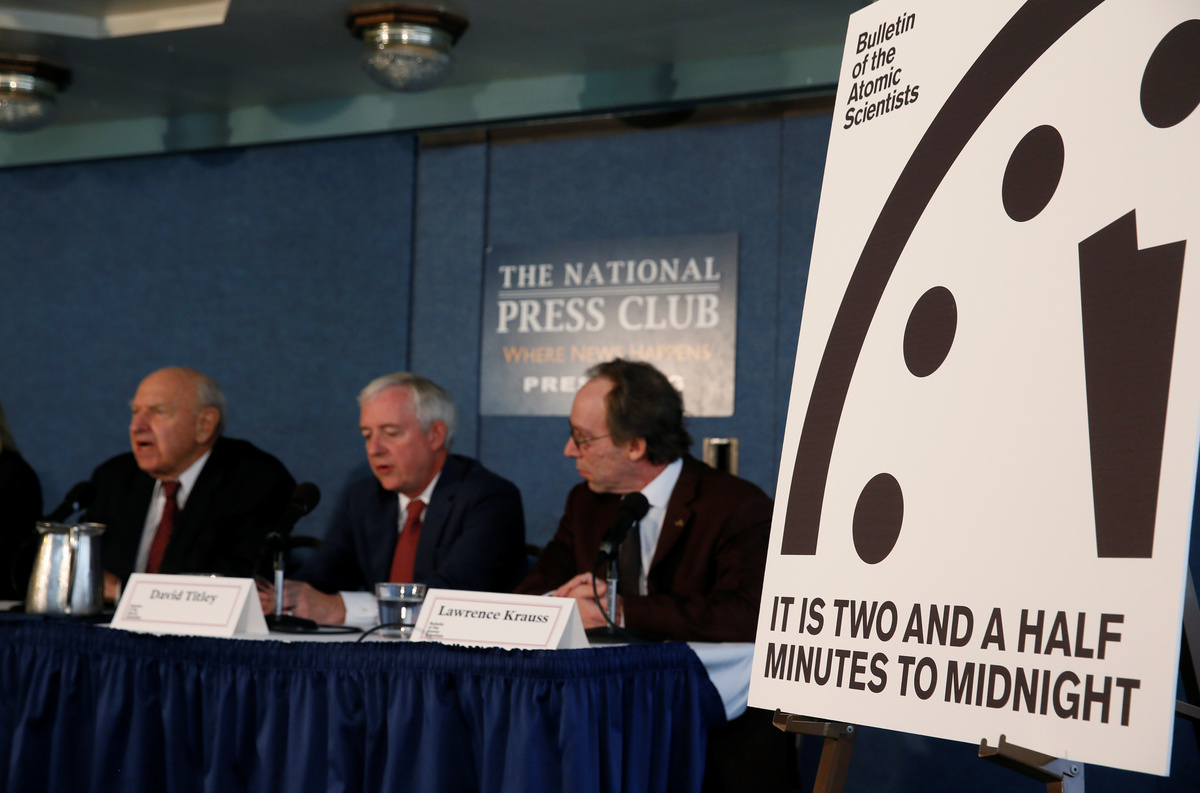
Robert Rosner, a member of the Bulletin of the Atomic Scientists, poses for a portrait after taking part in an announcement that the 'Doomsday Clock' hands have been moved to two minutes until midnight at a news conference in Washington, U.S. January 25, 2018. REUTERS/Leah MillisRachel Bronson, president and CEO of the Bulletin of the Atomic Scientists listens to her fellow members talk about their decision to move the 'Doomsday Clock' hands to two minutes until midnight at a news conference in Washington, U.S. January 25, 2018. REUTERS/Leah Millis"Bulletin of the Atomic Scientists" board members (L-R) Thomas Pickering, David Titley and chairman Lawrence Krauss speak at a news conference where the board revealed that it has moved the minute hand of their "Doomsday Clock" by 30 seconds to a more ominous 2-1/2 minutes from midnight at the National Press Club in Washington, U.S. January 26, 2017. REUTERS/Jim BourgSharon Squassoni listens to fellow members of the Bulletin of the Atomic Scientists talk about their decision to move the 'Doomsday Clock' hands to two minutes until midnight at a news conference in Washington, U.S. January 25, 2018. REUTERS/Leah MillisRobert Rosner listens to fellow members of the Bulletin of the Atomic Scientists talk about their decision to move the 'Doomsday Clock' hands to two minutes until midnight at a news conference in Washington, U.S. January 25, 2018. REUTERS/Leah MillisLawrence Krauss listens to fellow members of the Bulletin of the Atomic Scientists talk about their decision to move the 'Doomsday Clock' hands to two minutes until midnight at a press conference in Washington, U.S. January 25, 2018. REUTERS/Leah MillisRachel Bronson, president and CEO of the Bulletin of the Atomic Scientists listens to her fellow members talk about their decision to move the 'Doomsday Clock' hands to two minutes until midnight at a news conference in Washington, U.S. January 25, 2018. REUTERS/Leah Millis
Sign up to read this article
Read news from 100’s of titles, curated specifically for you.