HARTFORD, Conn. _ Investigators said Thursday they are trying to determine if the vintage World War II-era plane that crashed Wednesday at Bradley International Airport, killing seven people and injuring seven others, had engine troubles prior to takeoff.
National Transportation Safety Board member Jennifer Homendy said concerns about the B-17 bomber's engines stemmed from interviews with survivors of the crash.
Also, investigators are looking into the performance and fitness of the pilots _ both of whom died in the crash. Such an examination is conducted in most federal crash investigations.
Homendy said that pilot Ernest McCauley, 75, had 7,300 hours of flight time on the B-17. That may have made McCauley the most experienced B-17 pilot in the nation.
He'd been flying for Wings of Freedom for 20 years, Homendy said, and co-pilot Michael Foster, 71, had been a volunteer pilot for the Collings Foundation for five years.
Authorities sifted methodically through wreckage at the airport Thursday morning. A team of NTSB investigators were on the runway and surrounding area on the southern end of the airport, reviewing impact marks that the massive Boeing B-17G Flying Fortress, owned by the Collings Foundation, made in the ground and examining the remains of the aircraft.
Homendy said that the 75-year-old plane's last "major inspection" was in January.
"That inspection is called a continuous airworthiness inspection. From there, there are requirements to have progressive inspections," Homendy said. "We do not know the quality of those inspections, we do not know if any issues were identified. We will be looking at that as part of the investigation."
Homendy said that the NTSB has requested training records for the pilots and other crew members, as well as air traffic transcripts from the Federal Aviation Administration and flight records for the plane. The board has also received a number of videos and photos from the public.
The Collings Foundation said it was cooperating with investigators.
It could be up to 10 days before the NTSB, charged with investigating serious transportation accidents, files a report on their investigation and another 12 to 18 months before they make any determinations on the cause of the crash.
"Our mission is to determine what happened, why it happened and to prevent it from happening again," Homendy said.
U.S. Sen. Richard Blumenthal was quick to call for an investigation into the plane.
"I think there is a real need for scrutiny and oversight here. ... It's a vintage airplane and it needs to be properly maintained. If there were defects and improper maintenance it is a very strong red flashing light for others flying these planes," Blumenthal said.
Homendy said that the plane hit the ground about 1,000 feet short of Bradley's runway 6. The plane crashed at 9:53 a.m., Homendy said. That's just minutes after the plane took off.
The aircraft's pilots radioed in a problem, and said that the plane was not gaining altitude and that there was trouble with the plane's number four engine. Homendy said that the NTSB has obtained that engine "for further examination."
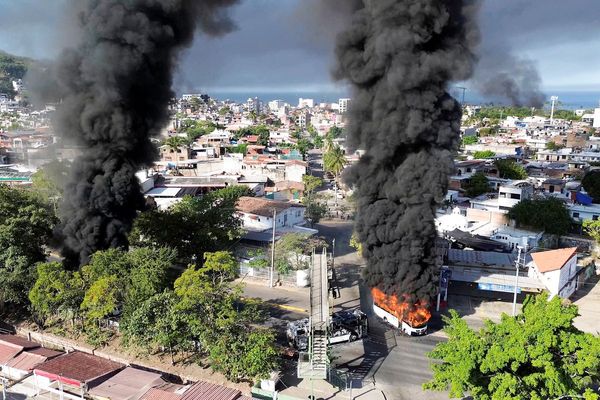
After the pilots radioed in, the plane hit multiple stanchions, veered right over a grassy area and the taxiway, and then slammed into the airport's de-icing facility before bursting into flames. It sent dark columns of smoke into the air that could be seen for miles.
The intense fire consumed much of the fuel-laden plane. A piece of a wing and the tail were all that was left of the storied bomber known as a Flying Fortress, a celebrated World War II plane that the Collings Foundation uses in its Wings of Freedom vintage aircraft display.
FAA records show the plane, owned by the Massachusetts-based foundation, was built in 1944 and is one of 18 Boeing B-17s still registered across the United States. The foundation purchased it in 1986 and reconfigured it from a firefighting plane to its World War II figure.
The historic plane has twice been involved in accidents. In a 1986 crash in Pennsylvania investigated by the NTSB, the pilot reported trying to land the bomber in a heavy crosswind, and unable to stop, went off the runway, down a ravine and was damaged, records show.
A 1995 accident, not investigated by authorities, was reported in a World War II veterans newsletter that said the plane had to land on one wheel when one of its landing gear would not lock into place. During the emergency landing in Iowa, its wing dragged for 700 feet and was damaged.
Maintaining these planes requires specific plans under federal regulations.
Simsbury Airport Manager Bradford Griswold said there are a variety of regulations surrounding the maintenance and inspection of non-commercial aircraft.
Private airplanes are required to have yearly inspections by an FAA-certified airframe and power plant mechanic, Griswold said.
The annual inspections are "incredibly" intensive, Griswold said, and pilots must also comply with any airworthiness directives, which may require more frequent inspections for particular aircraft or repair or replacement of specific parts.
But the process is more complicated with historical aircraft, Griswold said.
Historical airplanes are given individual, FAA-approved plans, Griswold said.
Those plans would cover pilot training and maintenance, as well as any other needs specific to the airplane, he said.
"Usually those plans are tailored to that particular aircraft, and approved by the FAA," Griswold said. "They're more custom to the situation, because they don't fit the boilerplate."
Griswold said the process of developing an individual aircraft plan is meticulous.
The FAA "has developed an exceptionally safe and reliable aircraft system in the United States," Griswold said. "They're not ones to generally let things slide. They'll make sure you get your ducks in a row."
An FAA official said that historic planes such as the B-17 are eligible to operate "Living History" flights.
This category comes with exemptions, the official said, allowing operators to carry passengers in historical aircraft that have "a limited or experimental airworthiness certificate."
"Exemptions are only granted when an applicant has demonstrated a public need, and demonstrates that an equivalent level of safety can be achieved," Bergen said.