If there is one remarkable dynamic in this as yet predictable NSW election campaign, it is the fight over National party turf.
Less than a week from the election, the Sunday morning surprise looks highly likely to be the change in rural and regional electorates in the state.
Coal seam gas and mining have given Labor and the Greens a foot in the door to encourage rusted-on National party supporters to consider voting a different way.
The key areas for the Nationals are the northern rivers seats in the north-eastern corner of the state, as well as Tamworth, inland from the mid-north coast, and Monaro, south of Canberra.
On current polling, the Greens candidate, Adam Guise, and Labor’s Isaac Smith are running neck and neck in the seat of Lismore. Both parties seem to agree on one thing: that the sitting Nationals MP, Thomas George, will lose.
If Guise wins Lismore, it would be the first time the National party has ever lost a seat to the Greens.
In Ballina, where long-standing National MP Don Page is retiring, it is highly likely Greens preferences will get Labor’s Paul Spooner over the line.
The upper house also remains in play across the state. Justin Field, a former army intelligence officer, looks as though he may take another seat for the Greens. Field needs a Greens vote of 11.5% to get in on the third spot on the ticket. On the latest Fairfax/Ipsos polling, the Greens’ primary vote was tracking at 13%.
In Tamworth, the former independent Peter Draper is polling well and is likely to challenge sitting National MP Kevin Anderson, off the back of anger over the NSW government’s approval of the huge Chinese state-owned Liverpool open-cut coal mine. In Monaro, John Barilaro is under challenge from former Labor MP Steve Whan. Labor hopes to win that seat, given Whan’s profile. Whan was the member for Monaro from 2003 to 2011.
If you haven’t been watching this dynamic closely, you would be forgiven for thinking there is something very strange going on in the bush, but it has been building since 2010.
The National party director for the next five days is Ben Franklin, before he moves to the upper house, assured by his No. 2 spot on the Coalition ticket.
Franklin acknowledges the party’s troubles, countering that the swing in National seats is partly a natural correction from the highs of the 2011 result that swept a very unpopular Labor government from office. He is sanguine.
“I am optimistic rather than confident,” he said.
“It’s really tough. Labor is running hard core on coal seam gas, when it was the party that handed out licences on CSG. Now it is saying it will cancel projects. Well you just can’t do that with a stroke of a pen. We are rolling it back and we have a plan to buy back licences.”
Certainly Labor is a Johnny-come-lately to the issue. But it is responding to a strong community movement that began with groups such as Lock the Gate, the farmer-green alliance that began campaigning against coal seam gas and mining in 2010.
It is no accident that two of the people heavily involved in that movement from its inception are now running for election for the Greens. Both Guise and Field cut their political teeth as campaigners for Lock the Gate and latterly advisers to the Greens MLC Jeremy Buckingham, who was elected to the NSW parliament in 2011.
All three men come from rural and regional backgrounds and appear to be dragging the Greens away from their inner-city base. That rural connection, plus their credentials in the Lock the Gate movement, have allowed a conversation with regional communities that a decade ago would not have been possible.
Guise says while there are only a couple of thousand farmers in the seat, the landscape is a focal point for other issues in the electorate. He names the four key industries as sustainable agriculture, renewable energy, tourism and the creative arts. Land use, he says, affects all of those areas, from clean food production, energy priorities and even down to cuts to Tafe, which affected the fee level of courses such as biological farming.
“We have a moral obligation to look after the land, and that affects everything in the area,” Guise said. “They have increased fees on Tafe courses for farmers and we haven’t heard a peep out of the Nationals. People here love their clean food reputation. Coal seam gas threatens all of that.”
Labor was switched on to the political possibilities after the Clarence byelection in 2011. That the Labor leader, Luke Foley, is spending a large proportion of his week in regional seats is instructive. Labor believes it has a strong chance of winning at least one seat in the northern rivers. Its main competition will be the Greens, though the two parties have come to an arrangement on preferences. Whoever comes second on the primary vote in these seats wins the prize.
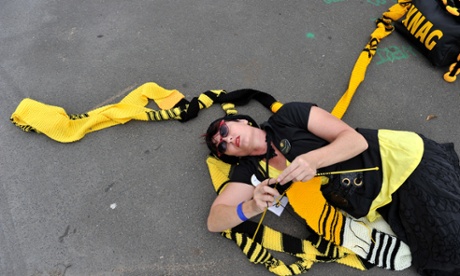
Five days before the election, Foley visited the Knitting Nannas, the community movement which has combined the moral weight of a country women’s association meeting with the marketing power of yellow beanies.
They were camped for his visit in a paddock next to the land near the Bentley Blockade site. They were part of the community group which brought about the suspension of Metgasco’s licence to mine coal seam gas.
Foley told the crowd, heavily weighted with Labor supporters dressed in Isaac Smith T-shirts, that if they put the National party last, no government would ever be game enough to approve coal seam gas again.
“If the Nats fall, you will never have CSG in this region again, and unfortunately it appears the Nats have to learn the hard way,” Foley said.
Colin Thomas is a farmer with a paddock across the railway line from the Bentley site. His quiet demeanour and navy blue workshirt told the story of this revolution in country communities.
Thomas said he had never voted Green, but this time he would vote for Guise, as recognition of his work on CSG. Thomas said he did not expect Guise to get up, so would preference Labor second to ensure the Nationals did not win.
Asked about Labor’s record of handing out the licences, he said the Nationals had done little on the issue in government and he just had to trust Foley.
“Labor has a lot to live down and all I can do is take Luke Foley on trust,” Thomas said.
Labor trialled a preselection model in Ballina that involved a mix of community members and party members selecting the candidate. If the seat falls to Labor – and it dents the Nationals in other seats – Labor will look at extending the model to some seats in the federal election. It will mark a bigger shift into Labor campaigns in country seats and will again be the space to watch, not just on Sunday morning.