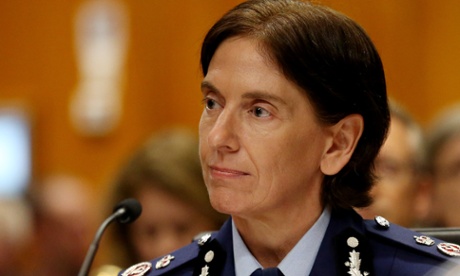
The New South Wales deputy police commissioner Nick Kaldas wants an apology from his fellow police commissioner, Catherine Burn, for being bugged 80 times under her watch, labelling her evidence in an inquiry “preposterous”.
Kaldas took the stand again in a NSW parliamentary inquiry on Tuesday to answer further questions on Operation Mascot, an anti-corruption probe which bugged more than 100 police officers in 2000. There are allegations unauthorised bugging took place during the operation.
Kaldas criticised the ombudsman, Bruce Barbour, for taking two years to investigate the bugging, saying Barbour was distracted by who had leaked information about the investigation when the investigation itself should have been his focus.
During the inquiry it emerged Kaldas had been bugged 80 times, which Kaldas described as wrong, saying he did not think even the murderer Neddy Smith had been bugged 80 times. He said M5, an informant who Burn had conceded was a “very dishonest person”, had been used in the operation to “even up personal scores”.
“Who among you would not be distressed to hear at public hearing that you were the subject of 80 warrants and know in your heart, it’s wrong, it’s unfair and ... every effort for reprisal over the years has been met with ridicule?” Kaldas said.
Burn had earlier said she could not recall who ordered the bugging of Kaldas and Kaldas used his afternoon hearing to say that as the team leader of the special crime and internal affairs command unit (SCIA) at the time, Burn would have had to have known he was being bugged.
“I would prefer deputy Burn to express some regret for a mistake she made early in her career … all I ever wanted was an admission it was wrong and an apology,” Kaldas said. “My career was derailed for years. My integrity so very publicly brought into question, I forgive Catherine Burn, I believe in Christian forgiveness.”
Kaldas, who still works alongside Burn as a fellow deputy commissioner, said he would be able to continue to work with her in a “professional and collegial” way.
Burn had earlier said there were “reasonable” suspicions about Kaldas’s conduct in 2000 to bug him, including allegations of theft from a crime scene, the planting of a firearm on a suspect and the fabrication of notes around that offence.
Kaldas said if there was serious questions about his conduct then he should have been interviewed and that had not happened once. “Eighty warrants I’ve been the subject of, and not one question,” he said.
Kaldas said despite the fact he held the highest level of security clearance possible in Australia, elected politicians and senior police were briefed that there was a reasonable suspicion about his integrity.
He said all he was ever seeking was an admission that the way he was treated was wrong.
“Nobody regrets the disruption and turmoil more than me, I and many others have done our best for over a decade to bring this to a head. What was impossible for all of us to accept was to bend over and pretend that it didn’t happen,” he said.
“There was wrongdoing, there was misconduct … possibly illegal activities”
Kaldas was applauded by the public gallery when he finished his testimony.
Earlier in the day Burn had faced the inquiry and said she no longer had suspicions about the conduct of Kaldas.
“I’m aware Mr Kaldas was promoted twice since I left and I would expect anyone being promoted would not have any outstanding matters,” she said. “I was satisfied [that] because he had been promoted the matter had been dealt with.
Burn said she could not recall who had ordered Kaldas to be bugged but the information would be easily available from meeting minutes at the time. She also expressed frustration at how long the investigation by Barbour had taken.
She said the investigation was taking a toll on “all of us” and it was difficult for police to investigate other police, but it was the nature of their work.
“The police force of today is not the police force of the 1980s, 1990s and even early noughties … allegations of corruption have been dealt with,” she said, adding there had been reforms in the police force to prevent further corruption.
Operation Mascot also bugged journalists including Channel Seven journalist Steven Barrett and Daily Telegraph crime editor Mark Morri.