NSW should be back in the black in 2024/25, with Treasurer Matt Kean laying down the prospect of a turnaround as the state rebounds from the impacts of COVID-19 and devastating floods.
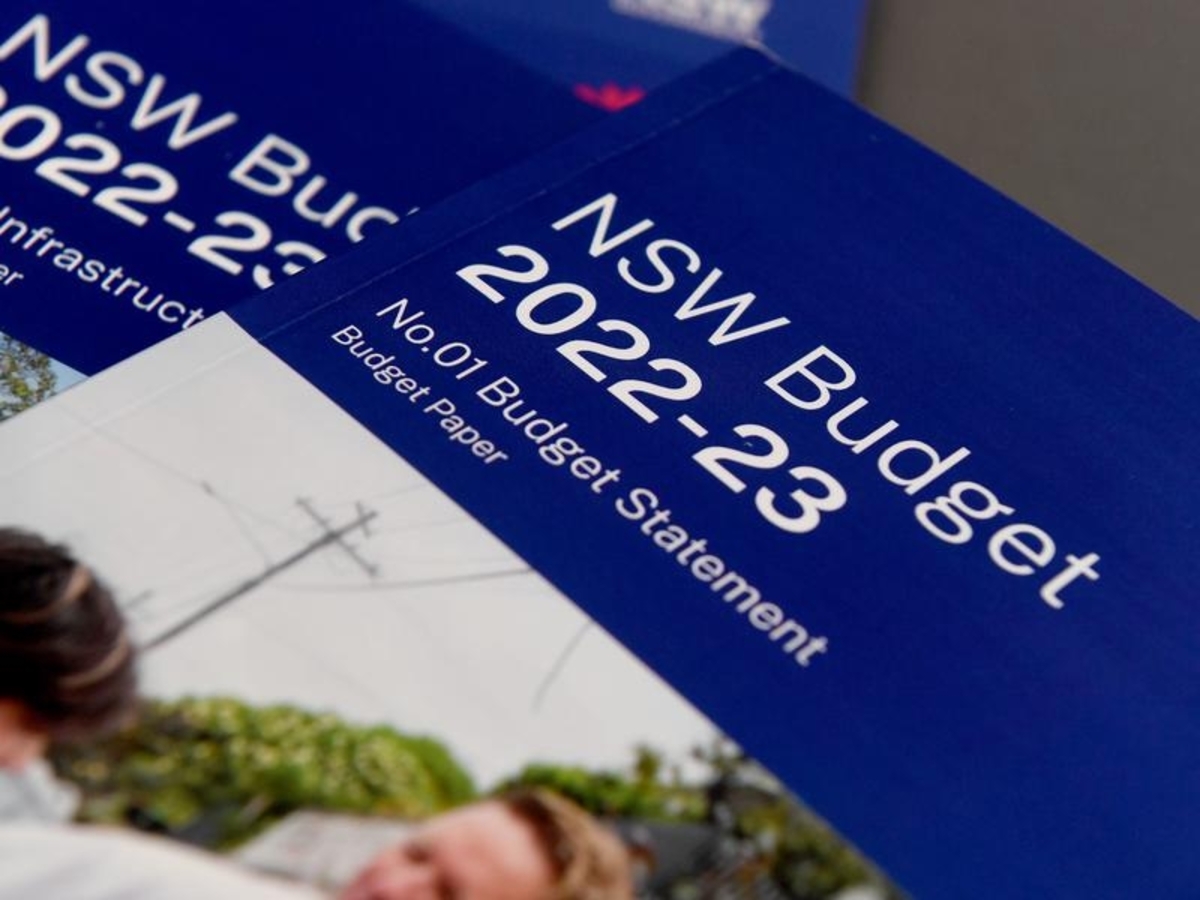
The NSW government handed down its 2022/23 budget on Tuesday, confirming a $16.6 billion bottom line and forecasting a deficit of $11.3 billion for the 12 months ahead.
The deficit for the current year marks an improvement from half-year forecasts, which predicted the state to be $19.5 billion in the red.
The government said record low unemployment and strong consumer and business spending had led to the budget upgrade, despite pressures from COVID-19 Delta and Omicron waves and the flood crisis in the state's north earlier this year.
It predicted the green shoots would have the budget back in the black by 2024/25 when a surplus of $601 million was forecast, followed by $1.4 billion the following year.
Mr Kean said the government was investing in major economic reforms that would keep the state on the path to surplus.
"We are doing this ... as we projected in last year's budget notwithstanding all the challenges that have been thrown at our state, including the Delta and Omicron waves and the unprecedented floods," he said.
After the budget release, credit ratings agency S&P Global said the state's fiscal repair remained on track, despite the government lifting spending before the state election in March next year.
S&P Global said high vaccination coverage and near-record low unemployment meant NSW was well placed to return its "operating position back to balance over the next few years, a crucial factor underpinning our AA+ rating on the state".
The upbeat assessment was despite the government committing billions of dollars to new spending measures on health care, early childhood education, and toll road rebates, it said.
"NSW's wealthy and diversified economy, as well as its track record of excellent financial management, anchor the credit rating on the state, in our view," the agency said on Tuesday.
The budget papers forecast a rise in NSW's gross state product or output of 4.25 per cent in 2022/23, having grown 1.5 per cent in 2021/22.
Net debt for 2022/23 was forecast at $78.2 billion and $93.7 billion in the following financial year before heading to $105 billion in 2024/25.
Economic risks will remain elevated in 2022/23 with the government citing threats from coronavirus, uncertainty around the pace and extent of interest rate hikes, the Ukraine conflict, and concerns over China growth.
Inflationary pressures also loom, driven by global supply chain pressures and exacerbated by Russia's invasion of Ukraine, which had impacted energy and commodity prices, the government said.
"NSW like many parts of the world is facing ongoing economic challenges driven by the lingering impacts of COVID," Mr Kean said.
"Inflation is up across many parts of the world including in the UK and US, inflation is increasing daily household costs and putting pressure on family budgets right here in NSW."