NSW Treasury coffers are benefiting from higher coal royalties driven by the surge in coal prices, according to yesterday's budget papers.
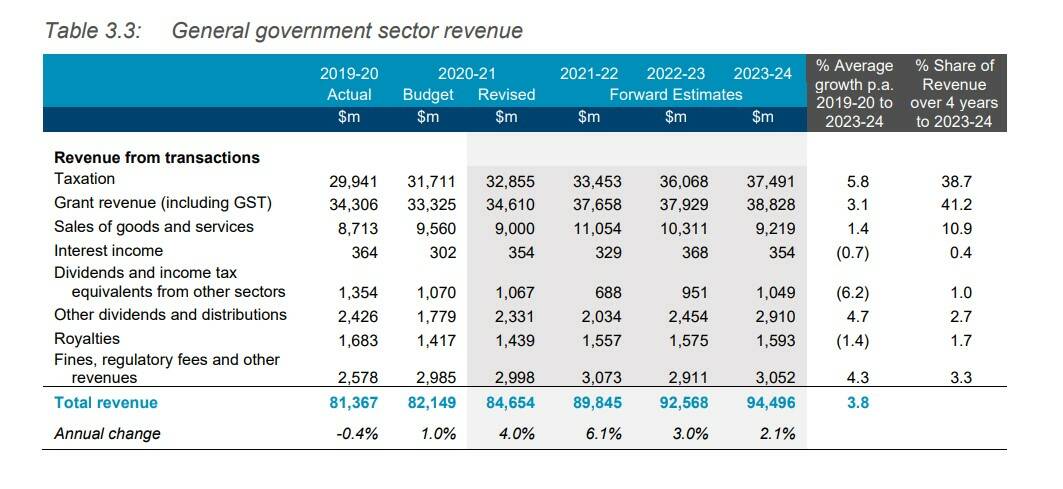
"Mining royalties are forecast to be $1.6 billion in 2021-22, $51.1 million higher than forecast at the 2020-21 half-yearly review," budget paper No.1 said yesterday.
"This is partly offset by a $20.6 million downgrade over the three years to 2024-25, resulting in a $30.5 million (0.5 per cent) uplift over the four years to 2024-25.
"The short-term increase in mining royalties reflects improved expectations for thermal coal prices, notably in 2021-22, but this is largely offset by higher exchange rate assumptions and weaker expectations for gold prices, relative to the 2020-21 half-year review."
Royalties are one of the main variables of state budgets, with their rises and falls often hard to predict.
Tables show a 2021-22 estimate of $1.608 billion for mineral royalties in total, up from an estimated $1.557 billion at the February half-year review, with an average growth rate of 3.1 per cent a year from 2021-25.
IN BUDGET NEWS:
-
A full list of the state budget highlights for the Hunter
-
How the Hunter fared in the NSW budget
-
NSW budget 'with a heart' forecasts four-year turnaround
-
NSW COVID bill hits $4b with more to come
- Mice money among regional NSW budget spend
Government publications show royalty rates as 6.2 per cent of sales price for deep underground mines (coal extracted below 400 metres), 7.2 per cent for other underground mines and 8.2 per cent for open cut mines.

With lower-grade 5500 kilocalorie coal having hit $US70 ($93) and high-quality 6000 kilocalorie product bringing $US122 ($162) a tonne in recent trade, percentage royalties could be as high as $13 a tonne.
But actual payments are reduced by allowable deductions including washing costs of up to $3.50 a tonne, as well as the costs of certain defined "bad debts" and government levies for coal research, mine subsidence, long service leave and mines rescue.
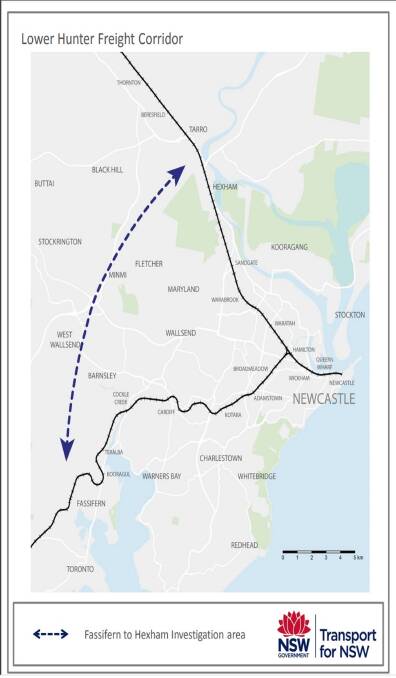
Elsewhere in the budget, $12.176 million has been allocated towards planning for a Lower Hunter Freight Corridor to accommodate the long-awaited Hexham to Fassifern freight rail bypass.
This is on top of $4.754 million classified as already spent on planning for the project.
Hunter Business Chamber chief executive Bob Hawes said that while the funding was welcome, promises had been made before about corridor planning but the work kept "disappearing off the radar".
The transport department told the Newcastle Herald in 2016 that the results of a corridor study were still "one or two years away".
In 2019, when government planners raised concerns in 2019 about a possible motor raceway at Wakefield, at the Fassifern end of the corridor, the Herald said submissions on the project suggested the corridor had not "progressed much further than a line drawn on a map".
Transport described its work at the time as "preliminary investigations".
Mr Hawes said the repeated delays were damaging.
"A lot of the land in question is government owned, which makes it easier, but at the same time, residential expansion is moving west, and you don't want to see any potential routes cut off by that," Mr Hawes said.
The bypass would move north-south freight trains out of Newcastle. It was seen as crucial for expanding underground coalmining on the Central Coast, which may now not proceed.