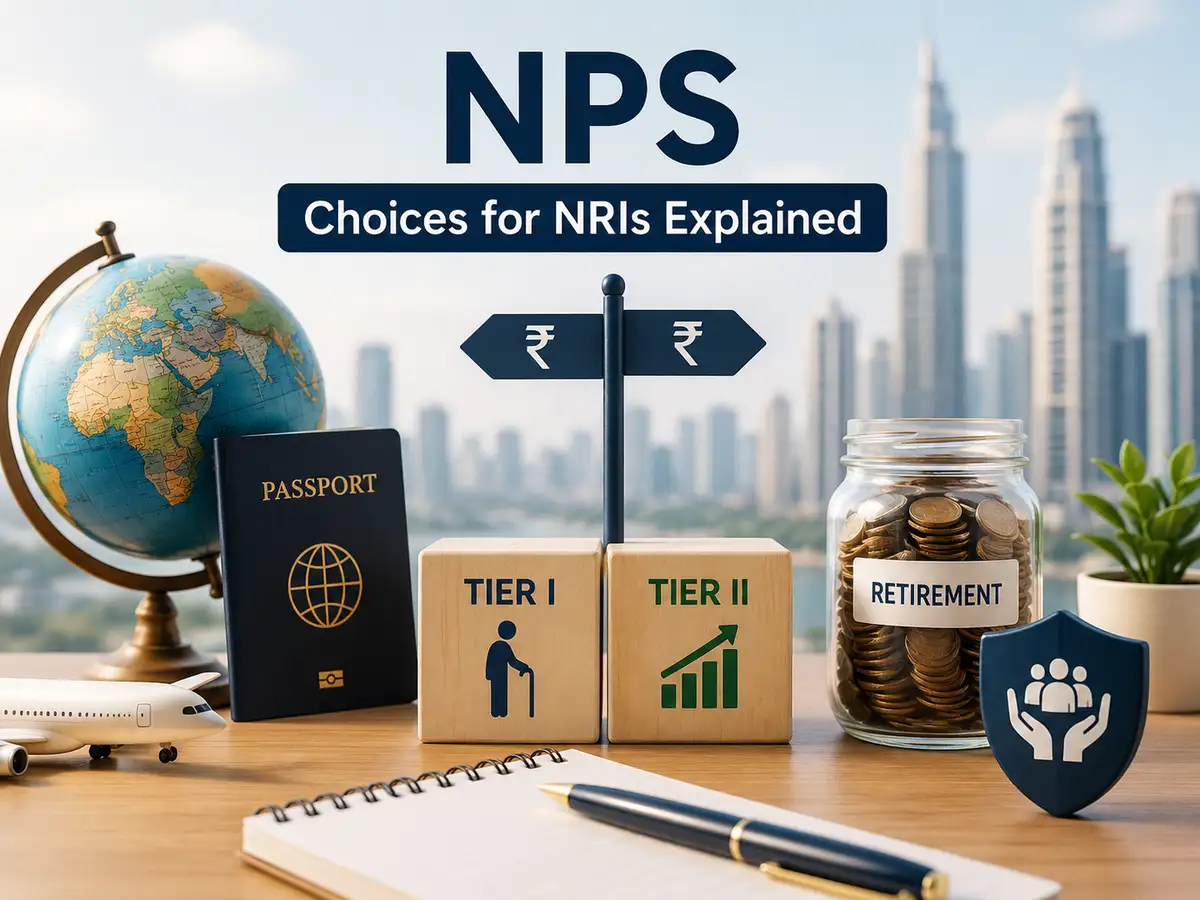
Non-Resident Indians (NPS) seeking to accumulate a retirement corpus in India can opt for the National Pension System (NPS). The NPS allows them to choose a variety of investment options where NRIs can build a sizable corpus in the long run. They can also purchase an annuity at the age of 60 to get a monthly pension.
NRIs seeking to invest in the NPS can invest in a Tier-I account.
Also read: NPS for NRIs: Who can invest, tax benefits, eligibility, withdrawal rules explained
Which investment model can NRIs choose in the NPS?
NRIs can invest in the NPS under the all citizen model, subject to KYC requirements.
Can NRIs also invest in a Tier II account of the NPS?
There are two types of accounts under the NPS — Tier I and Tier II. However, NRIs can invest only in a Tier I account.
A Tier I NPS account is a primary retirement account and is mandatory for all NPS subscribers. It offers tax benefits but has strict withdrawal rules until retirement.
The Tier II account is a voluntary savings account that does not offer tax benefits and allows withdrawals at any time.
Contribution details for NRIs in NPS
NRI and Overseas Citizens of India (OCI) subscribers can make contributions to the NPS using their Non Resident External (NRE) and Non Resident Ordinary (NRO) accounts. Note that if an NRI wants to get their NPS corpus repatriated, they should make contributions from an NRE account.
What are the investment options available for NRIs under the NPS?
NPS funds are invested in government securities, corporate bonds and equities. NRIs have the freedom to select the pension fund manager and investment options.
NRIs’ contributions in the NPS are primarily invested in three main asset classes:
Equity (E): This asset class may give a high return, but it is also a high-risk investment option that primarily invests in stock market securities.
Corporate Debt (C): Under this option, funds are invested primarily in fixed-income securities.
Government Securities (G): This scheme invests in government securities. It is a low-return, low-risk investment option.
NRIs can select their investment mix (E, C, G) based on their risk appetite and retirement corpus goals.
NRI investment choice: Active or passive
The NPS offers two main investment choices to its subscribers Active Choice and Auto Choice. NRIs can opt for both of them.
Active Choice: Under this option, NRIs can decide on the allocation across the asset classes (E, C, G).
Auto Choice: Under this option, an NRI’s investment is automatically managed based on their age.
There are three options in Auto Choice,
Aggressive (LC-75): Under this, the maximum equity exposure is 75% up to the age of 35.
Moderate (LC-50): The maximum equity exposure is 50% up to the age of 35.
Conservative (LC-25): The maximum equity exposure is 25% up to the age of 35.
What is the National Pension System (NPS)?
The NPS is a government-backed retirement savings plan to get income after retirement. It also offers tax benefits and flexible investment choices. NPS benefits include retirement income security, tax benefits, flexibility in investment options and long-term growth potential.