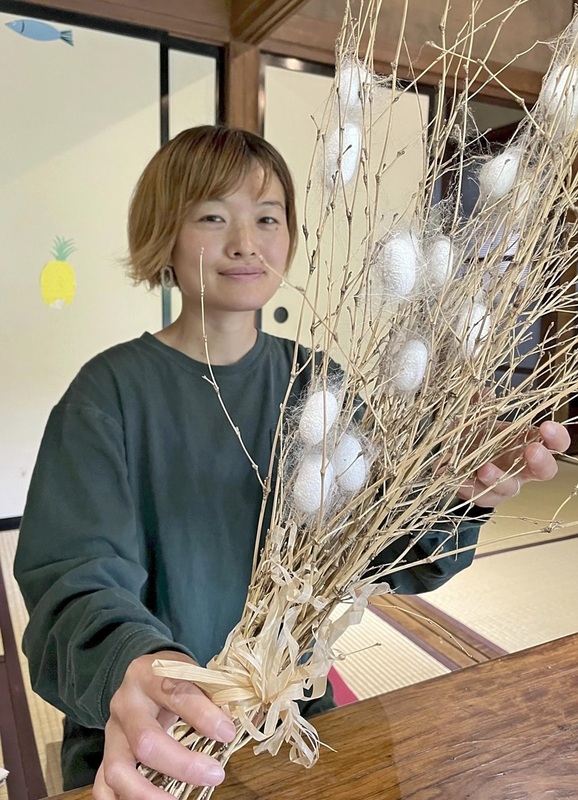
A nonprofit organization in Kunitachi, Tokyo, is hoping to spread the joy of raising silkworms at home.
The endeavor is called the Okaiko Friends Project, where okaiko is a polite way to call kaiko, or silkworms. The project was launched last year by Kunitachi Noennokai, which helps with urban agriculture and offers childcare support in the city's Yaho district, an area blessed with peaceful rural landscapes. The organization is considering offering events related to the project -- from sericulture workshops to cocoon-accessory-making events.
"We hope the 'petite' sericulture will become a new option for people spending more time at home," said a member of the NPO.
During the Meiji era (1868-1912), sericulture thrived across Japan as raw silk was an important export from the country.
Many farming households in the Yaho district produced silk until before World War II, and maps of the area at the time were apparently dotted with symbols for mulberry fields, on which silkworms feed, according to the Kunitachi Local Museum.
The NPO launched the project in spring of last year to help people learn about the history of sericulture and about silkworms.
A silkworm is about 2 to 3 millimeters long at birth and grows to be up to 8 to 9 centimeters long while repeatedly shedding its skin. It then spits a long strand and forms a cocoon around itself. The project first distributes silkworm eggs to participants and lets them exchange information with each other on a Facebook group regarding the silkworms' growth and well-being, as well as where mulberry trees grow. Many project members produce cocoon-making places for the silkworms with items such as paper cups and empty toy capsules, and they proudly show photos of such "okaiko apartments" to other members.
It takes about a month to raise a silkworm from an egg to a cocoon. However, members can also take part in related events, which are mostly held online. The events held last year include workshops with academic experts and a virtual visit to a sericulture farm in Hachioji, Tokyo. The NPO also invited a local accessory maker as a lecturer for a cocoon-earrings-making event. The organization is planning to hold similar events again this year. Among them is a walk in search of mulberry leaves.
Although it is difficult to travel afar due to the pandemic, about 50 people participated in the walk last year. Some parents, who said they joined the event for their children's special study assignment during summer vacation, became more enthusiastic than the children, according to the NPO.
"Silkworms are charming, when they rotate their heads and spit the strand, for example. Even if you are not fond of watching worms, there is much to discover," said Satoko Murai, 37, a member of the NPO who is in charge of the project.
Read more from The Japan News at https://japannews.yomiuri.co.jp/