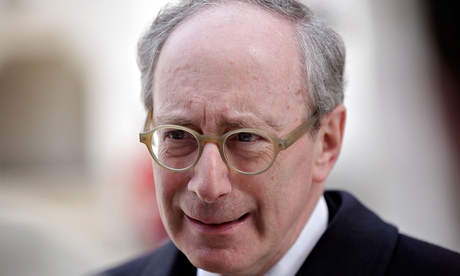
As a result of cash-for-access allegations, the Conservative party has suspended the whip from former foreign secretary Sir Malcolm Rifkind pending a disciplinary inquiry. However, the MP’s most important, most sensitive – and indeed most controversial – role is the chairmanship of the parliamentary intelligence and security committee (ISC). A huge question mark now hangs over a body whose burden of work is currently greater than it has ever been. Surely Rifkind has no option but to stand down? And, indeed, the prime minister himself could act more forcefully: he may have said this morning that the chairmanship “is a matter for the committee. It is a matter for the House of Commons”. But all the members of the committee, including the chair, must be “nominated for membership by the prime minister”, according to the 2013 act which reformed the ISC.
When Rifkind was appointed chairman of the committee by David Cameron in 2010 he proposed strengthening its powers – up to a point. He conceded that its past investigations had been inadequate, and its resources too meagre. He recognised it suffered from a lack of credibility.
But did he do enough to restore that credibility? The committee has found itself fielding a number of increasingly urgent questions surrounding the activities of MI5, MI6, and GCHQ, not least the revelations of the US whistleblower Edward Snowden, and that most vital of issues, the protection of personal privacy against the forces of the national security state. On these issues Rifkind was seen by his detractors as being insufficiently tough on the agencies involved.
Of Tempora, the programme that saw GCHQ secretly gain access to private communications, Rifkind said: “The reality is that the British public are well aware that its intelligence agencies have neither the time nor the remotest interest in the emails or telephone conversations of well over 99% of the population who are neither potential terrorists nor serious criminals.” He added that he was “yet to hear of any other country” that had “a more effective and extensive system of independent oversight than the UK and the US”.
But Rifkind too often appeared to approach the security services with the attitude of a critical friend, rather than with the dogged scepticism required of a really effective committee chair.
With his departure, which now seems likely as well as desirable, a new chair will of course have to be found. Among its present membership who might take over the reins until the general election are the Liberal Democrat elder statesman Sir Menzies Campbell, and the former cabinet secretary Lord Butler. Whether they would provide the grit needed for the committee to really hold the intelligence services to account is another matter.