The spread of the new coronavirus has forced us to take a new look at how we live and work. How should we address current issues and those to come amid a changing society?
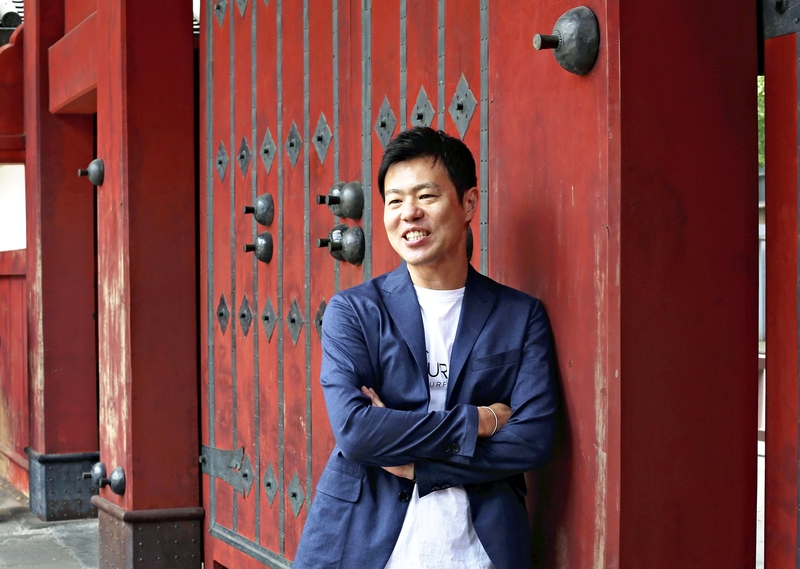
Shintaro Yamaguchi, professor of economics at the University of Tokyo, has been studying problems related to families, such as child rearing. His recently published "'Kazoku no Shiawase' no Keizaigaku" (the economics of 'family happiness') won the Suntory Prize for Social Studies and Humanities.
Prof. Yamaguchi shared his thoughts with Yomiuri Shimbun Senior Writer Sachio Nikaido. The following are excerpts from the interview.
--Coronavirus's effects on families
Looking at the impact of the new coronavirus from a family perspective, it has negatively affected women in the short term. Women are more likely to lose their jobs because they are often non-regular employees, and many have to look after their children due to school closures and reduced capacities at day-care facilities. We are still being dragged along by the traditional view of the family -- of the woman as homemaker and the man as breadwinner -- and I worry that this trend will become further entrenched.
While it is necessary to provide cash benefits to households that have seen sharp decreases in income, it is also important to open schools, kindergartens and day cares. The closing of schools and preschools not only delays learning, but hinders the ability to check for domestic abuse. Of course, the spread of infections must be prevented. But the risks accompanying school and preschool closings are extremely high.
We cannot rule out another wave of infections. We should be thinking now about how to keep schools open as much as possible at such a time.
--Child education is social benefit
What I would like to particularly emphasize, in terms of the importance of places of learning, is that education for very young children has great benefits for society as a whole.
When my research group analyzed data from government surveys, we found that attending preschool reduced hyperactivity and aggressiveness in children from economically disadvantaged families. Not only does it play a role in improving the children's academic ability, it leads to a reduction in juvenile crime.
A U.S. study on the long-term effects of early childhood education found that those who underwent solid child education have higher incomes, were less inclined to commit crimes and had lower rates of going on welfare, than those who did not. The cost-effectiveness of an early childhood education program exceeds returns from investing in the stock market.
On the other hand, empirical studies in various countries have shown that the intellectual effects of early childhood education do not last very long. So-called gifted educational programs are highly effective immediately after implementation, but the effects fade several years after the child enters elementary school. In early childhood education, it is important to acquire "lifetime assets" such as an ability to build interpersonal relationships and to properly deal with problems.
Be that as it may, we still cannot say that there are sufficient facilities for early childhood education. The introduction of free preschool education in October last year was the right step forward in the sense of increasing investment in our children, but there is a problem that it provides large benefits for high-income households that paid high preschool fees under the old system.
Ahead of anything else, the waiting lists for entering preschool have to be eliminated. Because priority goes to children with both parents working full-time, children from disadvantaged households, such as those with single parents, are more likely to be placed on the waiting list. The spread of the coronavirus has highlighted the fact that when the economy worsens, these children of disadvantaged families are likely to fall into a more dire situation. From the perspective of anti-poverty measures, the number of preschools should be increased.
In addition, a sufficient number of preschool teachers is necessary. Having teachers with plenty of time to interact with children will lead to the improvement of the quality of childcare. In reality, there are many licensed childcare workers not currently working. This is because preschool teachers are not treated very well -- the salary is low even though the work is hard, and it is difficult to get onto a career path.
I think the country has hardly spent enough on early childhood education. Looking at the ratio of family-related expenditures to gross domestic product (GDP), top-class countries such as Sweden are over 3%, while Japan's spending around 1.5%. That is on the low side compared with other developed countries. First of all, to immediately eliminate the preschool waiting lists, we should allocate funds to build facilities and secure human resources. For the future, we should consider lowering the starting age for compulsory education.
I want people who don't have children or don't intend to have children to think about this. When they become elderly, it will be the current generation of children who support them in the form of nursing care and pensions. The effects of early childhood education are clear, and spending money on it benefits everyone.
--Better future for families
If we consider the impact of the coronavirus from a long-term perspective, I think society will change in a way that favors families. Specifically, through the expansion of telecommuting. If people don't have to be tied to spending working hours in an office, women will have more options for how they work. That makes it easier for men to take part in childcare and housework.
In particular, when it comes to childcare leave for men, Japan's system is actually regarded as top-level by the United Nations Children's Fund (UNICEF). But even though the system is well established from an international point of view, the fact is that it is not being utilized because of men's concerns such as the adverse effects on promotions.
On the other hand, in Northern Europe, 70% to 80% of fathers take childcare leave. It used to be rare, but some brave fathers started a precedent and it gradually spread throughout society.
I can't yet say that overall there are many fathers taking childcare leave in Japan today. Still, the number has been steadily increasing. I am optimistic that the expansion of telecommuting will serve as a tailwind for further expansion of paternity leave.
Empirical research in Canada has shown that fathers who take a month or so of childcare leave spend more time raising children and doing housework even after they return to work. This could lead to lifestyle changes and be linked to measures to counter the falling birth rate. Telecommuting raises various issues, such as what to do about labor management, but the government and companies should still actively promote it.
--Challenge on data collection
What I have pointed out so far has been based on sound data analysis. Given that, I feel there are not enough policy discussions based on scientific evidence in Japan.
One reason is the sad state of data collection. Amid the countermeasures against the coronavirus, the counting of infected people has been slow, and, because taxpayer information is not managed well, the provision of uniform cash payments of 100,000 yen has also taken time. How to balance this with privacy concerns becomes an issue, but there is lot of knowledge from overseas which should be useful.
What's more, because the wide variety of surveys are not digitized, it is difficult to consolidate them and use them effectively. Behind this is the sectionalization of ministries and agencies and the lack of a "central command tower" for statistical surveys.
In addition to these issues, we need to deepen public understanding of surveys. Accurate data that reflects the actual situation is essential for proper policy-making and high-quality decision-making. I want people to regard responding to a survey as being as valuable as casting a vote.
What can we do to realize a better society based on data? I myself will put my mind to it using what I have learned in my studies of economics.
Yamaguchi was born in 1976. After graduating from the Faculty of Business and Commerce at the Keio University in Tokyo, he earned his doctorate in economics from the University of Wisconsin-Madison. In 2019, he became a professor of economics at the University of Tokyo, having previously taught at the McMaster University in Canada. In recent years, he has been researching the effects of Japanese public policies on working women and childhood development.
Read more from The Japan News at https://japannews.yomiuri.co.jp/