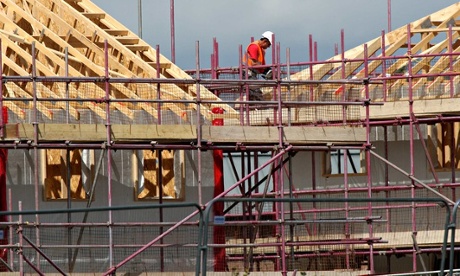
The latest figures on construction activity released on Wednesday by the Bureau of Statistics reveal that the transition of the economy from the mining boom looks to have hit a bit of a speed bump. Building construction in both the residential and non-residential sectors fell in the September quarter while engineering construction continued to plunge. The figures suggest the RBA might need to look at further reducing interest rates even at a time the OECD is warning rates should be raised.
The quarterly construction figures allow us to get a good picture of economic activity across the country. The figures are broken into building or engineering construction but within this we can also break building construction down in to residential and non-residential.
Engineering construction involves things like roads and bridges, but also the construction of mines.
Since the end of the investment phase of the mining boom, engineering construction has fallen off a cliff. In trend terms it fell 3% in the past quarter and 10% in the past 12 months.
The RBA’s strategy has been to lower interest rates in the hope that this would spur housing construction and ease the transition from the mining boom by helping to spur investment and work in the non-mining sectors of the economy.
And as we know from house prices in Sydney, the tactic did seem to work. Home loan approvals rose and so too did residential building construction. Annual residential building construction in the past 12 months has grown by 11% in trend terms. This was a massive turnaround from the 12 months to March 2012 when residential building activity fell 7.7%:
So problem solved? Well, perhaps not.
The latest figures released on Wednesday showed that in seasonally adjusted terms residential building work fell 1.6% in the last quarter and non-residential building fell 0.1%.
While the trend figure was more positive and suggested such work grew by 1.8% in the quarter, even this is heading the wrong way. The past two quarters have shown less growth than the quarter before it, and the 1.8% growth is the lowest since this time last year:
Given unemployment remains high, and investment in the mining industry continues to fall off the back of falling iron ore prices, now is not a good time for the housing construction boom to end.
It all goes to the difficulty of managing this transition. The value of engineering construction in Australia till the end of 2010 was less than the total building construction work. This meant falls in engineering construction could be somewhat easily balanced by lowering interest rates to cause building work to rise.
But engineering construction grew so fast in the 21 months from December 2010 till September 2012 that it went from accounting for 50% of total construction to 62%. This means that declines in engineering work require greater growth in housing and other building work to keep things equal. And when you have engineering work falling by 10% in 12 months, that’s hard to muster.
Thus while building construction has risen 8% in the past 12 months, total construction work has fallen 3%:
Since September 2012 the 14% fall in engineering construction is equal to a fall of around $4.8bn; whereas the 12% increase in building construction in that time is equal to just $2.4bn.
The difficulty also lies in a geographical sense. Prior to the mining boom, New South Wales and Victoria together accounted for over half of all of Australia’s construction work; now they account for just 38%, whereas Western Australia and Queensland together account for 51%:
Except, WA and Queensland are much more dependent upon engineering construction. In WA, engineering construction accounts for 74% of all construction; in Queensland it is 68%. But in NSW and Victoria it is just 41% and 27% respectively:
So for the RBA’s strategy to work it effectively means that big falls in engineering construction in WA and Queensland need to be countered by very much bigger rises in building construction in NSW and Victoria.
But while there were good signs six to 12 months ago, in both states the heat in building construction is coming off the boil:
In Victoria, building construction grew by just 0.13% in trend terms in the September quarter and it actually fell 2.8% in seasonally adjusted terms. That figure might be a bit erratic, but it certainly isn’t headed the right way.
The problem as well with trying to create a strong boom in housing construction is that it generally causes a boom in housing prices. That is why yesterday, in its semi-annual economic outlook, the OECD suggested that the RBA should “withdraw monetary stimulus” (ie raise interest rates) “in the second quarter of 2015”. It believed the “booming housing market and mortgage lending will require continued close attention by the authorities”.
But while the RBA will pay attention to house prices (which apart from in Sydney, are generally growing at below average rates), it will also pay attention to actual construction work – as that is the primary purpose of the low interest rates strategy.
These construction figures would give the RBA some cause for concern that their decision to keep rates steady for 14 months is the right one.
The record low interest rates don’t seem to have been low enough to keep the housing market going. New housing construction fell 5.2% in seasonally adjusted terms in the past quarter – the worst fall since September 2010.
The figures show that growth in non-mining construction work looks to have stalled while the mining sector investment and construction continues to plummet. All of which suggests Australia’s transition economy remains a work in progress, and may be in need of some tweaking with even lower interest rates.