I began to think about becoming a parent following an amicable divorce and some following years of education and personal development. As a single woman in her early 30s I considered all the options.
My life experience and profession as a qualified social worker led me to the perhaps naive conclusion that choosing to adopt would be a way to make a real difference to somebody waiting for a family. Love would conquer all.
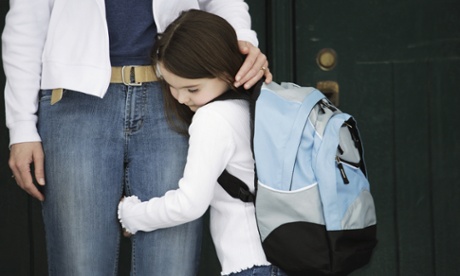
Even with my professional experience, and over a year spent readying myself, nothing could have prepared me for the reality of adopting a child as a single parent. My adopted daughter arrived aged five. It became quickly apparent that descriptions of “lively” and “cheeky” didn’t begin to express the anxiety, anger and fear she was experiencing. I remember feeling like we were two people stuck together in a survival situation.
We had to get on from day one, in close proximity, sharing and seeing everything of each other, but as relative strangers. Her strategy at first was to be compliant and over-friendly with every person she met in our daily life. This would cause a build up of triggers and anxiety which would explode when she reached the safety of our home.
The chaos of her early life played itself out constantly and before long I was struggling not only to understand how to parent her properly, but how to piece together her life story. In joining the dots in her history I was trying to understand her communication and emotional reactions. At that time, 16 years ago, although certain agencies and individuals understood the concepts of attachment and developmental trauma, very few had resources and such services were specialist and scant.
The result was that my daughter and I had to learn how to understand each other on the job, and inevitably I got it wrong on many occasions. By the time she was eight she had been permanently excluded by several schools for challenging and aggressive behaviour. Having attended and exhausted both mainstream and specialist schools she was left adrift with no education at all. I had remortgaged my house and was unemployed. The adoption allowance I fought for kept us hanging on by a thread alongside the ongoing emotional and financial support from my family.
Three years into placement I made contact with her birth family. As nerve wracking as that was, I did a thorough risk assessment and decided that contact was less risky to her than no contact. This decision gave us the missing pieces of her life story. Thankfully at the same time we received some excellent support from child and adolescent mental health services.
There were plenty of dramas over the years, many that weren’t easy to handle and several that are too difficult to recount. Suffice to say by the time my daughter reached adulthood, we had earned our adoption stripes. I’m immensely proud of our resilience and the strength of our relationship, despite the lack of support and understanding we faced as an adoptive family.
My adopted daughter is truly one of my closest friends. We share a spirit of adventure and a humour that laughs in the face of adversity. Despite her ongoing work at managing anxiety and trauma, I have conversations with her where her emotional intelligence teaches and amazes me. She is currently going through some testing identity issues and I have every faith that she will come through with flying colours.
We both feel there is much wrong with the current systems and cultures of adoption in the UK. We both campaign towards systemic change in adoption but at the same there is no regret in our hearts or minds that it bought us and our families together.
Amanda Boorman is founder of theopennest.co.uk
If you have an idea for a Social Life Blog, email socialcare@theguardian.com