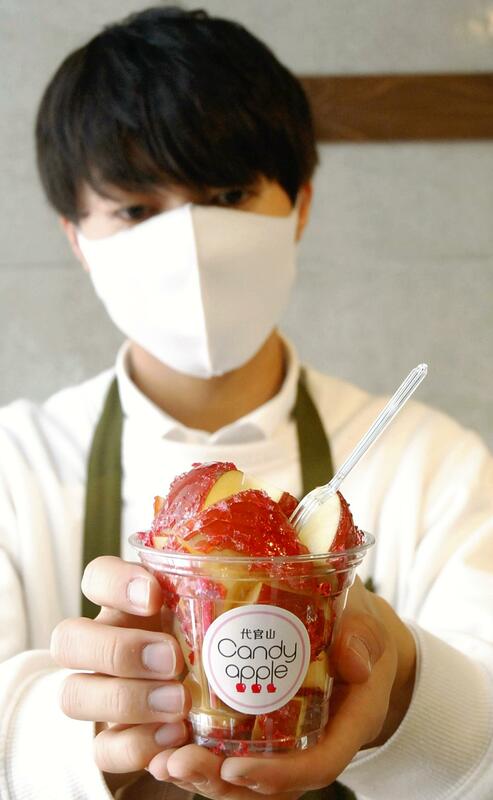
Batches of chic new treats have been seeing the light of day thanks to a shopping trend driven by connected consumers staying home amid the coronavirus pandemic and sweet shops that post innovative photos of their confections on widely used social media sites.
The traditional candy apple and ubiquitous castella sponge cake are among the snacks that have been fine-tuned for sweet new re-releases.
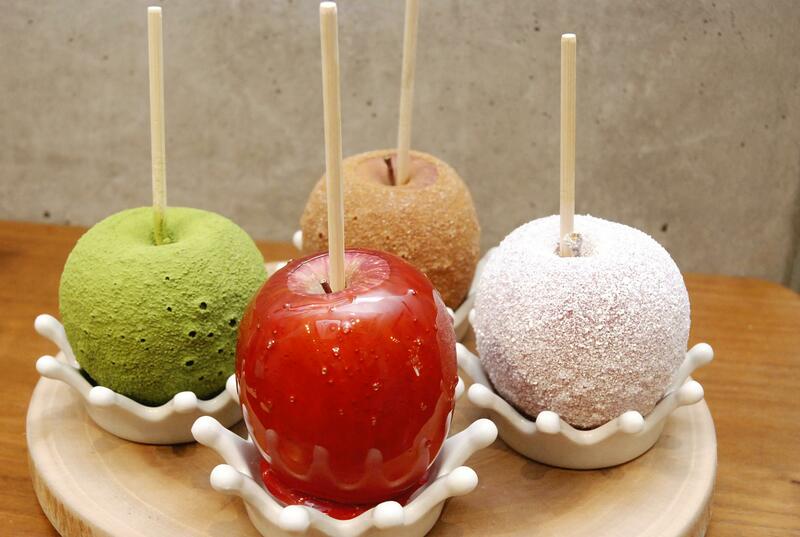
-- Crispy crunchy confections
At Candy Apple's flagship shop in the Daikanyama district in Shibuya Ward, Tokyo, various types of candy apples are lined up. In early April, a first-year student of a Tokyo junior college was at the store with her mother, who was visiting from Yamaguchi Prefecture. While the shop offers the standard served-on-a-stick candy apple, the two opted for to-go cups filled with bite-size chunks of the treat. After biting into the candy apples, they said they enjoyed the difference between the crispy candy coating and the crunchy, juicy apple inside.
There are eight flavors to choose from, including plain, cinnamon and green tea. The shop mainly uses tart Aomori Prefecture apples to provide some balance to the sugars being used. Take-out prices start at 648 yen.
Misa Nishino, a representative of the shop's management company, said, "Customers tell me that their concept of candy apples has changed."
The main shop began operations in January last year and since then five others have opened in Tokyo and other cities such as Yokohama.
"There are a lot of customers in their teens and twenties who post about how cute [our apples] look on social media," Nishino said. "But 60% of our customers are in their 30s and 40s, and they come to our shops saying that they've really missed [eating] candy apples."
Candy Apple also offers mail orders, and such sales amid the prolonged novel coronavirus crisis have seen a significant uptick.
Baby castella specialty shop And All opened its take-out operation in Tokyo's Ueno Ameyoko shopping district in July 2018. Instead of water, their dough is made with soy milk, which is aimed at giving a chewy texture to their distinctive castellas. In addition to plain, they offer chocolate chip and tea flavors. Their medium-size plain packs sell for 430 yen.
-- Much kneaded pistachios
Shops that specialize in specific ingredients are also appearing. Pista & Tokyo Tokyo Gift Palette shop, which opened in August last year at the Yaesu North Exit of JR Tokyo Station, uses pistachios in its range of sweets. Pistachios are kneaded into dough and used in the cream for its cakes and cookies to give them a distinct and savory flavor.
-- Stay-at-home adventurism
One reason behind the spread of niche sweet specialty shops according to Mari Ariki, a senior researcher at the Hot Pepper Gurume Gaishoku Soken research institute, is that a significant sector of the food service industry has been attracting customers through differentiation, which has resulted in an increasingly segmented industry on the whole.
"Through social networking services, consumers can find information on specialty food shops more easily. Such shops can also satisfy their desires to spread the word on the latest topics," she said.
The impact of the novel coronavirus crisis has also contributed to the surge in adventurous palates. In a survey conducted by the research institute last September on about 2,000 men and women in their 20s and 30s on changes in eating habits due to the pandemic, with multiple responses allowed, the top responses were "I want to be a little more extravagant with food since there is less entertainment," accounting for 35%, followed by "I want to taste something unusual," at 17%.
Ariki said: "As opportunities to eat out have shriveled, more and more people are expecting extraordinary experiences that only specialty shops can provide. And it's easier for people to try a new sweet that is based on an existing version rather than opt for something they've never heard of before."
Read more from The Japan News at https://japannews.yomiuri.co.jp/