As the Ernakulam Additional Special Sessions Court heard final arguments before sentencing in the 2017 Kerala actor abduction and assault case, the courtroom became the site of a pointed debate over how accountability should be measured in a gangrape conviction. Both sides invoked the 2012 Delhi gangrape and murder (Nirbhaya case) — a watershed in India’s sexual violence jurisprudence that led to major criminal law amendments — but to very different ends.
Public Prosecutor Aja Kumar argued that all six convicts should face equal punishment under the principle of joint liability. Citing the Nirbhaya precedent, he said, “In a criminal conspiracy, who committed the physical act has no significance.”
He urged the court to impose no less than 20 years of rigorous imprisonment, extendable to life, arguing that facilitation was as grave as the assault itself. “If the others had not confined and restrained the survivor, Suni could not have committed the crime,” he told the court, calling the attack on an unsuspecting woman a crime that had “deeply shaken the public conscience.”
Responding to his submissions, Judge Honey M Varghese asked whether the distinction between direct and indirect participation should affect sentencing. “While Suni committed the rape, others facilitated the abduction, confinement, and recording of the assault. These differences are not insignificant,” she observed.
At the same time, she warned against turning sentencing into an exercise in public messaging. “Punishment can serve as a deterrent, but a judgment is not written for society. It is guided by law, not by what society wants,” she said, emphasising that the court “cannot be carried away by sensation or bias.”
In a counter-argument, Pulsar Suni’s lawyer Pratheeksh Kurup sought to distance the case from Nirbhaya, contending that maximum punishment should apply only in cases of extreme brutality. “In that case, each accused raped the victim and used objects. Here, the act was not as grave,” he argued.
Advocate KV Sabu, representing fifth and sixth convicts, Salim H and Pradeep, pressed for leniency by highlighting that his clients had no criminal history and did not participate in the rape. “The court has the discretion to consider mitigating circumstances,” he said.
The defence pleas were preceded by emotional personal appeals by the convicts. Suni said he had no one to care for his elderly mother. Martin Antony, breaking down, pleaded innocence, while others cited family responsibilities and requested proximity to home prisons.
The sentencing arguments came three days after actor Dileep — earlier accused of conspiring in what was described as a ‘quotation rape’ — was acquitted by the same court. The five-year-long trial had seen over 200 witnesses and extensive forensic evidence.
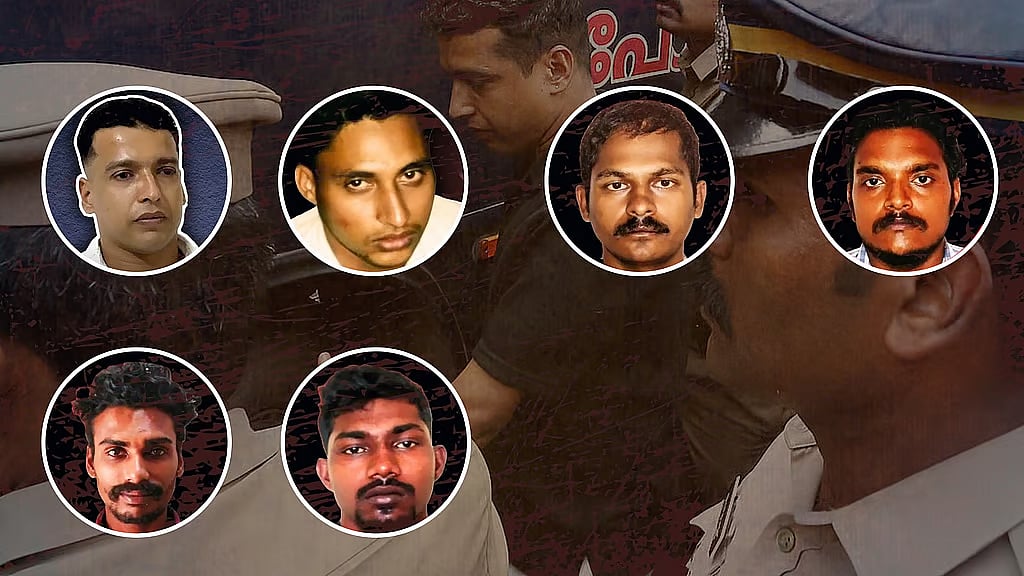
On Friday, December 12, Judge Honey Varghese sentenced Suni and five others — Martin Antony, B Manikandan, Vijeesh VP, Salim H, and Pradeep — to 20 years of rigorous imprisonment each, besides directing compensation of Rs 5 lakh to the survivor. She also ordered that the investigating officer must ensure the secure handling of the memory card containing the assault visuals.
This report was republished from The News Minute as part of The News Minute-Newslaundry alliance. Read about our partnership here and become a subscriber here.
Newslaundry is a reader-supported, ad-free, independent news outlet based out of New Delhi. Support their journalism, here.