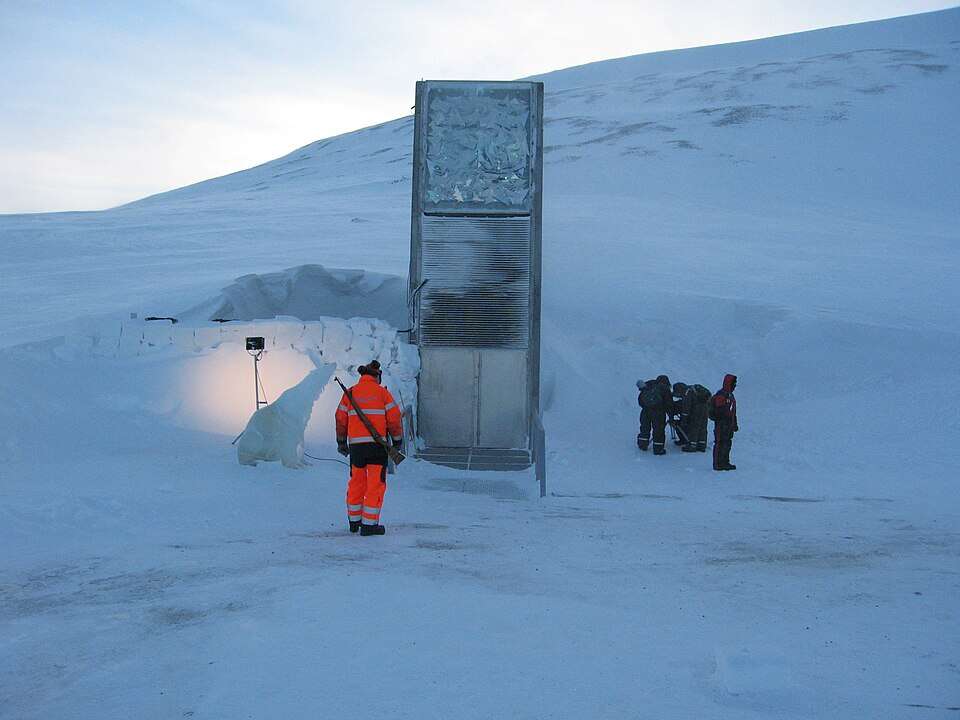
Deep inside a frozen mountain on a remote Arctic island, Norway has built one of humanity's most ambitious insurance policies against global catastrophe. Known as the Svalbard Global Seed Vault, the underground facility safeguards more than 1.3 million crop seed samples from around the world, preserving the genetic diversity needed to rebuild agriculture if war, climate disasters, disease outbreaks or other large-scale crises were to destroy existing food crops.
Get breaking news anytime, anywhere. Download the TOI app now!
The vault is often called the “doomsday seed vault” of the world and is situated in the island group of Svalbard, which lies halfway between mainland Norway and the North Pole. The vault is carved about 400 feet into a sandstone mountain and serves as a secure repository for the world’s most important food crops. This helps ensure that future generations will have access to seeds that can help revive agriculture.
Why the world's seed collection is stored beneath an Arctic mountain
The Svalbard Global Seed Vault officially opened in 2008 after years of planning by the Norwegian government in collaboration with international conservation organisations. Rather than functioning as a conventional seed bank, the vault serves as a backup repository for seed collections already stored in national and regional gene banks worldwide.
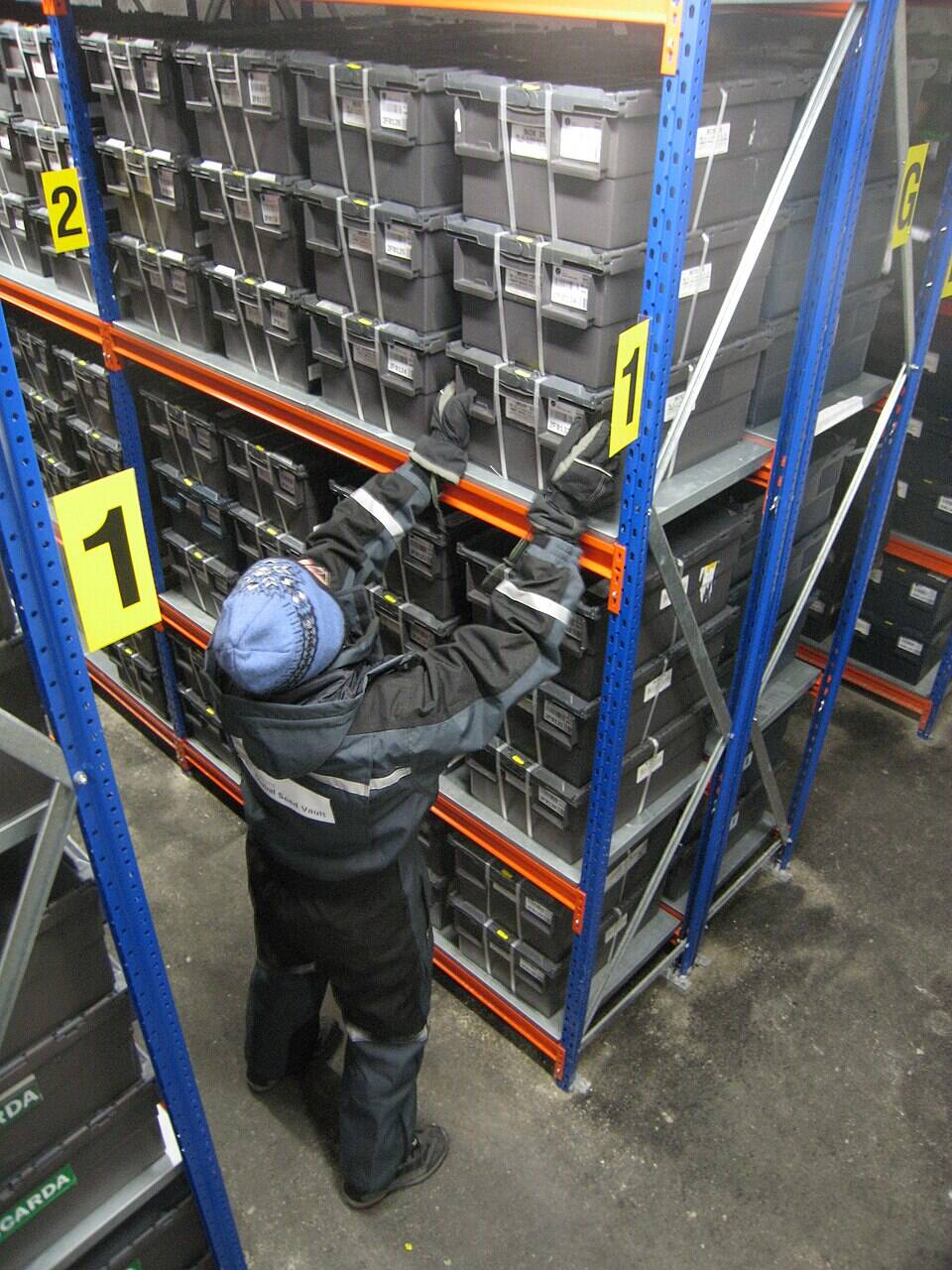
Countries and research institutions deposit duplicate seed samples in sealed containers, while retaining ownership of their collections. If their original gene banks are damaged by natural disasters, armed conflict, or technical failures, they can retrieve their stored seeds from Svalbard to rebuild their collections.
The vault's location was carefully selected for its exceptional natural protection. It is located far above sea level in an Arctic region of Spitsbergen. Permafrost in this region helps in maintaining a cool environment, and the artificial freezing system keeps the vault at -18°C, which is the optimum temperature for seed preservation.
The mountain itself acts as a protective barrier against earthquakes and other environmental threats. Even if the refrigeration system were to fail, the naturally cold Arctic environment would help keep the seeds frozen for an extended period, greatly increasing their chances of survival.
Today, the vault contains more than 1.3 million seed samples, representing over 6,000 plant species. These include staple food crops such as wheat, rice, maize, barley, beans and sorghum, along with thousands of locally adapted varieties that possess valuable traits such as drought tolerance, pest resistance and the ability to withstand extreme weather conditions.
A global backup that has already saved agriculture once
Although the vault was designed for worst-case scenarios, it has already proved its value in a real-world crisis. During the Syrian civil war, the conflict disrupted operations at the International Centre for Agricultural Research in the Dry Areas (ICARDA), whose regional gene bank was located near Aleppo. Many of its seed collections became inaccessible, making it impossible for scientists to continue distributing seeds for agricultural research and crop improvement.
ICARDA was the first organisation that retrieved seeds from the Svalbard Global Seed Vault in 2015. To recover the lost collection of seeds, scientists resorted to using the back-up copies and restored the missing seeds in Morocco and Lebanon, after which the new copies were returned to the Arctic seed bank. This example illustrates the purpose of the facility.
Indeed, in recent years, the importance of protecting plant genetic diversity has increased significantly due to global climate change and the deterioration of the political situation, as well as biodiversity loss. Modern agriculture relies mostly on a limited number of crop species, while traditional varieties have become extinct.
These older varieties often contain genetic traits that plant breeders rely on to develop crops capable of surviving droughts, floods, extreme heat, and emerging diseases. Without preserving this genetic diversity, future food production could become far more vulnerable to environmental change.
Research supports the importance of conserving crop diversity for long-term food security. A study published in Proceedings of the National Academy of Sciences found that maintaining genetic diversity within crop collections is essential for breeding resilient food crops capable of adapting to changing climates, new pests and evolving diseases. The researchers emphasised that conserving plant genetic resources provides the raw material needed to sustain future agricultural production and global food security.
Preserving the building blocks of tomorrow's food supply
The Svalbard Global Seed Vault is an example of an international collaboration between governments, research institutions and agriculture-related organisations from virtually all parts of the world. The Norwegian government finances the building and maintenance of the seed vault, whereas its operation is performed by the Global Crop Diversity Trust and NordGen – the Nordic Genetic Resource Centre. Unlike commercial storage facilities, the vault does not charge countries to store their seeds. As a result, developing countries can store unique seeds adapted to local climatic conditions in the same place as developed countries.
In contrast to any commercial storage facility, the vault does not demand fees from any country that wants to store its seeds. Thus, developing countries, which have unique seeds that are acclimated to particular climatic conditions, can save them in the same place as developed countries.
The importance of these collections extends far beyond preparing for catastrophic events. Scientists regularly use preserved genetic material to develop improved crop varieties that produce higher yields, tolerate drought, resist pests, and adapt to changing environmental conditions. As climate change alters rainfall patterns and temperatures worldwide, access to diverse genetic resources is expected to become even more critical.
Research published in Nature highlights that genetic diversity within crop species is fundamental for ensuring resilient agricultural systems. Scientists note that conserving diverse plant genomes enhances breeders' ability to develop crops that can cope with future environmental challenges, thereby strengthening global food security.
The vault has also undergone improvements to ensure its long-term resilience. Following unusually warm weather in 2016 that caused water to enter the access tunnel, Norwegian authorities upgraded the entrance with enhanced waterproofing and drainage systems. Importantly, the storage chambers remained completely secure throughout the incident, demonstrating the effectiveness of the vault's multiple layers of protection while reinforcing the need to adapt infrastructure to a changing climate.
Far from being a symbol of disaster, the Svalbard Global Seed Vault represents international cooperation and long-term planning. Hidden beneath an Arctic mountain, it quietly protects the genetic foundation of the world's food supply, preserving millions of seeds that could one day help restore agriculture after conflict, environmental disasters or unforeseen global crises. In doing so, it serves as one of humanity's most important safeguards for ensuring that future generations continue to have the resources needed to grow food in an uncertain world.