Defense giant Northrop Grumman Corp. is acquiring aerospace and defense firm Orbital ATK Inc. for about $7.8 billion in cash, a deal that would boost Northrop's presence in the space and missile businesses.
Orbital shareholders are to receive $134.50 per share in cash, a 22.2 percent premium over Friday's closing price. Northrop is to assume $1.4 billion in net debt.
Orbital, based in Dulles, Va., makes rocket motors that power missiles and designs and produces target launch vehicles that are used to test missile defense systems.
The company also makes the interceptor boosters for the U.S. Ground-based Midcourse Defense system, the nation's primary protection against a missile strike.
Northrop _ along with competitor Boeing Co. _ was recently chosen by the Air Force to continue work on designs for a new intercontinental ballistic missile system known as the Ground Based Strategic Deterrent program.
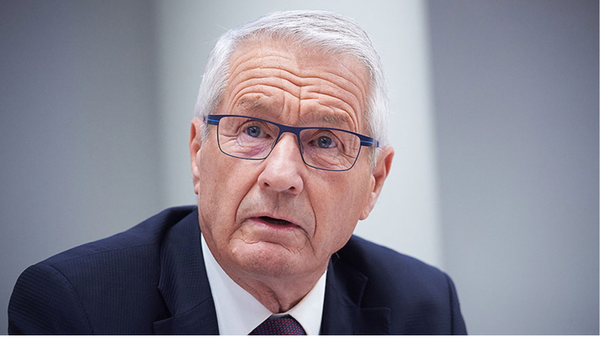
In a call with analysts Monday morning, Northrop Chief Executive Wes Bush described Orbital's capabilities as "very complementary." Northrop executives singled out space, missiles and missile defense as areas where the deal could create new opportunities and offerings for customers.
"We've had a chance to work directly with Orbital ATK over the years on a variety of programs as partners," Bush said on the call. "That has given me a very high level of confidence in the discipline within that organization. ... We have seen them perform exceptionally well on everything where we've been partnered."
The deal, which is still subject to regulatory approval as well as approval by Orbital shareholders, is expected to close in the first half of 2018.
After the deal closes, Orbital is to be established as a new business sector in Northrop and will operate as its own segment, at least initially. Bush said the company had not set any timeline for "any different look for the organization."
Orbital CEO David Thompson said in the call that operating management teams and the company's workforce will be kept in place, though final decisions on sector leadership have not yet been made.
"Like our other senior corporate executives, I am very supportive of this transaction and will be available to support Wes and his team as we move forward," he said.
On the space side, Orbital has a NASA contract to ferry supplies via its Antares rocket to the International Space Station.
It has also developed the Pegasus, a smaller rocket that can be attached to the belly of the company's Stargazer L-1011 airplane and launched while the plane is in flight.
Orbital plans to add more capabilities to its lineup with its first intermediate and heavy-lift rockets, known for now as the Next Generation Launcher, or NGL.
The NGL rockets are still being developed, but Orbital hopes to eventually get them certified by the U.S. Air Force to compete for lucrative national security launch contracts. United Launch Alliance, a joint venture of Boeing and Lockheed Martin Corp., and Elon Musk's SpaceX are the only two launch providers currently certified to compete for those contracts.
Northrop probably was interested in Orbital for several reasons, including Orbital's steadily improving financial results and its dominance in areas with few competitors, including large solid rocket motors, which would be used to launch intercontinental ballistic missiles, and liquid rocket engines, said Loren Thompson, aerospace analyst at the Lexington Institute think tank.
He said the deal answers the question of what's next for Northrop.
"Northrop is doing fine, but it wasn't clear what their strategy was for the future," said Thompson, whose think tank receives some money from Orbital. "What this suggests is they're making a bigger commitment to space."
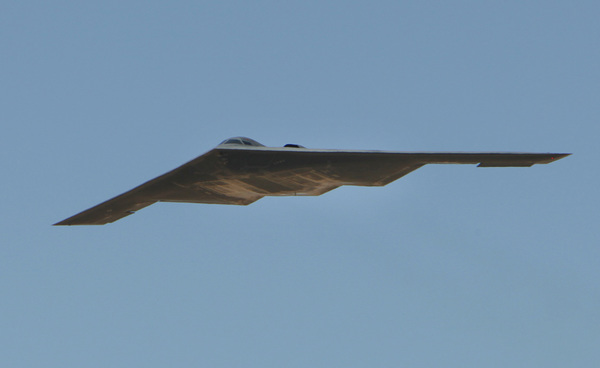
Northrop, based in Falls Church, Va., is known for building aircraft such as the B-2 bomber, as well as unmanned aerial vehicles such as the Global Hawk surveillance craft.
In 2015, the defense company won a contract to build the next generation of stealth bombers known as the B-21.
Northrop is also constructing the James Webb Space Telescope, an $8.8 billion spacecraft with a 21-foot-diameter mirror that is set to capture the oldest light in the universe.
Thompson said discussions between the two companies began earlier this year, but that Orbital had not been shopping itself around.
The deal comes on the heels of the $23 billion acquisition of aviation communications and electronics supplier Rockwell Collins Inc. by United Technologies Corp., announced earlier this month.
Like the UTC-Rockwell Collins deal, Northrop's acquisition of Orbital is a sign of further consolidation in the aerospace and defense sector _ Orbital itself was created in 2015 when Orbital Sciences Corp. combined with Alliant Techsystems Inc.'s aerospace and defense groups.
It's also a consequence of the run-up in share prices for aerospace firms, which "make these kinds of transactions easier to do," Thompson said.
After the Northrop deal closes, Orbital _ like Rockwell Collins _ will have the financial clout to make deals that may have previously been beyond its reach, he said.
Orbital shares jumped 20.2 percent to close at $132.25 on Monday. Northrop shares climbed 3.4 percent to $275.97.