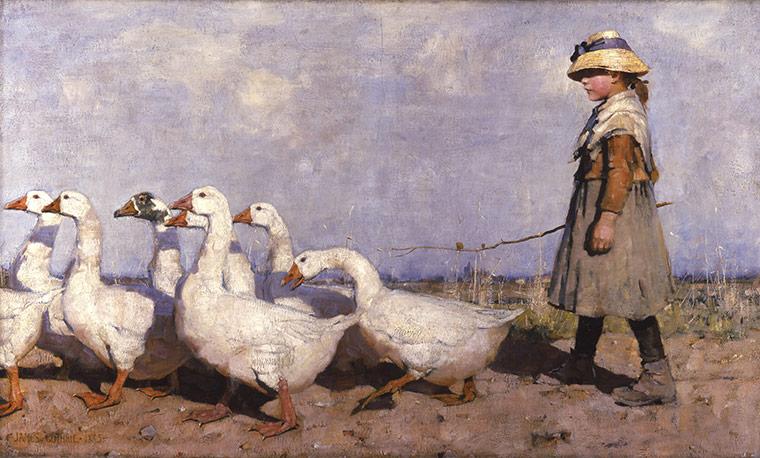
Scottish realist painter James Guthrie, though devoted to French plein air and naturalist principles, actually used one live and one stuffed goose to create his depiction of a whole flock. It was one of the few Glasgow Boys paintings exhibited in London: in 1883 it was hung over the door to the restaurant at the Royal Academy, admired by some but mocked by most for its down-to-earth subject matter Photograph: Aberdeen Art Gallery & Museums Collections
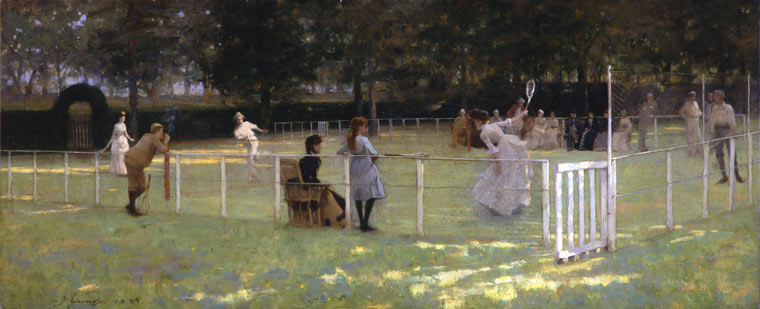
Like To Pastures New, this sun-dappled Lavery canvas is one of the best-loved paintings in the Aberdeen Art Gallery collection. The Tennis Party explodes two myths about the Glasgow Boys: not all of them were Scottish – Lavery was born in Belfast – and they were not all starving students. The game of lawn tennis was only a few decades old when this picture was painted, but the wealthy parents of Lavery's artist friend Alexander Macbride already had courts in their huge garden at Cartbank on the outskirts of Glasgow. The elders can be seen in the background, a dark rampart of solid Victorian values. After 1900, when the group scattered, Lavery would become one of the most successful and highly paid society portrait painters in London
Photograph: Courtesy of Felix Rosenstiel's Widow and Son Ltd, London, on behalf of the Estate of Sir John Lavery
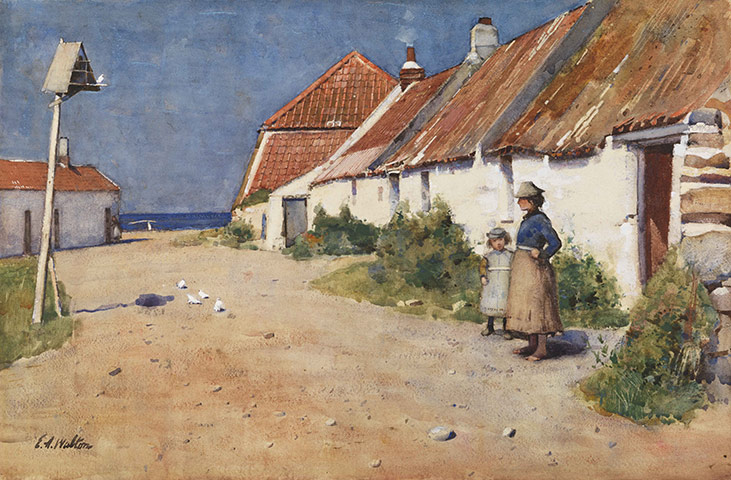
Walton, a lifelong friend of Guthrie’s, was only 23 when he painted the row of cottages under an improbably blue Scottish sky. Like many of the others he became a pillar of the establishment, elected to the Royal Scottish Academy in 1905 and as president of the Royal Scottish Society of Painters in Watercolour in 1914
Photograph: Kelvingrove Art Gallery and Museums, Culture and Sport Glasgow on behalf of Glasgow City Council. Bought by Glasgow Museums, 1966
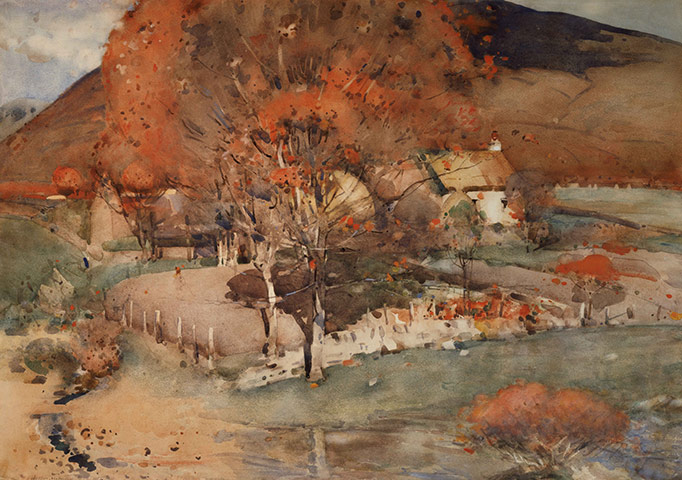
The intense colour of Melville's autumn scene is typical of the dramatic effects he achieved in the usually dainty medium of watercolour. Close up, the image almost disintegrates: the artist has used a sodden brush on damp paper, meaning that the leaves are formed by layers of drips and pools of pigment. Later in life Melville travelled widely, painting equally intense landscapes in north Africa and the Middle East. Some of his most beautiful watercolours were made in Spain, where he was on a painting holiday when he caught typhoid and died aged just 49 Photograph: The Robertson Collection, Orkney
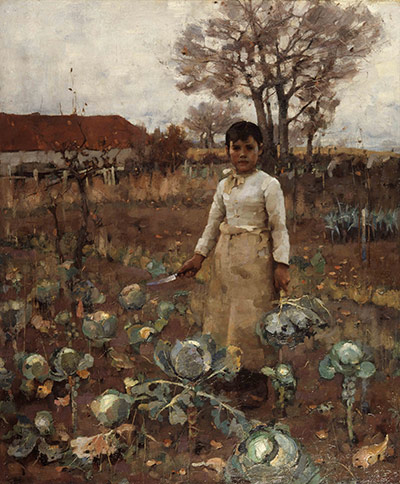
When the Glasgow Boys did exhibit their work in the south their everyday subjects and muddy fields were much derided. Most were plein air artists but Guthrie did try staying on through one bitter winter at Cockburnspath – where he was so cold and lonely he almost abandoned art altogether
Photograph: National Gallery of Scotland
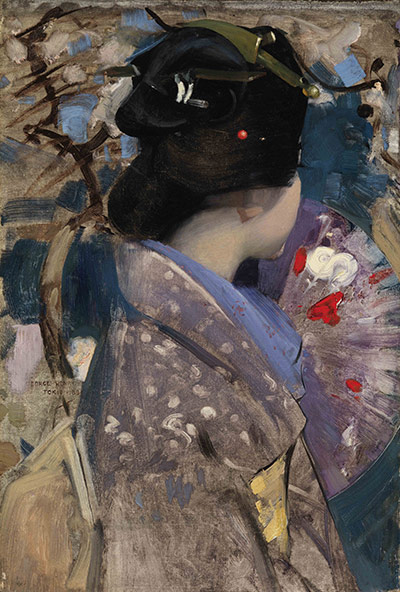
After so many rural browns, it comes as a shock to confront Henry's blazingly colourful Japanese scenes. George Henry painted his share of both before coming under the influence of the slightly younger Australian-born artist E A Hornel in 1885 and adopting an increasingly symbolist style. Japanese art – partly transmitted through Whistler and accessed via the many shops selling Japanese imports in the shipping and trading city of Glasgow – was a major influence on the Glasgow Boys
Photograph: Kelvingrove Art Gallery and Museum, Culture and Sport Glasgow on behalf of Glasgow City Council. Given by Mrs MD Lindsay in memory of Col Barclay Shaw, 1927
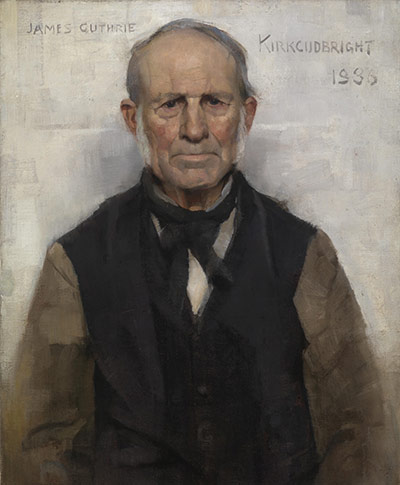
Stripped of all background detail the portrait of Old Willie, with the sitter's weatherbeaten face and distant, incurious gaze, has immense power and authority. Willie is probably the model who appears hard at work with hoe or spade in several other Boys paintings from Kirkcudbright. Guthrie would soon turn to middle-class portrait commissions, which may have had less natural dignity but paid much more handsomely
Photograph: Kelvingrove Art Gallery and Museum, Culture and Sport Glasgow on behalf of Glasgow City Council. Bought by Glasgow Museums 1974

Henry and Hornel worked together on this extraordinary picture, wreathed in an almost hallucinogenic intensity of colour and atmosphere, at a time when musicians, artists and poets like WB Yeats were working to revive interest in Celtic legends and culture. Although the costumes and settings were invented, the artists were extremely interested in the real-life archaeological excavations then taking place across Scotland. Much of the jewellery and many of the weapons depicted can be linked to real artefacts now found in the country's museums
Photograph: Kelvingrove Art Gallery and Museums, Culture and Sport Glasgow on behalf of Glasgow City Council. Bought by Glasgow Museums 1922