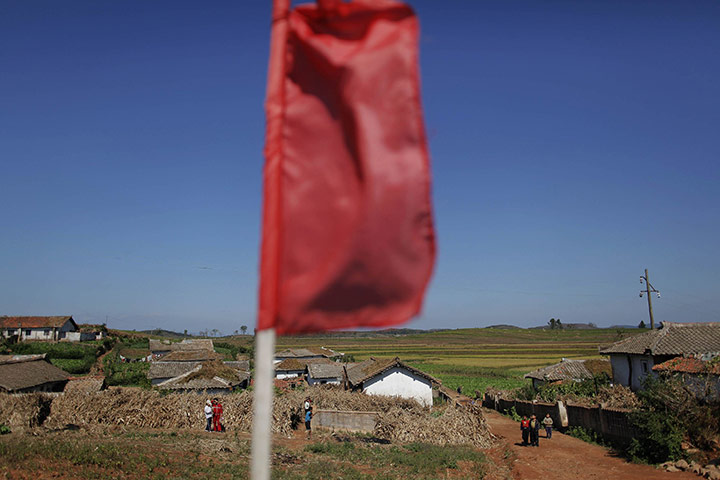
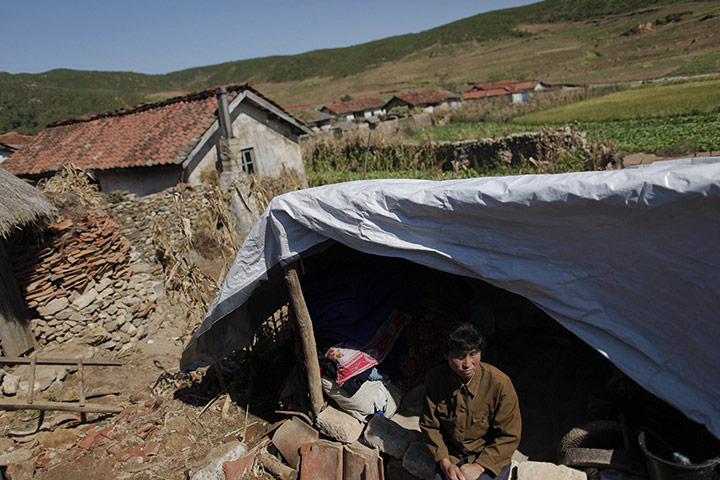
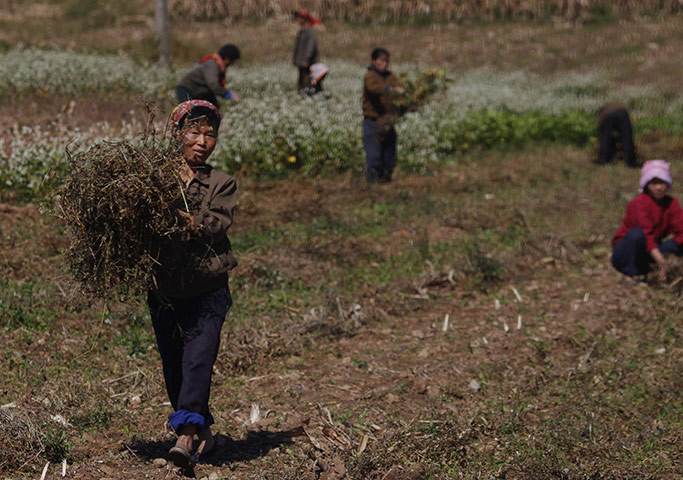
North Korean children are seen behind a red flag in their village in the area damaged by recent floods and typhoons in the farming province of South Hwanghae. The Reuters AlertNet humanitarian news service was allowed to make a tightly controlled trip to the area, where they found many children suffering from severe malnutritionPhotograph: Damir Sagolj/ReutersPak Chun Hwa, a farmer who lost her home in the floods, sits outside a temporary shelter in South Hwanghae. In March, the World Food Programme estimated that a quarter of the population needed food aid and one in three children were chronically malnourished. The country has struggled with its food supply since the 90s faminePhotograph: Damir Sagolj/ReutersNorth Korean farmers at work in a field belonging to a collective farm in South Hwanghae. The farm was damaged during the devastating summer floods and typhoons, which compounded the hunger crisis created by rising global commodity prices, international sanctions and a dysfunctional food distribution systemPhotograph: Damir Sagolj/Reuters
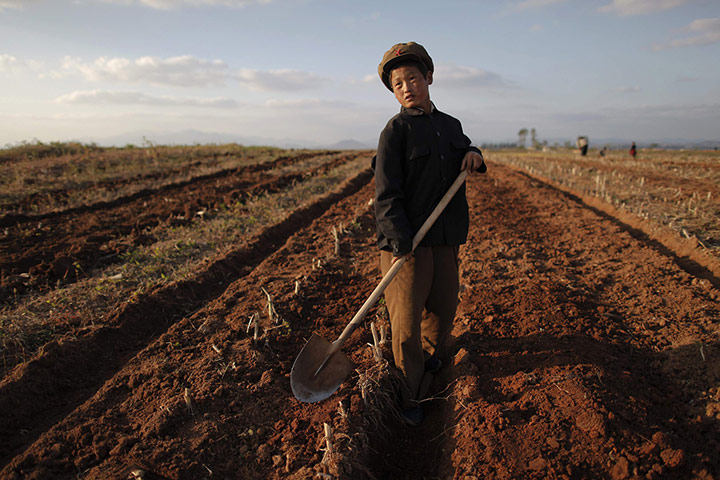
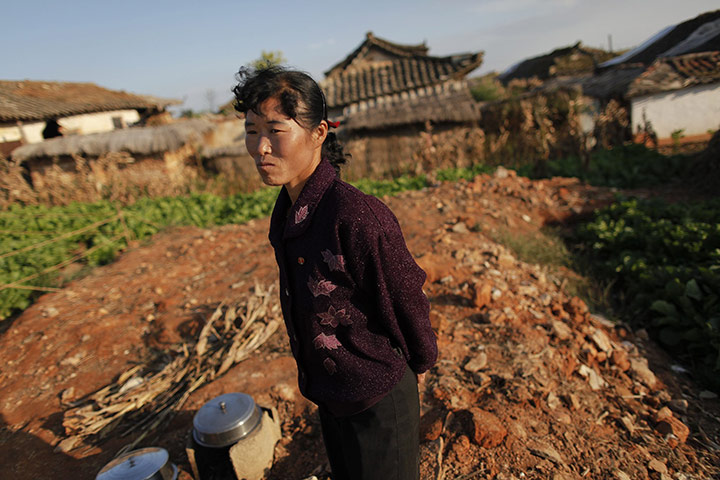
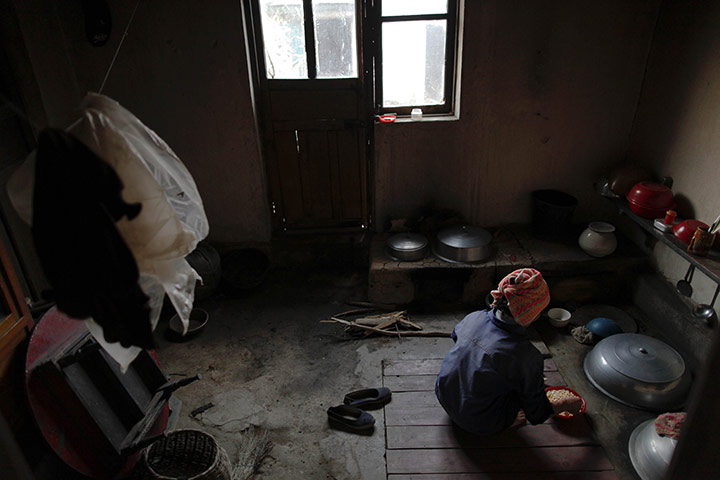
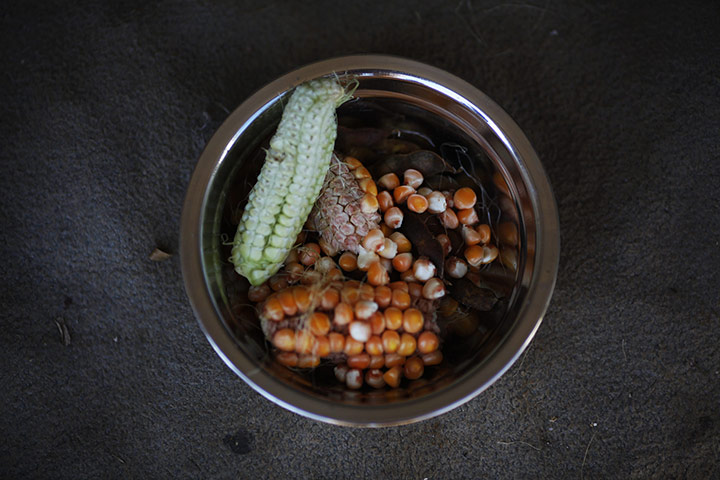
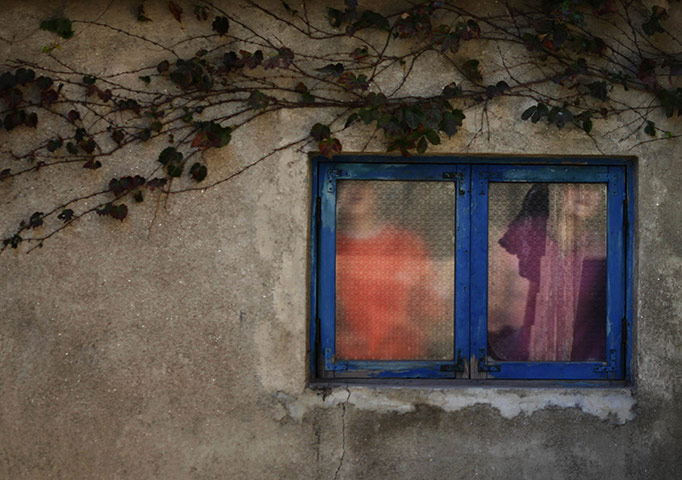
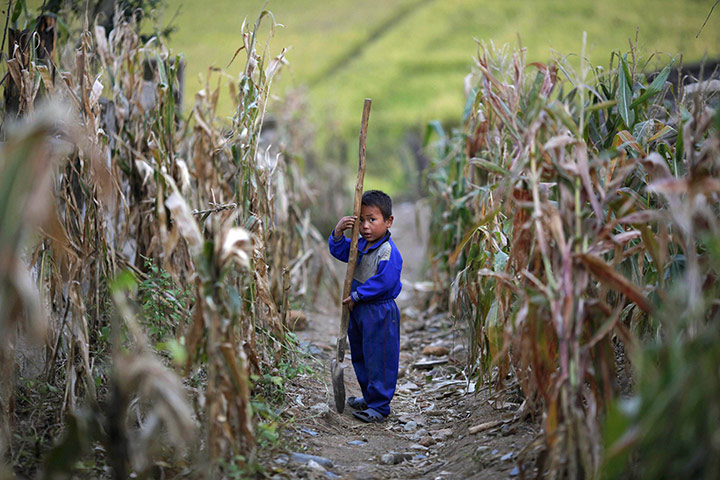
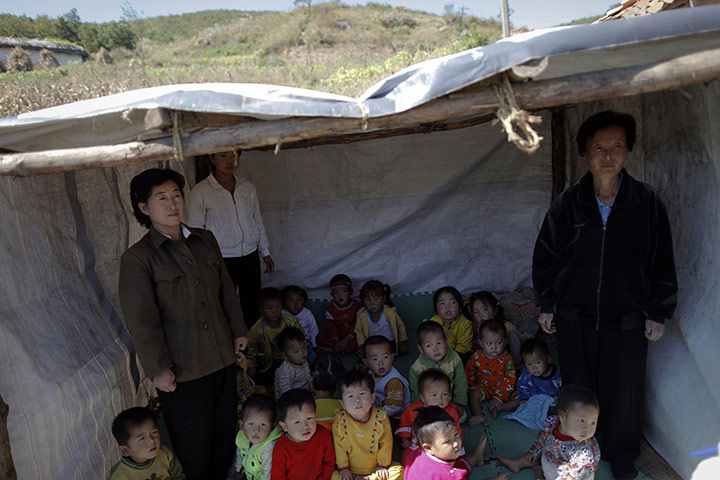
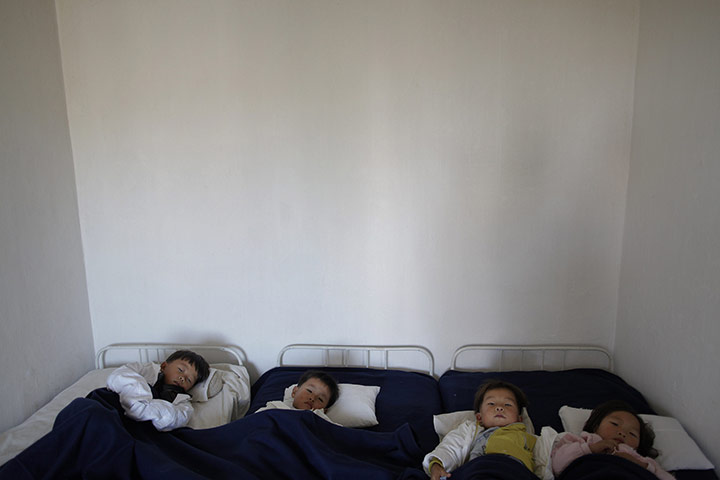
A boy at work on the same farm. South Hwanghae province traditionally produces about a third of North Korea's total cereal supply, but officials say the savage winter wiped out 65% of the barley, wheat and potato crops. The floods laid waste to 80% of the maize harvest, and it is believed the October rice harvest may also be affectedPhotograph: Damir Sagolj/ReutersJong Song Hui stands amid the ruins of her home at the Sojo-Ri collective farm in South Hwanghae. The province was particularly vulnerable in the wake of the summer floods, because it was a heavily militarised area – making trading harder – and its closeness to Pyongyang meant much of its food was used to feed the armyPhotograph: DAMIR SAGOLJ/ReutersA North Korean woman prepares a meal in her home at the Soksa-Ri collective farm in South Hwanghae. The World Food Programme has warned it has only 30% of the funding needed for its relief operation in North Korea, which targets 3.5 million peoplePhotograph: Damir Sagolj/ReutersA meal prepared by a North Korean woman. 'The natural disasters of last year and this year have forced the people to live on potatoes and corn,' says Jang Kum-son, a doctor. 'Because people aren't taking in proper nutrition, the number of in-patients has increased [from about 200 in May to around 350 every month from July to September]'Photograph: Damir Sagolj/ReutersNorth Korean girls peer through a window at a foreign delegation visiting a school in Haeju, the capital of an area in South Hwanghae damaged by floods and typhoonsPhotograph: Damir Sagolj/ReutersA North Korean boy holds a spade in a corn field in an area damaged by the summer floods and typhoons in the Soksa-Ri collective farm in South HwanghaePhotograph: Damir Sagolj/ReutersNorth Korean children wait in a tent before being examined for signs of malnutrition. Their kindergarten in South Hwanghae was destroyed during the summer floodsPhotograph: Damir Sagolj/ReutersBabies suffering from malnutrition rest in a hospital in Haeju. According to Kim Chol-jun, paediatrician at a school for orphans, the heavy rainfall and flooding in North Korea contaminated water supplies, leading to digestive diseasesPhotograph: DAMIR SAGOLJ/Reuters
Sign up to read this article
Read news from 100’s of titles, curated specifically for you.